Pseudorabies in dogs
Pseudorabies is one of those diseases with a really bad name (although it's a pretty bad disease too). It has nothing to do with rabies. Rather, it's caused by a herpesvirus; porcine herpesvirus 1. The name "pseudorabies" presumably came into existence because it causes neurological disease that, in some cases, can look like rabies.
Pigs are the reservoir of this virus, and it's a very important cause of pig disease in some regions. Spillover infections can occur in many different mammals, including dogs, cattle and sheep, and infections in these species are typically fatal.
Pseudorabies is not as widely distributed internationally as rabies, but it is present in wild boars in many regions, including many European countries. Infections in dogs are sporadically reported, typically in hunting dogs infected by contact with wild boars.
Recently, a case of pseudorabies (also known as Aujeszky's disease) was diagnosed in a dog in Luxembourg, the first diagnosis of the disease in the country since it was identified in domestic pigs in 1999. (Infections in wild boars were suspected in late 2009 but not confirmed.) Few clinical details are provided in the report to the OIE, beyond the fact that the dog died. Contact with "wild species" was listed as the source of the infection, which presumably was contact with wild boars.
Unlike rabies, pseudorabies is not a significant concern in people.
Cryptosporidiosis and petting zoos: England and Wales
Petting zoos are very common in the UK (as in many other regions), where approximately 2 million people visit 1000 different petting zoos every year. While the vast majority of petting zoo visits are simply pleasant outings associated with no problems, some people leave with more than just memories... they leave with an infectious disease. A letter in the latest edition of Emerging Infectious Diseases (Gormley et al 2011) describes one of the diseases people can pick up at petting zoos: cryptosporidiosis.
From 1992-2009, 55 outbreaks of intestinal infections associated with petting zoos were reported in England and Wales. (There were presumably many more unidentified cases or even outbreaks.) Of these, 55% were caused by E. coli O157. The second most common cause was Cryptosporidium, a protozoal parasite that is commonly found in feces of calves and lambs, which was responsible for 42% of the outbreaks and affected 1078 people. (Again, this is probably an underestimation of the true numbers because typically there are many undiagnosed or unreported cases of illness for every case that is identified). The number of people involved ranged from 2-541 per outbreak. Twenty-nine people were hospitalized due to the infection.
Factors associated with outbreaks were things that we know are issues with petting zoos:
- Contact with young lambs, calves or kids
- Inadequate hand hygiene facilities
Cryptosporidium outbreaks were also more common in the spring, as opposed to E. coli outbreaks which were more common in the summer. This may be explained by the association of the pathogen with contact with young calves, lambs and kids, since these animals are mainly born in the spring.
Alcohol-based hand sanitizers, while excellent for most bacteria, are ineffective against Cryptosporidium. This can also be a contributing factor to outbreaks of cryptosporidiosis, particularly if hand washing stations are replaced with hand sanitizers. While alcohol-based hand sanitizers are certainly better than nothing, their usefulness is limited when resistant pathogens (such as Cryptosporidium) may be present, and when peoples' hands might be contaminated with large amounts of dirt or other debris (e.g. feces).
Petting zoos can be great events, particularly for kids. However, kids, especially young kids (less than five years of age), are at high risk for certain infectious diseases they may encounter at such venues. While petting zoos seem to be improving and governments are paying more attention to making them safer, visitors need to look out for themselves.
- Make sure a hand hygiene station, preferably a hand washing station, is available. Do this before you touch animals.
- Always wash your hands after leaving the petting zoo, regardless of whether or not you touched an animal (since other surfaces you touched may have been contaminated).
- Do not have contact with young calves, lambs, kids (i.e. baby goats) or poultry.
- Do not have contact with diarrheic animals, or animals that appear to have any other health problems.
- Don't take food, drink or anything that might go into a child's mouth (e.g. baby bottles) into the petting zoo area.
- Closely supervise children.
- If you see a poorly equipped or run event, don't be afraid to contact your local public health office. While most petting zoos seem to be improving, some are still pretty bad and may need to be forced to do things right.
No good deed goes unpunished: Cat rabies version
A Royal Oak, Michigan resident is undergoing rabies post-exposure prophylaxis after being bitten by a rabid cat. The person found a sick cat by the side of the road and took it to a vet clinic... a good deed in theory, but problematic in many ways. One obvious risk is the potential for rabies exposure, as occurred here. The cat was subsequently diagnosed as rabid, and having been bitten the good samaritan was clearly exposed. Fortunately, the veterinarian kept the contact information for the person who dropped off the cat, who can therefore now receive the necessary treatment.
Associated with this event, the Royal Oak Animal Shelter has issued the following reminder:
- Do not approach any animal if it appears sick. Call the Police to get animal control involved.
- Tell your children to stay away from any stray animals, whether they are skunks, dogs, or cats. Any of these could be infected.
- Vaccinate your dogs for rabies. It is the law.
- If you let your cats outside, STOP doing so. If you can't stop, please make sure your cats are vaccinated for rabies.
- If they already have been vaccinated, talk to your veterinary professional about having a booster administered to protect your animal. There is no cure for this deadly disease.
Rabies in Guangdong, China
Many people think of rabies as a very rare disease primarily associated with wildlife, however canine rabies kills tens of thousand of people each year, making it a leading cause of infectious disease deaths in some areas. China is an example of such a region, and rabies is a serious problem throughout much of the country. For example, last month 33 people died of rabies in Guangdong province, according to the the Provincial Health Bureau. That means that there were more deaths from rabies than tuberculosis in the region (there were 80 deaths from AIDS, 33 from rabies and 14 from TB).
The frustrating part is that the vast majority of rabies infections can be prevented with basic medical care, consisting of timely administration of rabies post-exposure prophylaxis, and vaccination of both feral and pet dogs.
Tuberculosis in pets: The treatment quandry
A few days ago, I wrote about tuberculosis (TB) exposure in several people who performed a necropsy on an infected dog. As part of that investigation, a cat in the household was tested and was also positive for TB. It was euthanized because of the public health concerns. A logical question from a reader was "Is there no treatment for animals, as there is with humans?"
Diagnosis of tuberculosis in an animal often results in prompt euthanasia, and some individuals and groups have euthanasia as a standard recommendation.
Why?
- We have no data about how to properly treat an infected animal.
- We have no data about how effective (or ineffective) treatment may be.
- It's not easy to test animals before or during treatment to see if they are shedding the TB bacterium (Mycobacterium tuberculosis).
- It's such a concerning disease in people that the inclination is to err on the side of caution when it comes to public health.
Is it an appropriate response?
In some circumstances, it probably is. In other circumstances, treatment shouldn't necessarily be dismissed. A major problem is the knowledge gap.
- We don't know whether infected animals pose any risk to people. Human-animal transmission can occur, but it's unclear whether animals can transmit the infection back to people.
- If transmission between pets and people occurs, we don't know what circumstances are involved. TB is not readily transmitted even between people. Short term exposure is not a major concern. It's likely that close and prolonged contact is required for transmission from pets, but we don't know for sure.
- We don't know if certain infected animals are higher risk than others, although there probably are differences. A dog with respiratory TB and active disease is probably a much higher risk than a dog with a localized TB abscess.
- We don't have easy and accurate ways to test pets for TB exposure and shedding. In people, sputum cultures are tested by having people spit in a cup. Getting a sample like that is obviously difficult in dogs. Collecting a good sample for testing is much more involved in pets and not amenable to routine testing (for research or monitoring).
- We don't know for how long to treat a pet with TB, or which drugs are optimal for use.
Treatment might be reasonable when there is an animal with mild disease (or no signs of disease), when the animal was infected from a household contact (meaning that some degree of TB exposure has already occurred in the household and the dog would probably only be a secondary source of exposure), when there are committed owners who are willing to embark on time consuming and expensive treatment, when owners are able to keep the dog away from other animals and people during the treatment period, and when there is an understanding that treatment may not work.
When might treatment not be a good idea?
- When the animal is shedding the TB bacterium in respiratory secretions.
- When the owners cannot afford prolonged and expensive treatment and monitoring.
- When the owners cannot be relied on the administer every dose of medication and make every required follow-up appointment.
- When owners cannot be relied on to keep the dog away from other dogs and animals (and people) during the treatment period (or at least during the initial period).
- When there are high-risk people in the household, such as people with HIV.
- When serious disease is present, such that the chances of recovery are low.
Rabies vaccine failure in dogs and cats
A recent paper about rabies post-exposure treatment in animals (Wilson et al, J Am Vet Med Assoc 2010) also contained some interesting information about rabies vaccine failure in pets. The study, which looked at data from more than 1000 animals in Texas from 2000-2009, mentioned a vaccinated 15-month-old cat that developed rabies. It had been vaccinated at 5 months of age and was not yet due for a booster, which would have been required at 17 months of age.
Rabies was also diagnosed in a dog and cat that had been vaccinated but were overdue for their boosters. Both initially received one dose of a 3-year vaccine, but they did not received the booster that is supposed to be given 1 year later. (Even with 3-year vaccines, pets are supposed to be given their first booster (i.e. their second dose of vaccine) after 1 year, before moving to getting boosters every 3 years). The dog was vaccinated 2 years and 9 months earlier. Twelve days after being exposed to a rabid skunk it was given a booster, but it developed rabies nonetheless and died 8 days later. The cat was vaccinated 2 years and 3 months earlier. It apparently did not receive a booster after it was exposed to rabies, and subsequently also died of rabies.
Another six dogs and three cats that were vaccinated developed rabies, but all of these were overdue for their booster or had been vaccinated less than 30 days before rabies exposure. These were therefore not considered vaccine failures.
This information should not be taken as an indication that rabies vaccination is not useful or that current vaccination protocols are inadequate. This involves a very small number of animals, and only one that was properly vaccinated. Rather, it should be a reminder that vaccination is not infallible and that the possibility of rabies cannot be summarily dismissed just because the animal has been properly vaccinated.
Rabies post-exposure prophylaxis for dogs
If an unvaccinated person is exposed to rabies, the protocol is very clear: the person receives a single dose of anti-rabies antibody and a series of four rabies vaccines over a few weeks.
If an unvaccinated dog is exposed to rabies, the typical requirement is a strict six-month quarantine (with rabies vaccination one month into quarantine or one month before the end of quarantine) or prompt euthanasia.
Why? There has been only limited investigation of rabies post-exposure treatments in dogs. Ineffective post-exposure treatment could put the people around an exposed dog at risk of rabies exposure themselves. In the absence of convincing evidence, public health concerns trump animal issues.
A recent study published in the Journal of the American Veterinary Medical Association (Wilson et al 2010) sheds some more light on the topic. The authors reviewed records from rabies-exposed animals in Texas from 2000-2009, where a different post-exposure protocol is used for animals. In Texas, exposed unvaccinated animals are either:
- immediately euthanized, OR
- immediately vaccinated, kept in strict isolation for 90 days and given rabies vaccine boosters during the 3rd and 8th week of quarantine.
The authors reviewed the records of 1014 animals (769 dogs, 126 cats, 72 horses, 39 cattle, 3 sheep, 4 goats and 1 llama) that were treated with this modified protocol after exposure to another animal that was confirmed to be rabid.
None of the treated animals developed rabies.
An important issue to bear in mind is whether the animals in the report were actually exposed to the rabies virus itself, not just a rabid animal. There's no way to prove that any were actually exposed to the virus, however 29% had what was considered "direct exposure," and a further 38% had "probable exposure." Presumably, not all the animals were actually exposed, but even so, because they looked at so many animals, it provides more convincing evidence that the protocol is effective for preventing rabies. The only definitive way to figure it out would be to experimentally infect animals with rabies and then see if the post-exposure treatment prevents them from developing disease, something that is unlikely to be done for many reasons.
Immediate vaccination may be a key component of this protocol. Previous reports of post-exposure treatment failure have been cases where there was a relatively long interval (e.g. a couple of weeks) from rabies exposure to first vaccination. By that time, it's possible that the infection is too advanced, particularly since the typical incubation period for rabies in dogs is 21-60 days.
The Texas post-exposure protocol makes sense. It appears to be effective and requires a shorter quarantine period. Those are both important factors, and make post-exposure treatment a more viable option.
However, while this study provides evidence that this protocol may be effective, it doesn't mean everyone can just start using it. Regional laws regarding rabies exposure supercede these results, and unless the rules are changed, this approach may not be an option. Hopefully, regulatory officials will look at the results of this study and Texas' experience, and think about modifying their own protocols.
At the end of the day, however, it's still much better to have your animal properly vaccinated against rabies so that post-exposure treatment or quarantine isn't needed. Vaccination isn't 100% effective, but it's very good overall, and the mandated response to exposure of a vaccinated animal is much easier (on both the animal and owner) than for an unvaccinated animal.
Tuberculosis exposure from a dog
Tuberculosis (TB) is a very important public health issue. Caused by the bacterium Mycobacterium tuberculosis, TB is likely the most widespread human infectious disease. Although it primarily affects people, it can rarely affect various animal species as well, including pets. The relevance of dogs to human TB is unclear: we know dogs can (rarely) be infected by M. tuberculosis, but it remains uncertain whether infected dogs pose a risk to their human contacts (presumably dogs become infected in the first place from one of their human contacts, who is therefore also a source of exposure to other people). There is little information available about this risk.
People working in the veterinary field are at increased risk of exposure to many infectious agents. For this reason, there are standard practices that are (or at least should be) used to reduce unexpected exposures. A good example of such an unexpected exposure and the consequences thereof is presented in a case report from Switzerland recently published in Veterinary Microbiology (Posthaus et al 2010).
The report describes a seven-year-old Ibizan hound that was referred to the University of Bern's small animal clinic because of lethargy and vague neurological abnormalities. The dog was originally imported from an unknown country in southern Europe and was adopted from a shelter at two years of age. The animal was ultimately euthanized after it became very ill, with severe neurological disease and respiratory arrest. On necropsy, masses were identified in the brain and liver, and infection with Mycobacterium avium complex was suspected. However, subsequent testing identified M. tuberculosis, triggering an investigation of all human and animal contacts.
Testing included a blood test called the IGRA, which detects people who are either infected or exposed. The test can't differentiate between a recent infection and a past infection/exposure, so a positive result needs to be interpreted in conjunction with an evaluation of the person's history, to determine if previous exposure is likely.
The Ibizan's two owners tested negative. None of the veterinary clinicians that worked with the dog before its death were positive (or more specifically, none were positive and the result thought to be related to exposure to the dog), including the three people who were involving in intubating the animal (placing a breathing tube - a potentially high-risk procedure in an animal with TB). In contrast, six pathologists who were involved with the necropsy were positive, including the three who were most closely involved. Two of these individuals had no apparent risk of previous exposure, so infection from the dog was suspected
Additionally, a cat that lived in the house tested positive. Because of the potential that the cat was infected and concerns about transmission to people, it was euthanized.
This case had some rather interesting findings:
- TB infection in a dog. Clinical disease caused by TB in dogs is rare, and signs can be quite vague, as in this animal. This was not a case of classical respiratory tract TB.
- Infection occurred in the dog well after its presumed time of exposure. The source of infection was unknown, but given the family's history, it is reasonable to suspect that the dog arrived in the country already infected. This shows how diseases like TB with potentially long incubation periods can catch you by surprise. The dog was treated with high doses of steroids initially, possibly triggering re-activation of dormant TB because of immunosuppression.
- Infection of people with TB while conducting a necropsy, demonstrating the occupational risks that can be involved in such procedures. The use of power tools to open the skull is commonplace in veterinary pathology, and may have played a role here by aerosolizing the bacterium. The institution has now changed standard necropsy practices to reduce the risk of subsequent exposures.
- There was no apparent infection of any people when the dog was alive. Presumably, it was not shedding much, or any, of the TB bacterium in its respiratory tract.
- Possible transmission of TB from the dog to a cat. However, it can't be stated with certainty that the dog and cat were not infected by the same unknown source after the dog was adopted. Testing was not performed on the cat after it was euthanized, so it is possible that it was not infected with TB, but with another related Mycobacterium.
This case doesn't indicate that we are dealing with a new issue. Rather, it is possible that there are many more dogs that are apparently healthy but infected with TB. These animals may pose little risk to people, especially if they don't have respiratory disease, but it's an area where information is limited. More attention needs to be paid to the risk of interspecies transmission of TB, how to identify it, how to reduce the risk, and how to manage infected animals. There's debate about whether exposed but healthy animals like the cat in this case should be euthanized because of the potential (but completely unknown) public health risk. Without good research data, we can't provide reliable answers to questions about the risks.
Image: Ibizan Hound (click for source)
UK crackdown on alternative medicine claims
The UK's Veterinary Medicines Directorate (VMD) has taken the long-overdue step of requiring people selling alternative therapy products for prevention and treatment of diseases in animals to actually show that the products are safe and do what they claim. The effort includes products like homeopathic nosodes, nutraceuticals and herbal preparations.
Historically, alternative medicines have received little regulatory scrutiny, and manufacturers have blatantly disregarded rules about what they can and can't say about their products. As a result, many products have claims of safety and effectiveness that are not based on any evidence whatsoever. While this may simply result in people wasting money in many situations, there are concerns that the products could actually do harm in some cases, and that some people may use untested "alternative" treatments instead of proven traditional therapeutics. In these situations, using poor quality ineffective products can obviously also harm an animal's health. Since the alternative medicine industry has shown an obvious lack willingness to self-regulate, the government is required to step in.
It's hard to say how aggressive the VMD will be, and it's likely that it will take some time to straighten out the false advertising. To start, the VMD will be contacting manufacturers to request proof of safety and evidence supporting any health claims that they make.
This doesn't mean that these products will be banned. While there are basically no studies supporting the effectiveness of close to all of these products, they are not being taken away from consumers. Rather, the key is making sure the label claims are accurate so consumers can make a better informed choice. If a product hasn't been shown to cure disease X, it shouldn't say on the label that it does. If manufacturers don't want to do the studies to show effectiveness, they can still sell the product, they just can't make these claims on the label. Assessing safety is tougher, since these products typically lack any safety trials, and it's unclear what degree of safety testing/evidence the VMD will require.
This is a welcome change. Alternative therapies are still therapies. It doesn't matter if they are herbal, otherwise "natural" or manufactured. They can be (or contain) powerful substances and it should be the legal (and ethical) duty of manufacturers to properly test and advertise their products. Only with good quality control and proper research will we be able to understand the role of alternative therapies in patient care.
In the interim (to bring this back to an infectious disease-focused post), it is critical that unproven therapies not be used in place of standard approaches when dealing with the treatment or prevention of infectious diseases. Using these products as supplemental therapies is usually fine. Just don't risk a pet's health using unproven treatments alone when better-investigated options are available.
Tegus and Salmonella
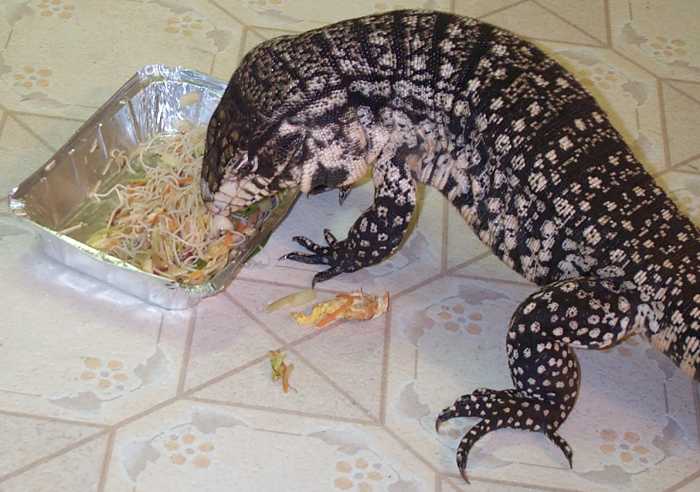
Tegus are large South American lizards that are sometimes kept as pets. As with other reptiles, Salmonella is a concern, as highlighted by a recent study in the journal Zoonoses and Public Health (Maciel et al. 2010). In that study, the authors tested feces of 30 captive-born tegus. From the first round of samples, they isolated various types of Salmonella from 87% of the animals. They collected a second fecal sample from the 4 tegus that were initially negative, and found Salmonella in feces of all of them.
It's not particularly surprising to find Salmonella in tegus, just like in other reptiles. The fact that it wasn't too hard for the authors to find this important bacterium in all of the reptiles highlights the public health concerns regarding reptiles and Salmonella. Further, they showed (as has been shown with other reptiles like snakes) that Salmonella can be shed intermittently, so a negative culture doesn't mean the animal is truly Salmonella-free.
Reptiles can make good pets, but they are accompanied by an increased degree of risk with regard to infectious diseases. They are not recommended for households with children less than five years of age, elderly persons, pregnant women or people with compromised immune systems. In low-risk households (i.e. households without people in these categories), the risk can be reduced (though not eliminated) by basic common sense practices, particularly close attention to handwashing after touching the animal or its environment, and preventing the animal from roaming around the house.
Image from http://ns3.powerblogs.com/my_pet_tegu/
Another Ontario canine respiratory disease outbreak
Recently, I wrote about a potential outbreak of respiratory disease in dogs in Ottawa, Ontario. That "outbreak" seems to have died down (as is common, since outbreaks typically burn out over a period of time). However, I had a call today about a similar situation that might be occurring in the Whitby (Ontario) area. A few veterinarians are reporting a spike in "kennel cough" cases, including some dogs with severe disease. Whether this is truly an outbreak, and whether it's related to the Ottawa situation are both unclear, but it's concerning to get two similar reports over a relatively short period of time.
Situations like this can be caused by a variety of factors, including
- Movement of a known pathogen into a new area. Emergence of canine influenza in Ontario is my main concern in this category.
- Increased disease caused by typical pathogens that are present in the area.
- Hyper-awareness (and increased reporting), as opposed to a true outbreak.
Veterinarians and dog owners should be aware that something different may be going on in different Ontario regions, and consider more thorough diagnostic testing should respiratory disease be encountered. Including testing for canine flu would be a good idea. The two most common and effective ways to test for this disease are:
- Seroconversion: Detection of an increase in antibody levels against canine influenza virus in blood samples taken 10-14 days apart.
- Detection of virus by PCR: This molecular test looks for viral RNA. Testing can be done by certain labs on deep nasal swabs.
Testing does cost money (not much, but free testing isn't available) and it's sometimes hard to convince people that testing is useful, since it may not change the treatment for an individual dog. However, it is important to find out what caused the disease in order to explain why disease happened, to help prevent further disease in the individual dog, to determine optimal vaccination programs, and to provide important information for protection of other dogs in the community.
Dog causes airplane diversion
Heart attacks? Sure.
Mechanical problems? Absolutely.
Aggressive passengers? Yes.
But a 12-pound dog? Apparently so.
"Mandy," a Manchester terrier, has joined the exclusive club of causes of airplane diversions.
Mandy and her owner were flying from Newark to Phoenix on a US Airways flight. The dog was sedated and in an airline-approved cage under the seat, as per airline policy. So far, so good.
Then the dog started to become agitated. One report suggests it was because the sedation was wearing off. Whatever the cause, the owner tried to take the agitated dog out of the protective confines of its cage, into a noisy, crowded and potentially frightening new environment. Not surprisingly, when you take a dog coming out of sedation (and perhaps not completely aware of what's going on) and put it in a unfamiliar and confusing environment, bad things can happen.
In this case, it resulted in the dog biting the passenger in the seat next to the owner (who was trying to help calm down the dog). The dog then got loose and ran up and down the aisle of the plane, barking. A flight attendant who tried to grab the dog was also bitten.
The bites were minor, but the pilot decided to divert the flight to Pittsburgh so the bite victims could be treated (and presumably to get the dog off the plane before it bit more people). The people who were bitten eventually got back on board and continued the flight. However, Mandy and her owner did not, as "separate transportation" was arranged for them.
There's no information in the reports I've seen about the dog's rabies vaccination status, something that was hopefully queried by medical personnel. There's also no information about whether any action will be taken against the dog's owner. If the airline (and/or passengers) wanted to, I imagine a lawsuit could easily follow (especially given the litigious nature of US society). They might win, too, since the dog's owner deliberately broke clear rules that say the dog must remain in the carrier at all times. As a result of her action:
- Two people were injured.
- Medical costs were incurred.
- The plane had to be diverted, probably resulting in a large cost to the airline for additional landing fees, fuel, personnel time, and perhaps the need to move flight personnel or postpone flights because of the diversion. (I'd love to know an estimate of what such a diversion actually costs.)
- 122 passengers were inconvenienced and might have incurred costs from the delay as well.
...all for something that could have been avoided by leaving the dog in its cage.
US dog bite data, 2008
The US Agency for Healthcare Research and Quality has published data regarding emergency department visits and inpatient stays involving dog bites. The comprehensive data from 2008 don't provide any real surprises, but they demonstrate yet again the importance of dog bites and the need to take further steps to reduce their incidence.
Among the highlights:
- There were approximately 316 200 emergency department visits due to dog bites in 2008, with 9 500 people requiring hospitalization.
- On average, 866 people visited an emergency department and 26 were hospitalized from a dog bite every day.
- Bites requiring emergency visits or hospitalization were much more common in rural areas, and males were more commonly bitten than females.
- Children 5-9 years of age had the highest rates of emergency department visits due to dog bites, while hospitalization rates were highest for 65-84 year-olds.
- The average cost of a dog-bite-related hospital stay was $18 200. More than half of people hospitalized required surgery.
- 0.5% of people hospitalized for a dog bite died.
This report involved hospital record data only, so there was no way to assess why the bites happened. Not all bites are preventable, but a lot are. When you consider the huge impact of these injuries, both physically and economically, it's clear that we have to do a better job preventing bites.
Otter attack update
A dead otter was found floating in a pond in Florida near the site of a recent otter attack that was captured on video. Testing confirmed that the animal was rabid. It's impossible to determine whether this is the same otter that attacked the teenager in Boca Raton last week, but it's likely, and shows that rabies post-exposure treatment of the victim was a good decision.
Numerous rabid otters have been identified in Florida in recent years. I haven't seen any information about the viral types that have been involved or how it is thought that otters are becoming infected. Regardless, these incidents should be a reminder to stay away from wildlife, and to consider rabies exposure any time someone has been bitten by a wild mammal.