Watch out for rabbit pee
Urine from healthy animals is typically considered to be of little to no risk to people. This is generally true, at least for the otherwise healthy human population, but like with most things in infectious diseases, there are exceptions. An interesting one in rabbits is a bug called Encephalitozoon cuniculi. This microorganism (now classified as a fungus, but previously considered a protozoal parasite) is very common in healthy pet rabbits. In fact, the majority of rabbits have antibodies against E. cuniculi and may have it living in their bodies, particularly in the kidneys. It can cause infection of the brain, and is an important cause of neurological disease in rabbits, but more often than not it lives within the rabbit without causing any problems. Rabbits can shed spores of this organism is their urine, although they mainly do this only in the first few weeks after they've become infected, and shedding after that may be intermittent.
E. cuniculi is one of a group of microorganisms that became much more important when the HIV/AIDS epidemic hit. While rarely a cause of disease in people in the pre-HIV era, E. cuniculi is recognized as a potential cause of infection in people with compromised immune systems, particularly people with AIDS. Infections of people with normal immune systems are extremely rare.
It's always a challenge deciding what to do with a microorganism that can be shed by a large number of healthy animals. One reference "strongly advises" routine testing of rabbits, but that makes no sense to me. Here's why:
- Screening always comes down to a question of what you would do with the results. If you get a positive antibody test, it means that the rabbit has been exposed sometime in its life, but that does not mean that it is necessarily still infected or shedding spores - so it's not really convincing.
- Tests can be done to detect spore shedding but they are not particularly reliable. Since infected animals shed spores intermittently, a negative result here isn't convincing either.
- If the animal is positive, what would you do? If the household has no immunocompromised people, I'd say do what you've always done, and pay attention to good hygiene.
- If the animal was "negative," I'd say do what you've always done, and pay attention to good hygiene... same as for a positive rabbit.
- If there is an immunocompromised person in the house, I wouldn't say to get rid of the pet, since there's no evidence that's necessary. There is also no evidence that treatment is useful to eliminate E. cuniculi shedding rabbits. If the animal is positive, immunocompromised persons should avoid contact with urine and feces, and use good personal hygiene... just as they should do if the rabbit is negative!
More information about E. cuniculi in rabbits can be found in our archives.
HIV/AIDS, kids and pets
The Centers for Disease Control and Prevention (CDC) has released updated Guidelines for the Prevention and Treatment of Opportunistic Infections Among HIV-exposed and HIV-infected Children. A small but still important part of this document involves recommendations for contact with animals. It's a nice, balanced document that acknowledges the risk but doesn't make unnecessarily restrictive recommendations.
Among the important recommendations regarding animals:
- When getting a new pet, avoid dogs and cats less than 6 months of age or strays: These animals are at higher risk for shedding various infectious diseases and are more likely to have problems with biting and scratching.
- Avoid contact with animals that have diarrhea.
- Wash hands after handling pets.
- Avoid contact with pet feces.
- Avoid contact with reptiles, chicks and ducklings: These are very high risk for Salmonella.
- Avoid contact with calves or lambs at farms or petting zoos: These animals are high risk for various infectious diseases such as Cryptosporidium and Salmonella.
These recommendations also largely apply to other high-risk groups, including people (of all ages) with compromised immune systems and young children (especially less than 5 years of age). A key point is normal contact with common household pest using basic hygiene practices is considered a low risk. Infection control isn't rocket science. It involves basic and practical measures that can reduce risks associated with animal contact.
Rhodococcus equi in horses and people
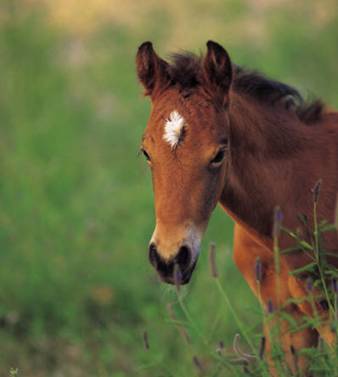
Rhodococcus equi is a very well recognized pathogen in horses – it is a common cause of pneumonia in foals between the ages of 1-6 months, and infection is also sometimes associated with other problems such as diarrhea, swollen joints and abscesses in other parts of the body. The infection can be very difficult to treat because the bacteria are able to live inside white blood cells, which helps protect them from the body’s immune system, and because they often cause abscesses to form, which are difficult for antibiotics to penetrate. Rhodococcus equi infection in foals has been studied extensively, but there’s still a lot we don’t know how the body defends itself against this organism. These are a few things we do know:
- Almost all foals are exposed to R. equi as neonates, but most of them never develop signs of infection.
- Giving newborn foals hyperimmune plasma (plasma with extra antibodies against R. equi) may have some beneficial effects on farms where the infection is a recurrent problem, but this practice is still controversial.
- Adult horses are essentially immune to the infection.
- In almost all cases if clinical disease in foals, the R. equi strain involved carries a special gene called vapA.
- Mortality rates in foals vary considerably from 0% to 30%.
- So far, efforts to develop a vaccine to help protect foals have been unsuccessful, but research in this area is ongoing.
People can also be infected with R. equi, and as in foals, pyogranulomatous pneumonia (infection of the lungs which results in the formation of many abscesses) is one of the most common conditions caused by this organism. However, there are a few important differences between infection in people and infection in horses:
- 85% to 90% of people with R. equi infection are immunocompromised, meaning their immune system is weakened or suppressed for some reason, e.g. HIV infection, or immunosuppressive drugs taken by organ transplant or cancer patients.
- Among people infected with R. equi who have normal immune systems (i.e. immunocompetent), about half of the infections are localized, meaning they only affect one small part of the body. Many of these are associated with wound infections.
- Only 20% to 25% of the R. equi isolates in people carry the vapA gene.
- Infection in immunocompetent people can be fatal in approximately 11% of cases, but among HIV-infected patients the mortality rate from R. equi infection can be as high as 50% to 55%.
Rhodococcus equi is actually a soil organism, and this is likely the most common source of the organism for both horses and people. Only approximately 1/3 of humans infected with R. equi report that they have had contact with horses or pigs (pigs can also carry the bacterium). So we don't know how much of a risk an infected foal is to a person. However, it is prudent for people, particularly those with weakened immune systems, to take precautions to avoid potential transmission of R. equi from horses.
- Try to reduce dust levels on the farm. Because R. equi most often lives in the soil, it can get stirred up into the air in dusty areas, which can then lead to inhalation by animals and people. Doing things like planting grass or other vegetation, installing windbreaks in high-traffic areas, or wetting down dusty stalls or paddocks can help reduce dust levels in the air.
- Keep open wounds and other broken skin covered when working around animals.
- Always wash your hands after handling a foal (or any horse)
- If you have a foal that develops signs of R. equi infection, make sure you have your veterinarian examine it as soon as possible so the diagnosis can be determined and the foal can be treated properly as soon as possible. Some foals with R. equi may develop severe pneumonia very quickly, so it’s important that they are examined right away.
CDC recommendations for people with HIV
The latest edition of the Centers for Disease Control and Prevention (CDC)'s publication Morbidity and Mortality Weekly Reports consists of the revised Guidelines for Prevention and Treatment of Opportunistic Infections in HIV-Infected Adults and Adolescents.
Among the highlights relevant to pets:
- HIV-infected patients should be advised to wash their hands after handling pets or other animals.
- They should avoid direct contact with diarrhea or any stool from pets, particularly stray pets or dogs and cats less then six months of age.
- Gloves should be worn when handling stool or cleaning areas that might have been contaminated with stool from pets.
- Contact with calves or lambs (e.g. on farms or at petting zoos) should be limited or avoided. Attention should be paid to hygiene and avoiding direct contact with animal manure when visiting such premises.
- Contact with reptiles, chicks and ducklings should be avoided because of the risk of Salmonella.
So, nothing earth-shattering or nothing we and others have not been saying all along. That's because basic measures, while not flashy, are the most useful tools. Use common sense, avoid contact with stool and high risk animals, and above all wash your hands.
Dietary indiscretion, HIV and dogs
A reader asked this question the other day:
"I was walking with my dog, when it got hold of a used condom. Is it possible that my dog got HIV or AIDS or something?"
The short answer is NO. Dogs cannot be infected by HIV, nor can dogs transmit the virus (although there is a theoretical concern that a dog could transmit HIV from one person to another if it bit someone with HIV, got blood from the person in its mouth, and then immediately bit someone else). The virus that causes HIV/AIDS does not survive long outside the human body and would quickly die in a dog's mouth. So HIV infection in a dog from chewing on or swallowing a used condom is not a concern.
Dogs are not susceptible to the other important sexually transmitted diseases in people either. The biggest potential problem in this situation (and a slim on at best) is if the dog swallowed the condom, it could cause a blockage in the dog's intestine. Most likely, though, the dog would pass the condom in its stool and nothing untoward would happen.
(The "ick" factor with dogs eating things like this furthers my objections to being licked in the face by any dog, however!)
Pets and immunocompromised people
There was an interesting article in USA Today about the increasing recognition of the positive role that pets can play in patients recovering from serious disease, and how contact with pets can sometimes conflict with disease transmission concerns in these same patients. The attitude towards pet ownership among physicians is highly variable - some recognize the strong human-animal bond and its positive effects, while others see pets as unnecessary infectious disease risks. The infectious disease concerns are heightened in patients with compromised immune systems, to the point that sometimes people are told to get rid of their pets if they are severely immunocompromised. However, more and more pet owners, veterinarians and physicians are beginning to question if this is truly the best approach.
The USA Today article describes the experiences of a cancer patient whose greyhounds were "banished to a caregiver on doctors’ orders". Considering she was at high risk for (potentially fatal) infectious disease because of chemotherapy, bone marrow transplant, stem cell transplant and immunosuppressive drugs, it’s not surprising that there was concern about the pets. After researching the risks, and measures she could take to reduce those risks, the patient convinced her doctors that the risks from her dogs were not as great as the benefits from having them around, and so the dogs returned home. While everyone’s relationship with their pets is different, the patient felt that the return of her dogs was an important step in her recovery, stating "There's no question that having (the dogs) with me these past few months made a huge difference in my recovery".
Infectious disease transmission from pets to people is certainly a real issue, and it is of particular concern in people with weakened immune systems. There is not, nor will there ever be, a "no-risk" pet. Every contact with a pet, just like every contact with another person, carries with it some degree of risk of disease transmission. What needs to be considered is the trade-off, the risks versus the benefits. In some people, the risks are greater than the benefits because of the severity of disease, type of pet, the person's ability (or more likely inability) to interact with the pet. In other people, especially those who have a very strong bond with the animal, the positive social and emotional benefits of pet ownership may greatly outweigh the associated disease risks. The article contains a great quote from Dr. Ray Pais, a pediatric hematology/oncology specialist, saying "Our young patients have already given up so much, I see no reason at that moment for them to also lose the dog."
People that have compromised immune systems need to have a serious discussion with their physician, veterinarian and family about the best thing to do with their pets while they are sick. While there is very little research in this area, taking a few common sense precautions should reduce the risks of disease transmission. These include:
- Avoiding contact with stool
- Frequent handwashing
- Preventing licking of the person by the pet
- Proper training to reduce the risk of bites and scratches
- Keeping cats indoors
- Following a good preventive medicine program for the pet
More information about Immunocompromised Pet Owners will be available soon on the Worms & Germs Resources page. The CDC also has useful information on its website about this topic.
Thanks to Dr. Doug Powell of Barfblog for forwarding this article.
Feline Immunodeficiency Virus - HIV/AIDS for Cats
Everyone is familiar with the human immunodeficiency virus (HIV) - the retrovirus that causes acquired immunodeficiency syndrome (AIDS) in people. Although HIV can only infect humans and some primates, cats can be infected by a very similar virus from the same genus (Lentivirus) with a similar name – feline immunodeficiency virus (FIV). The FIV virus is transmitted from cat to cat by contact with blood, usually through a cat bite. In Canada and the USA, up to 3% of healthy cats may be infected with FIV.
As with HIV in people, FIV attacks a cat’s immune system, which can leave the animal susceptible to many different infections that a healthy cat could normally fight off. Some of these infections, like toxoplasmosis, are similar to those that occur in AIDS patients. (More information on toxoplasmosis and Toxoplasma is available on the Worms & Germs Resources page). Depending on a number of factors, an FIV-positive cat may remain healthy for years, but once the animal begins to show signs of a weakened immune system, it will often develop chronic or recurrent health problems. The infection is life-long – there is no “cure” for FIV.
Some key points to remember:
- Cats cannot get HIV. People cannot get FIV. They are related but different viruses.
- Keeping your cat indoors will prevent fighting with other cats and decrease the risk of your cat contracting FIV.
- There is a vaccine available for FIV, but it remains uncertain if the vaccine can protect cats from all strains of the virus. The vaccine also interferes with tests for FIV infection. Therefore, preventing exposure to the virus is still the best way to prevent FIV infection.
- If your cat already has FIV, it is important to keep it indoors to decrease exposure to pathogens that could make your cat sick, and to prevent your cat from spreading the virus to other cats.
More information about FIV can be found on the Cornell Feline Health Center website.

Toxoplasmosis - Why Your Cat Shouldn't Get the Blame or the Boot
Toxoplasma gondii is one of the most widespread zoonotic pathogens in the world. Toxoplasma is a protozoal parasite that can infect almost any warm-blooded animal, including humans. In most people and animals, infection doesn’t cause any illness at all, and after the initial infection, the body usually produces strong immunity which protects it from subsequent Toxoplasma infection. Problems arise when infection occurs in a person with a weakened immune system. For example, toxoplasmosis (i.e. illness due to Toxoplasma) has been a major problem in HIV/AIDS patients, although better HIV treatments have decrased the incidence of the disease in this group in recent years. Toxoplasma can also cause problems when a woman is infected for the first time, before her body has developed immunity to the parasite, while she is pregnant. In these cases, the parasite can infect the fetus. This may result in birth defects or loss of the pregnancy altogether.Our friendly feline companions have the unfortunate distinction of being what is called the “definitive host” of Toxoplasma. This means that even though the parasite can infect many species of animals, cats are the only species that shed the parasite “eggs” (which are called oocysts in this case) in their stool after they’re infected. But what most people don’t realize is that the number of cats that are shedding oocysts at any one time is very small – usually less than 1 in 100. And after the first time a cat is infected, it usually doesn’t shed oocysts again, and if it does it sheds them in very low numbers.
Depending on individual lifestyle and eating habits, a person is just as likely or more likely to be exposed to Toxoplasma from working in the garden or eating undercooked meat (particularly free-range pork or wild game). People who are pregnant or who have a weakened immune system do NOT need to get rid of their cats because of Toxoplasma, but they DO need to take steps to avoid exposure to Toxoplasma from all sources. This includes avoiding contact with cat stool and kitty litter by asking someone else to clean their cat’s litter box for them if possible, or wearing rubber gloves and being very careful to wash their hand very well afterwards if they need to clean the box themselves. Here are a few more tips that can help reduce their risk of exposure to Toxoplasma:
- Clean your cat’s litter box every day. The oocysts usually take about 24 hours to become infective once they’ve been passed in your cat’s stool, so daily cleaning helps remove them before they reach this stage.
- Always wash your hands with soap and water after cleaning your cat’s litter box, after working in the garden or in any soil, and after handling raw meat.
- Cook all meat, especially pork, lamb, mutton and wild game, to an internal temperature of 67ºC/153ºF or higher.
- Keep sandboxes covered so outdoor cats don’t contaminate them with stool.
- Keep your cat indoors. Outdoor cats are more likely to be exposed to Toxoplasma and shed oocysts in their stool.
HIV/AIDS and dogs
My dog licked someone with HIV/AIDS, and they had an open sore. Can my dog get HIV?
Can a dog that bites someone with HIV get infected?
If a dog bites someone with HIV then bites someone else right after, can it spread the virus?
The answers are no, no and it's very, very unlikely.

HIV (human immunodeficiency virus) does not infect dogs. Regardless of how a dog is exposed, it will not develop an infection. HIV is also a very fragile virus. It does not survive long in the environment and a dog's mouth is not a very hospitable location. It is theoretically possible that if a dog bit someone with HIV and then immediately bit someone else, it could transfer the virus, but this has not ever been identified and is very unlikely. In some countries, the source of all cases of HIV are investigated, and an animal bite has never been implicated as a potential cause.
Bottom line....don't worry about HIV and your pets.