Banning Bowser from the beach

Many dog owners love to take their canine companions to the beach with them during the summer. Unfortunately, other people (particularly non-dog owners) sometimes take exception to having Bowser on the beach. These individuals often cite potential infectious disease risks as a reason to ban dogs from the beach.

While there are some potential infectious disease risks associated with having pet dogs at the beach, they are minimal. Also, some simple, common-sense steps can greatly reduce the risks that do exist. The infectious disease risks from feral (wild) dogs and wildlife defecating in the sand are much greater.

  • The biggest health risk is actually probably from dog bites. Bites can be avoided through proper handling and training of dogs that are brought to public beaches.
  • Many different bacteria (e.g. Salmonella, Campylobacter) can be passed in the stool of even healthy dogs. Some of these can be harmful to people, but only under certain circumstances, such as if they are swallowed or if they contaminate an open wound.
    • Promptly picking up any stool passed by a dog greatly reduces the risk of significant contamination of the sand. Also, sunlight is an excellent “disinfectant” and will help kill any residual bacteria left behind.
  • Dogs can also have different kinds of zoonotic parasites in their stool.
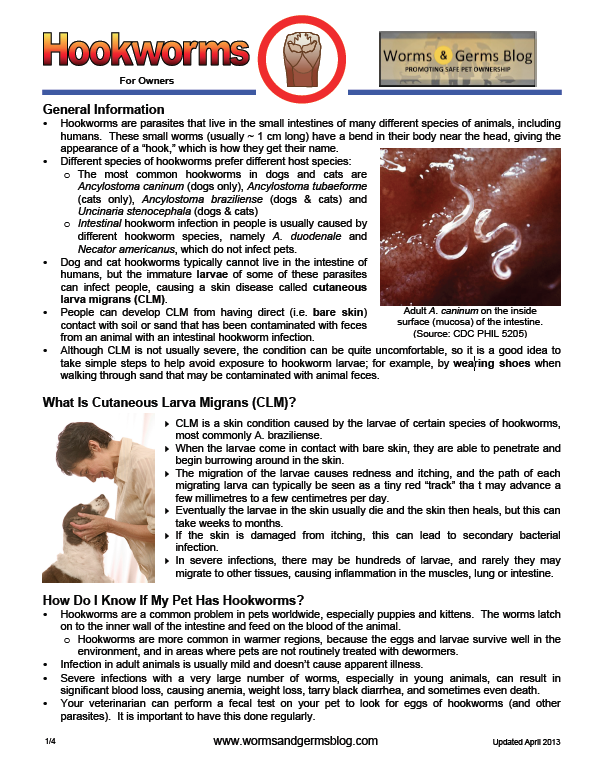
    • Some of these parasites (e.g. roundworms, hookworms) are passed in a form that takes days to become infectious to people. So promptly removing dog stool from the beach minimizes the risk of transmission.
    • Other parasites, such as Giardia, are immediately infectious when passed in the stool, but must be swallowed to cause infection. Prompt removal of dog stool, good hand hygiene with soap and water or an alcohol-based hand sanitizer before eating, and avoiding sand contamination of food and drink should largely eliminate this risk as well.

Overall, the risks of having dogs on beaches are very low if people behave responsibly, specifically properly restraining their dogs and promptly picking up stool.

More information about zoonotic diseases associated with contamination of sand and Sandboxes is available on the Worms & Germs Resources page.

Sandbox fun...

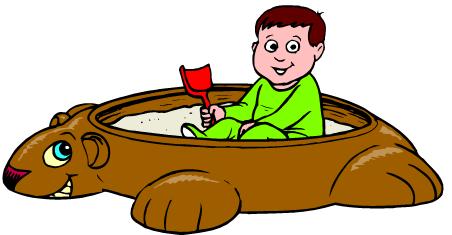
A sure sign that spring is approach is the advertising of outdoor summer items in stores. A large pile of sandboxes at one store caught my eye the other day, particularly as it followed a discussion I had with some infectious disease physicians about kids and sandboxes. Sandboxes can be a great thing for kids, however there are some infectious disease concerns. Uncovered sandboxes can become litter boxes for cats, raccoons and other outdoor animals. Some of these animals could be passing potentially dangerous bacteria and parasites in their stool. An example of this was reported a few months ago in Morbidity and Mortality Weekly Report. This report described an outbreak of cutaneous larval migrans in 18 children and 4 staff at a day camp. This is a skin disease caused by hookworms. Cats and other animals can pass hookworm eggs in their stool. A sandbox contaminated with cat stool was implicated as the cause.

We really have no clue about how common sandbox exposure causes disease. While this skin disease is usually relatively minor, there are some other groups of parasites that can migrate through other parts of the body, including the brain, and cause devastating illness. All of these are very rare in northern climates like Canada, but measures should be taken to reduce the risk of exposure because of the potential severity of disease. Risks are much higher in warmer climates. These are a significant concern in warmer areas. It’s probably pretty uncommon but some of the diseases that can occur are very serious, so attention should be paid to these risks. The main things that can be done to reduce the risk are keeping animals out of sandboxes and handwashing after contact with sand. Check out our “Sandbox” information sheet for more details.

Information Sheets for Pet Owners

INFORMATION SHEETS specifically for KIDS, for VETERINARIANS and for PHYSICIANS are also available on the Worms & Germs RESOURCES page!

Click on the highlighted topics below for information sheets. Topics that are not highlighted are in development and coming soon. Sheets for other animal species and diseases are also under development and will be added when they are available.

Animals Diseases Other
Dogs Rabies Litter Boxes
Cats Giardia Sandboxes
Turtles Toxoplasma Cat Bites
Hamsters Leptospira Raw Meat
Rabbits Clostridium difficile  
Birds Cryptosporidium  
  MRSA  
  Salmonella  
  Campylobacter  


Please Remember:

  • Your veterinarian and physician are your ultimate resource for information about the health of your pets or your family.
  • Information provided here is accurate to the best of our knowledge, but infectious diseases can be unpredictable and these sheets are for general information purposes only.
  • There can be great variation in disease risks in different geographic areas. The information provided was developed for Ontario, Canada, but most of the information is relevant for other regions as well.