
No spleen + dog bite = beware
A report from Seattlepi.com is a textbook example of what can happen to certain people after dog bites. Mike Moore tried to break up a fight involving his two dogs and received a minor bite. It barely broke the skin. No big deal, eh? Well, perhaps for most people, but unfortunately not for Mr. Moore.
He cleaned the wound and didn't think much about it. Two days later, he thought he had the flu. The next day, he was worse and went to the hospital. By the time he arrived, "his face and body had a bluish tint" ...never a good sign. When he was being examined, he was asked about the scar on his abdomen and he told the hospital staff it was from his spleen having been removed. They then asked about the bandage on his hand and he mentioned the dog bite. (Insert big ringing bells here!) The article says that the medical staff couldn't pinpoint the problem right away, but hopefully Capnocytophaga was a leading thought. Mr. Moore was critically ill by this point with multiple failing organs. He was admitted to ICU, became septic (overwhelming infection in his bloodstream) and was put on a ventilator. His hand had to be amputated, as did both legs below the knee and three fingers on the remaining hand. But he survived. (Despite the obvious long-term problems, he's very lucky to be alive after such a severe infection).
People that have had their spleens removed or who have non-functional spleens are at much greater risk for various infections, such as Capnocytophaga infections. No one should be allowed to leave a hospital after having their spleen removed without a letter saying, among other things, if you are bitten by a dog, get thee to a physician (pronto)! If you don't have a functioning spleen, make sure you know the risks and how to protect your health.
More information about Capnocytophaga and bites can be found on the Worms & Germs Resources page and in our archives.
No spleen, no pets?
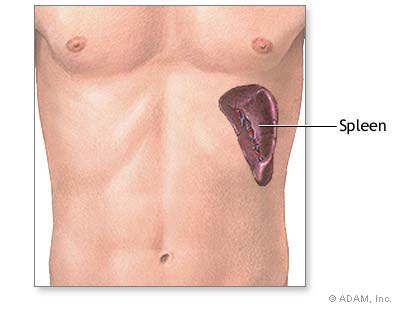
The spleen is an important part of the immune system. It is especially important for fighting off certain types of infections. People who have had their spleen removed or whose spleen is not working properly are therefore at greater risk of some infectious diseases. The risk of infection is highest in the first few years after the spleen is removed or stops functioning, but the risk remains increased for life. In general, people who are immunocompromised (i.e. have a weakened immune system (including lack of a working spleen)) can get sick from microorganisms that would not usually cause illness in other people, and bugs that would only make most people mildly ill can cause severe infections in immunocompromised individuals. This is a particular problem in children. Kids that have their spleen removed are often treated with antibiotics for a few years to help prevent infections.
Infection with Streptococcus pneumoniae and Haemophilus influenzae, which are both common pathogens of humans, are two of the major concerns in people without a functioning spleen. The most commonly discussed zoonotic disease threats in these individuals are the bacterium Capnocytophaga canimorsus and Salmonella. Capnocytophaga lives in the mouth of a large percentage of healthy dogs. Infection in immunocompromised people typically occurs as the result of a bite, but is very rare in other people. There is no indication to test dogs for Capnycytophaga, because it is difficult to identify and we do not know how confident we can be about a negative result (e.g. it may be in the dog's mouth even though it doesn't grow from a sample in the lab).
Here's some general advice for individuals who don't have a working spleen:
- Talk to your physician or an infectious disease specialist about the risks associated with animal contact (including pets).
- In general, you do not need to give up your pets. The risk of infection may be increased, but the risks can be minimized in most situations, and the risks are often outweighed by the beneficial aspects of pet ownership.
- Be wary of any possible exposure to an infectious disease, and be diligent about infection control precautions. If you are bitten by an animal (of any kind), see a doctor as soon as possible.
- Make sure your pets do not touch any open wounds you may have. In particular, do not let a dog lick skin that is damaged in any way. Since Capnycytophaga is commonly carried in the mouths of healthy dogs, licking in general should be discouraged.
- Don't feed your pet raw meat or raw treats, because this increases the risk exposure to Salmonella from your pet's stool.
- Be very careful when handling stool to avoid contaminating yourself or other objects/surfaces. If you have a cat, ideally its litterbox(es) should be changed by someone else.
- Always wash your hands well (and frequently) after contact with pets and pet foods, including dry commercial pet food (kibble).
Dog Bite Septicemia - Capnocytophaga canimorsus
Lots of people have heard of cat scratch fever (an infection caused by Bartonella henselae, which is often transmitted by cat scratches and bites), but dog bite septicemia is a much less familiar condition, although it is equally if not more serious when it occurs. As the name suggests, the infection (caused by the bacterium Capnocytophaga canimorsus) is typically transmitted by dog bites, and causes an infection of the bloodstream, resulting in very serious body-wide illness. The bacteria can also cause other types of infection including meningitis, endocarditis (infection of the heart valves) and rarely ocular infections.
One study reported that 16% of dogs carried C. canimorsus as part of the normal bacteria in their mouths. Compared to the number of dog bites that occur, C. canimorsus infection is relatively uncommon. Most of the people affected by this bacteria have some kind of predisposing factor, particularly having had their spleen removed (splenectomy), having a weakened immune system, or being an alcoholic. The majority of cases occur in people who have regular close contact with dogs or who were bitten by a dog. Septicemia with C. canimorsus is fatal in approximately 1/3 of cases.
Prompt attention and treatment of dog bites is the best defence against bite-associated infections, including C. canimorsus. The bacteria are typically susceptible to many different antibiotics, but if treatment is delayed too long, the damage to the body may be too severe for the patient to survive.
ALL bite wounds should be taken seriously, and immediately washed thoroughly with lots of soap and water. Consult a physician for any bite on the hand, over a joint or tendon sheath (such as on the wrist or ankle), over any kind of implant or prosthesis, or in the groin area. It is also very important to consult a physician regarding treatment of any bite to a person with a compromised immune system, who has had their spleen removed, or who has any serious underlying chronic disease. Animal bites should also be reported to the local public health department.
More information on bites, much of which is also applicable to dog bites, is available on the Worms & Germs Resources page on the cat bites information sheet.
Picture: Trained attack dog Samo leaps forward toward a decoy's arm wrap as Tech. Sgt. David Adcox restrains him. (USAF Photo archives)