
The other day, I did a half-hearted tick drag while walking Ozzie in our back field (yes, I know that’s strange, but let’s move on…). It was far from a professional job – just me dragging a blanket through the field as we walked, but it did the job. It quickly picked up a tick, that I quickly dropped – by accident (I’ve fortunately moved beyond the point of being freaked out about ticks). However, I had a an more effective tick-dragger with me: Ozzie. When we got back to the house, my towel was clean, but my dog was not – we found not one but three ticks on him (and none on me… I checked). It really didn’t stress him out too much.
Although we’d been walking through a hay field through which I’ve cut a walking path, Ozzie of course trolls through the longer plants and leaf litter along the side of the field, which is classic tick territory, so it’s not overly surprising that he’d pick up some ticks. Not surprising these days at least, but it would have been about 5 years ago. Up until then , I’d never seen a tick on one of my animals (or myself, or my kids). Things have changed a lot in those years.
It’s noteworthy that Ozzie picked up black legged ticks, Ixodes scapularis (first picture below).
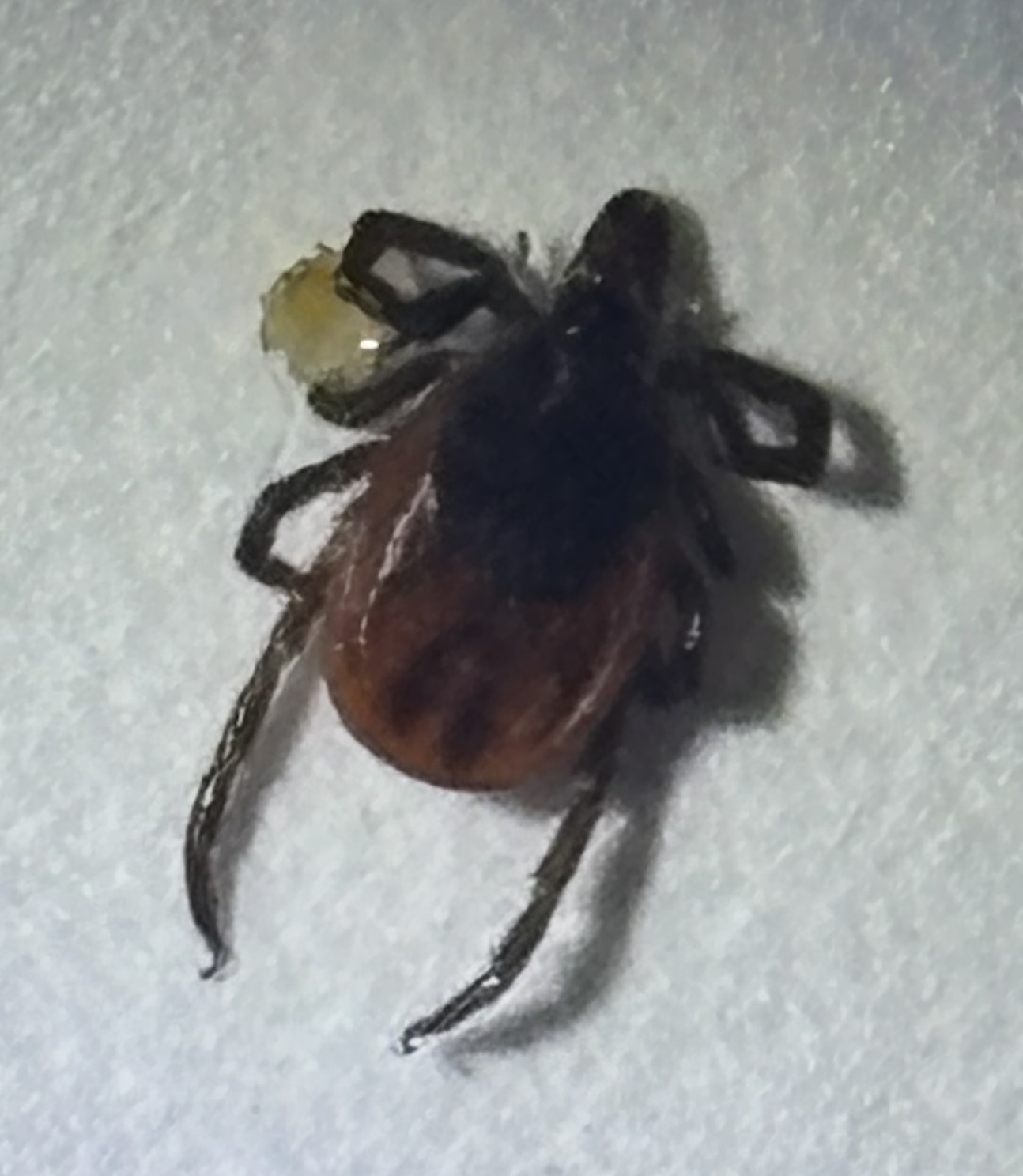
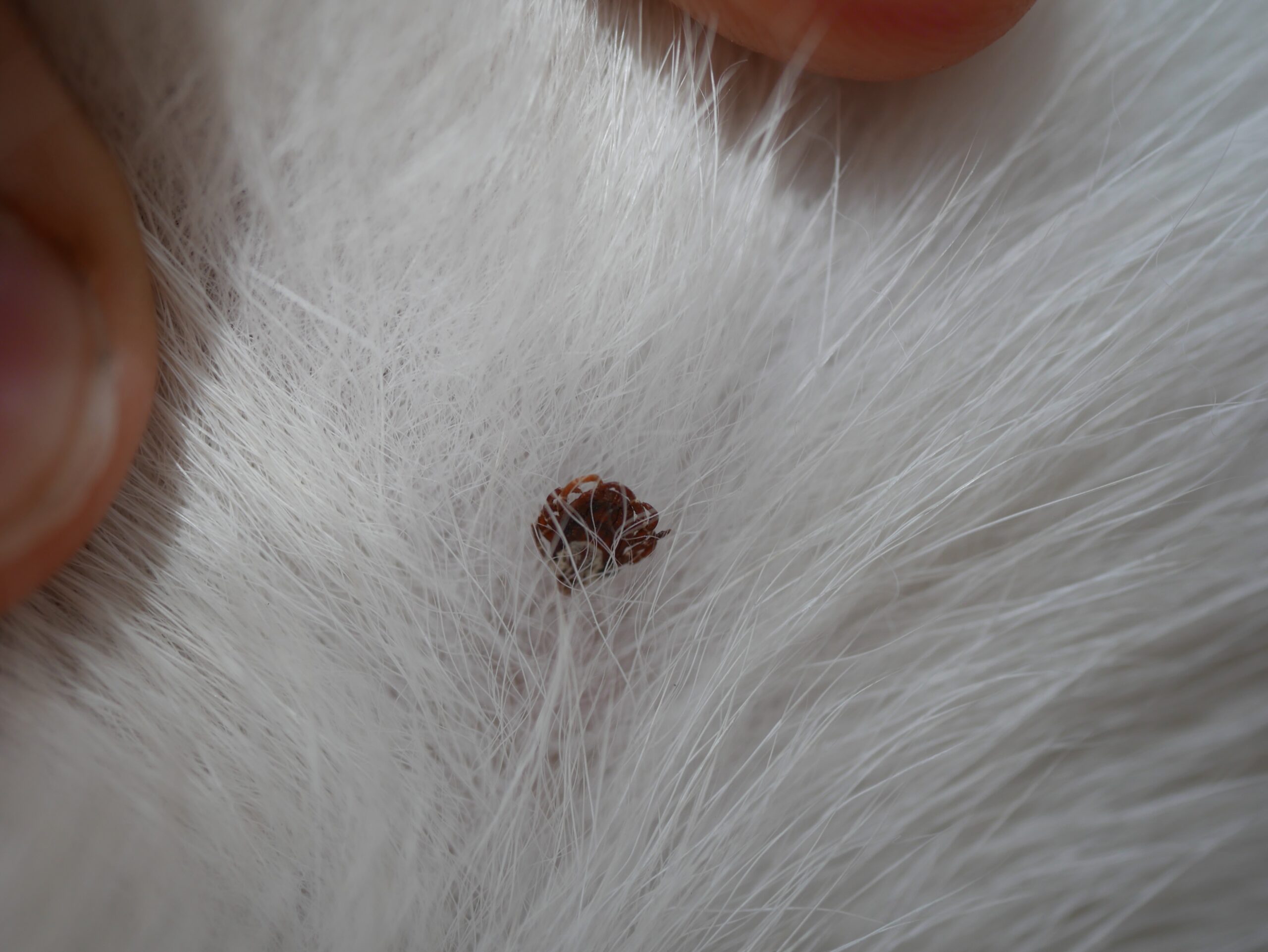
That’s the first time I’ve seen that type of tick here, but I’ve been expecting it as it’s been steadily moving into the area. Ixodes scapularis is one of the vectors of Lyme disease and anaplasmosis, diseases that affect both dogs and people. When we first started seeing ticks in this area, they were all American dog ticks, Dermacentor variabilis. The next picture below is one of these ticks which we found on Ozzie earlier in the year. We’ve traditionally considered that tick to be pretty benign in Ontario, but the recent detection of Rocky Mountain Spotted Fever in Long Point, Ontario might change that.
Tick exposure risk definitely varies over the seasons of the year.
Tick exposure risk drops substantially in the winter, because when the temperature is below 4C (or maybe 0C), ticks aren’t looking for hosts (questing). Ticks also tend to stay hidden in protected areas during hot, dry weather, so there is also usually a lull in tick exposures in late summer.
There’s also seasonality to what tick species dogs or people are likely to encounter. Fall is black legged tick season here, with almost none of the American dog ticks we see at other times, but the American dog tick season here may be getting longer as we seem to be finding them later and later in the season lately.
Ozzie’s on tick prevention medication, so any ticks that attach should die within hours. That’s great for preventing Lyme disease and anaplasmosis, as those take at least a day to be transmitted from the tick. It’s a bit less effective for Rocky Mountain Spotted Fever, since ticks can transmit the bacterium that causes that disease (Rickettsia ricksettsii) much quicker, and there’s overlap between the potential transmission time and the time that it takes tick preventatives to work. The preventatives are still very useful, but they aren’t 100% effective at stopping all pathogen transmission. So, other risk reduction measures such as avoiding high risk areas and tick territory (e.g. long grass and leaf litter) and doing regular tick checks are also important. We’re fortunate that Ozzie is a yellow Lab, as it’s not hard to find ticks on a dog with a short light-coloured haircoat. Darker dogs and dogs with long hair are a much bigger challenge. Tick checks are likewise far from 100% effective, but they’re an important part of the toolbox.
There’s also an important dog factor to consider with regard to the risk of human exposure to ticks. The ticks we found on Ozzie after the walk weren’t yet attached to him, they were just wandering around in his hair coat. If left alone, they’d most likely they’d attach to him quickly and subsequently die because of the tick preventative he’s on. However, loose ticks can also fall off a pet or be transferred to people or other animals that weren’t necessarily exposed to the environment where the tick originated. I’ve found the odd tick free in the house that presumably hitched a ride in on Ozzie. Ticks checks on dogs can therefore also help protect people by preventing loose ticks from ending up in the indoor house environment.
Knowing about local ticks and tickborne diseases is important for everyone, dog owner or not. It helps us understand when and where the risks are highest, and informs the types and intensity of prevention measures we need to use.
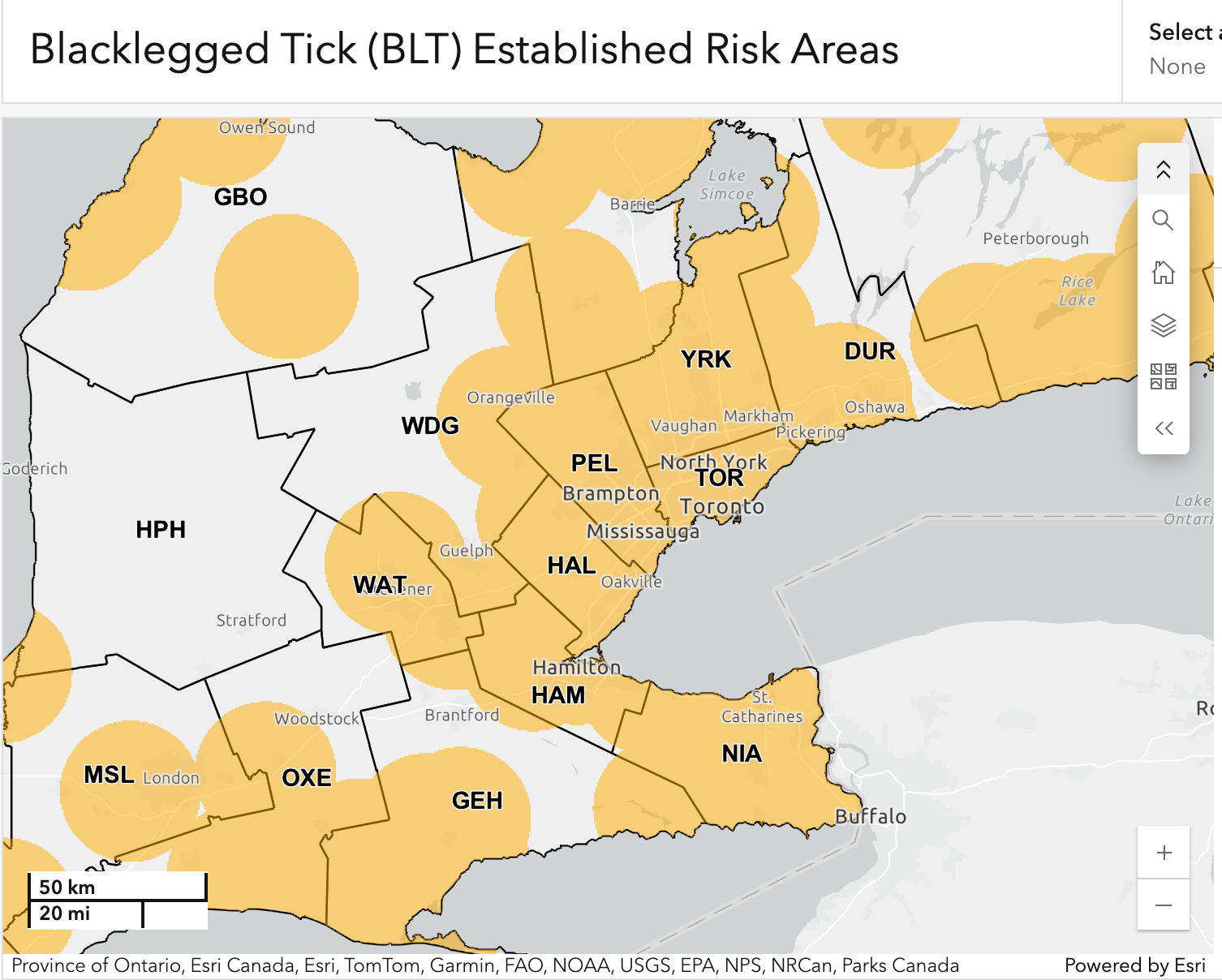
Public Health Ontario has a relatively new online interactive vector borne disease tool that shows high risk areas for black legged ticks, and provides information about the incidence and distribution of various vector borne diseases (in people). The black legged tick risk map shows our property just within one of the risk zones, which fits with the changes we’re seeing.