
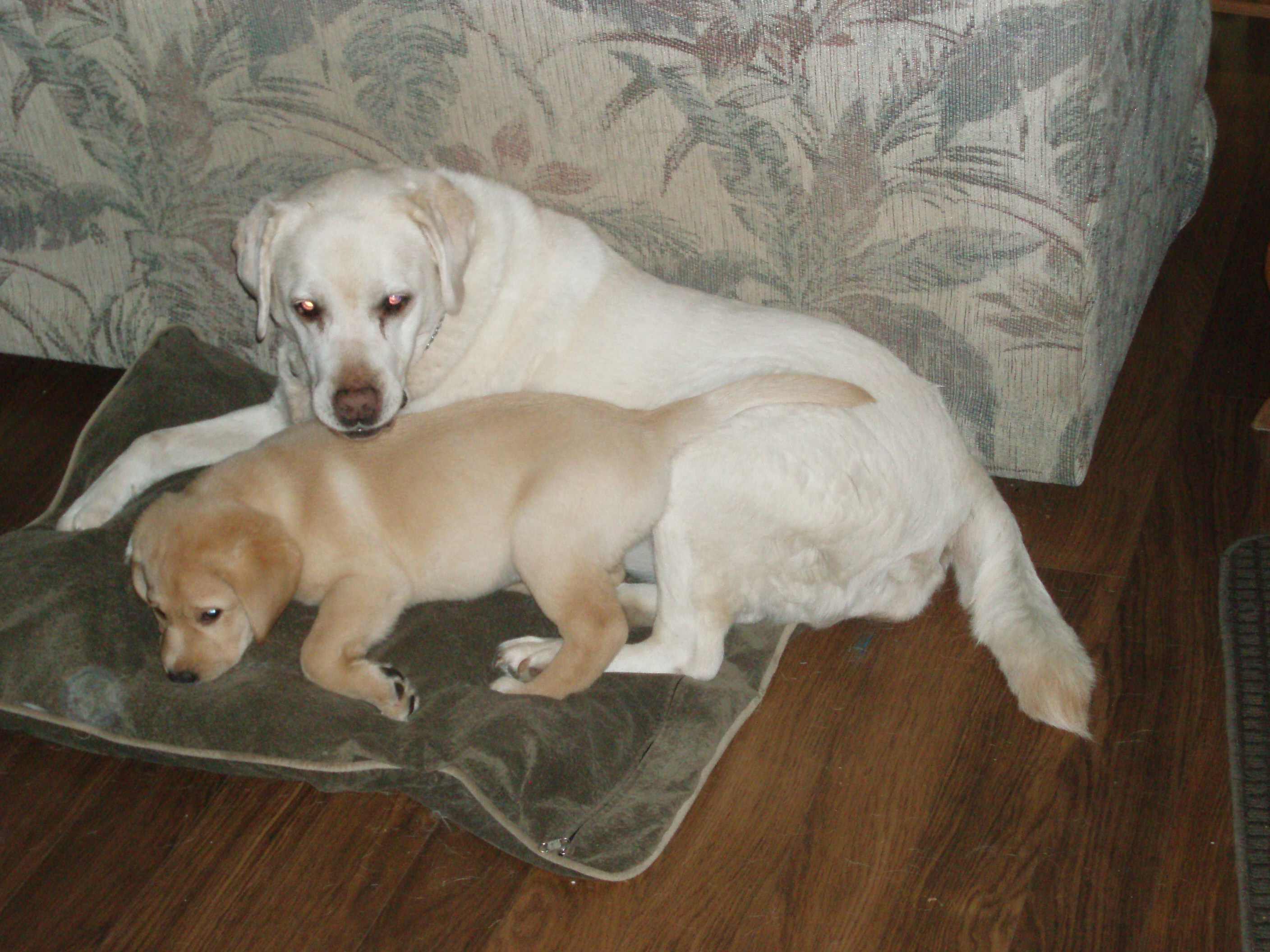
Life with Merlin is going fairly well and the house training has been surprisingly good (so far). He was straining a bit to poop yesterday so I was wondering if diarrhea was on the way. Diarrhea wouldn’t be too surprising since he’s had a pretty good shock to his system with a big lifestyle change and a new diet (gradually transitioned, but a change nonetheless). But, so far, so good.

This morning, I collected a fecal sample from him. I’m getting it checked for parasites, as I mentioned the other day. I also did fecal cytology, out of curiosity and because I can do it easily and quickly in my lab. Fecal cytology is a controversial area for diagnosis of bacterial intestinal disease in dogs. Some people use it to diagnose "clostridial" disease and certain other problems. A common statement is that seeing  more than 5 clostridial organisms per high power field under the microscope is indicative of a problem. However, a recent American College of Veterinary Internal Medicine consensus statement on the diagnosis of bacterial enteropathogens basically said that this "rule" is pretty useless (disclaimer: I was one of the authors). Yet, some people continue to use it.

Why do I think it’s useless?

  • There’s no evidence indicating that it’s accurate. All of the (very few) studies that have looked at this test in dogs have found it to have no usefulness for diagnosis.
  • On a fecal smear, you look at a couple of hundred bacteria. That’s a miniscule percentage of the trillions of bacterial present in the animal, and there’s no assurance that bacteria are equally distributed, so there’s no way to tell if what you see is truly representative of the entire bacterial population (it probably isn’t).
  • There are a few hundred species of Clostridium. Only a few species are known to cause disease. Many of the others are probably important components of the intestinal bacterial population that are important for gut health, so they should be there.
  • You can’t identify a Clostridium species by looking at it under a microscope. It looks like a purple rod when using a typical Gram stain. The "bad" clostridia look no different than the "good" clostridia. Also, there are many other bacteria that have the same appearance. So, finding lots of "clostridia-like" organisms is incredibly non-specific – it really doesn’t tell you much of anything.

Back to Merlin’s poop sample: When I looked under the microscope, I could see lots of clostridia-like organisms. Certainly, there were more than 5 per high power field. Yet, he’s bright, alert, eating well, and has formed stool. Yes, something could be brewing but I don’t see any real sign of that. Some people would treat him with an antibiotic such as metronidazole based on this cytology finding alone. I think that’s a bad idea because he’s not sick, I doubt he’s getting sick, I have no evidence that he has an intestinal bacterial disruption that needs to be treated and the last thing i want to do is mess up his developing intestinal bacterial population with an antibiotic. That’s just asking for trouble.

So, no antibiotics for Merlin. Dewormer… that’s another story.

The new puppy, now named Merlin, is keeping things busy around here. (Note to self: avoid getting a new puppy during miserable weather.  Standing in pouring, driving rain at 4 AM is not fun. Okay, enough whining.)

Yesterday, I wrote about the new puppy’s deworming plan. One thing I forgot to mention was the rest of the "herd." By that, I mean Meg, our 11-year-old Lab. Herd health gets a lot of attention in food animals and to a lesser degree in horses, but many concepts remain important for pets. Specifically, when you introduce a new member into the herd, you might change disease risks or required preventive measures for other members of the herd.

Meg lives a pretty cat-like existence. She sleeps, eats, walks far enough to go outside to pee and, well, that’s about it. As an older dog who has very rare contact with other dogs, her risk of exposure to many microorganisms, such as parasites, is limited. However, since we brought a new little furry vector into the house, Meg might be exposed to some things that haven’t been much of a concern in the past. Her habit of eating whatever she can find (including poop), increases that risk further. So, what’s the herd health plan?

It’s not too detailed, actually.

  • One thing is making sure that we deworm Meg and we don’t just focus on the puppy. She might be exposed to anything the puppy is/was shedding. We’re usually pretty lax on deworming her in the winter months, but she’ll get a couple of doses of dewormer alongside the puppy. 
  • Poop removal. Since Meg’s a notorious poop-eater, we’ll want to remove Merlin’s waste promptly. That’s pretty straightforward. If she can’t find it, she can’t eat it. It’s also important to make sure that old feces aren’t left around, because some parasites require time in the environment to become infectious, so regular feces removal prevents accumulation of infective forms of some. The current temperature is at the lower limit of where Toxocara eggs are able to develop into infectious larvae, and the risk will probably be pretty minimal as the temperature drops over the next few days, but it’s not hard to make sure the yard gets cleaned up.
  • If we find something in the puppy, then we’ll have to consider whether Meg might be exposed or at risk too, and decide whether she needs to be tested or treated.

The other aspect of the herd is the non-canine component of the household (i.e. the kids). The key points for that, in terms of zoonotic parasites, are cleaning up feces from the yard, avoiding fecal contact, hand washing, treating the dogs appropriately to reduce parasite shedding and other basic feces-avoidance measures.

Here is another equine update from guest blogger, Dr. John Prescott of the University of Guelph.

Research presented at the Ninth International Equine Infectious Disease conference last week in Lexington, Kentucky, highlighted the dramatic impact that the latest inexpensive genome sequencing techniques are having on understanding microbial disease. 

This is well illustrated by an epidemic of S. zooepidemicus upper respiratory tract infection in horses that occurred in Iceland in 2010, described by lead author Sigrídur Björnsdóttir of the Icelandic Food and Veterinary Authority. The infection itself was relatively mild but lasted about 4 weeks, and over the course of the summer affected a large proportion of Iceland’s horses. It caused a headline-stopping movement and export of horses. The disease presented as a laryngitis and persistent dry cough, with a serous [watery] nasal discharge. The infection started at a facility with a water treadmill, and was rapidly disseminated by horses moving from there to 18 other centres across the country, with a high transmission rate to horses within these stables. Since S. zooepidemicus was isolated from the nasal exudate only as the disease progressed, veterinarians investigating the outbreak thought at first that these isolates were opportunistic or secondary invaders, layered on top of an unknown virus infection.

This is where bacteriologists Andrew Waller and Carl Robinson from the United Kingdom’s Animal Health Trust in Newmarket and Matthew Holden from the Sanger Centre in Cambridge became involved. Incredibly, these researchers sequenced the genomes of 290 isolates from the outbreak as well as from an earlier national collection. They used this information to find, to their astonishment, that S. zooepidemicus Sequence Type 209 was responsible for the outbreak. This strain was isolated from the affected farms all over the country, as well as from a case of miscarriage in a person. It could clearly be linked epidemiologically to the outbreak; the date that the infection started was pinpointed to within 5 days. The epidemic occurred so quickly that the genomes of this strain showed almost trivial variation compared to S. zooepidemicus strains that were more established in Icelandic horses.

This is the best description ever of the impact of introduction of a more virulent S. zooepidemicus into a naïve horse population, and will change forever the way that equine veterinarians will think about this underrated pathogen. It illustrates the enormous power of genome sequencing in bar-coding the bad guy.

Andrew Waller also gave a really interesting talk about the diversity of S. zooepidemicus. Sequencing and “sequence typing”, based on multilocus sequence typing (MLST), has identified over 300 sequence types of this species. What is emerging from this is the recognition that difference types cluster with different diseases. For example, strains (sequence types) of S. zooepidemicus that cause abscessation of pharyngeal lymph nodes (“mild strangles”) belong to sequence types that have acquired a bacterial virus carrying a superantigen gene. These are, of course, outclassed by the true strangles organism, S. zooepidemicus subspecies equi, which possesses four bacteriophages with these virulence genes, as well as other nasty characteristics.

Andrew Waller told me that it cost him about $35 to sequence an entire streptococcal genome, which for Canadian veterinarians is now about the cost [Weese comment: or much less than the cost] of sending a swab to a diagnostic lab for culture and sensitivity testing. However, don’t start ringing up the lab to ask for a genome sequence just yet, since the real cost is for the analysis, which is still labour intensive. However, it points the way to the future, which has clearly now arrived, and is changing the way we think about S. zooepidemicus and infection in the horse.


Hide the kids’ toys, tune up the carpet cleaner, get ready for some sleep deprivation… there’s a new dog in the house. Last night, the yet-to-be-named ("he who shall not be named" having been rejected by Heather) little yellow critter arrived. Meg (the existing dog) seems relatively content, or at least resigned. The cat… not so much, but he’s already established who’s the boss.

So, while I’m momentarily not trying to convince the puppy to pee outside, I’ll take this opportunity to hopefully practice what I preach and describe what we’re doing for things like vaccination, deworming and other infectious disease-related topics.

To start things off: What’s the deworming plan?

  • Roundworms (Toxocara canis) are the main concern in puppies. It’s generally a good idea to assume that a young puppy has roundworms, regardless of from where it came and how well cared for it was.
  • Canadian parasite treatment guidelines are to treat puppies with a drug that will kill Toxocara worms at 2, 4, 6 and 8 weeks of age, then monthly until 6 months of age. Our little guy is 9 weeks old and has already been treated a couple of times for roundworms, plus he’s had one treatment for coccidia (a different parasite that was found on a recent fecal exam).  He’ll get another dose of pyrantel pamoate in the next day or two, then monthly until he’s 6 months old. (If someone gets a puppy and it hasn’t been treated like this or its vaccination history isn’t known, it is recommended to give 3 treatments 2 weeks apart, then monthly until 6 months).
  • A fecal exam will be done on the puppy in the near future. It’s not an emergency since it won’t impact what I do at the moment in terms of treatment, but it’s good to see if there are any parasites that aren’t killed by the chosen dewormer (e.g. tapeworms) and to detect resistant parasites (i.e. Toxocara eggs still found in feces after appropriate treatment).
  • No flea treatment now since he doesn’t have any evidence of a flea infestation and it’s not very likely he’ll be exposed to fleas before the spring based on the current climate where we are.
  • No heartworm treatment until the spring either. The Canadian Parasitology Expert Panel (CPEP) recommentaion is for dogs to receive monthly heartworm preventive treatments beginning at a maximum of two months of age. So, I’m not really following that one, but given the time of year, the low prevalence of heartworm in the area he’s from and the fact that the puppy wouldn’t have had too much risk of mosquito exposure because of its age and indoor housing, the risk of heartworm exposure this season is very low.

More updates to come, and hopefully not too many descriptions of how to clean puppy feces off of various surfaces.


Here is another guest blog, this time from the "worm-guy" Dr. Martin Nielsen of the Gluck Equine Research Center at the University of Kentucky.

At the recent 9th International Conference on Equine Infectious Diseases (EIDC) in Lexington, Kentucky several sessions were focused on parasite control of horses. Drug resistant parasites are a world-wide problem in equine establishments, and it has become a challenge to define a simple and useful set of guidelines to be used by horse owners. As many readers of the Worms & Germs Blog will be aware, there is no longer a “one size fits all” program, and parasitologists instead often talk about the complexity related to the different parasites that often infect the horses in concert, their interactions with their hosts, and how to interpret fecal egg counts. While this is all useful and important information, it can be frustrating when it does not readily come with some practical guidance.

Equine parasitology is rarely well-represented at parasitology conferences. Usually, there are less than a handful equine abstracts, and often not even enough for a separate session. The three or so participating equine parasitologists often have to create their own little scientific session over a cup of coffee during the breaks. The EIDC was much different. It had participation from leading equine parasitologists from Sweden, Denmark, Finland, Germany, United Kingdom, Canada, Brazil, and the USA. More than 30 parasitology abstracts were presented at the meeting, and a special session critically addressed the most pressing research needs for equine parasite control. During the conference, an international equine parasitology consortium was formed, and it will serve to coordinate future research efforts and to communicate consensus-based guidelines for parasite control.

So, what are these recommendations then?  New research presented at the EIDC illustrated very well that general recommendations are more straight-forward than often anticipated. Work performed by Kurt Pfister and colleagues in Germany illustrated that fecal egg counts are useful for monitoring and controlling parasite transmission by the means of selective therapy. Two Danish studies illustrated that one or two yearly strategic treatments applied to all horses are advisable to effectively break the life cycle of large strongyles, particularly the bloodworm, Strongylus vulgaris. In other words, a basic foundation of treatments can be defined, upon which the some of the more parasitized horses can be identified to receive additional treatments with a selective approach. Several presentations underlined the need for yearly routine evaluations of the efficacy of the anthelmintic drugs used on each farm. The fecal egg count reduction test is the most important use of the fecal egg counts. [Weese comment: that’s when you do a fecal egg count before and after deworming, and compare the egg counts to see how much they dropped, as an indication of how well the dewormer worked] Perhaps most encouraging was the promising new diagnostic tools presented by several groups for detection of migrating or encysted parasite larvae. These will turn very useful for identifying horses at risk of disease and in need of deworming. One of these, developed by Jacqui Matthews and her group at Moredun Research Institute in Scotland shows great promise for measuring burdens of small strongyle larvae (cyathostomins), which can pose a threat for severe parasitic disease. With these new tools in hand, we will become able to further refine our recommendations in the future.

More from the International Conference on Equine Infectious Diseases, this time from guest blogger and bacteriologist-extraordinaire, Dr. John Prescott of the University of Guelph:

Stellar work on understanding strangles and Streptococcus equi subspecies equi was presented at the Ninth International Equine Infectious Disease conference in Lexington, Kentucky. Researchers at the Animal Health Trust in Newmarket, United Kingdom (Andrew and Carl Robinson) are working with Matthew Holden at the Sanger Centre in Cambridge to use NextGen sequencing to understand better the strangles bacterium, and the impact of the carrier state on the pathogen as it lurks in the guttural pouch. The abstracts of their work are freely available through the conference web site, http://www.eidc2012.com/.

A novel quantitative PCR (qPCR) based on two unique genes of S. equi was was described that will identify S. equi within 2 hours, with a sensitivity of 93% and specificity of over 96%. Not only is it more sensitive than culture but it also overcomes the effects of non-S. equi contaminants which can interfere with culture. Another development reported was an ELISA based on two antigens unique to S. equi that together have a similar sensitivity and specificity to the qPCR. Current thoughts are that the ELISA could be used as a serological test in screening for carriers, with the qPCR then being used on guttural pouch aspirates to confirm the carrier state, which would then be treated.

The strangles (equi) subspecies of S. equi has been thought to be genetically and immunologically identical, but sequencing the M protein SeM gene has shown that there are over 100 strains. Holden and his colleagues have used high throughput sequencing to characterize the genomes of an astonishing 240 isolates from different countries, including one strain from Canada. They have found that genomic diversity is even higher than SeM sequencing had suggested. As a result of this work, they identified a “fitter” clone (ST151) now spreading through the UK population at the expense of an older clone (ST179).

Most interestingly, they have identified the genetic changes occurring as outbreak strains adapt to their different life in the guttural pouch, which is where the organism hangs out in carrier horses. The adaptation involves discarding some genes, stopping the expression of others, but also duplicating others. According to Holden, a Sanger Centre genome veteran, the S. equi genome is more dynamic than any of the other pathogens with which he has worked. The big question is of course the impact of this adaptation on virulence, and the extent and speed with which these genetic adaptations can be reversed if and when the “carrier“ strains revert to cause acute strangles. There is a horrible suspicion that some may be able to borrow back the deleted genes from other S. equi strains in the guttural pouch.

Because of both its species- and niche-adaptation, strangles has all the characteristics of a bacterial infection that can be eradicated. The superb work being done at the Animal Health Trust, all based on genomics, is drawing the noose ever tighter around this ancient scourge of the horse.

– John Prescott, Department of Pathobiology, University of Guelph


Two presentations at the International Conference on Equine Infectious Diseases yesterday discussed equine coronavirus and whether it might be a new or previously unrecognized cause of disease in adult horses. This follows a presentation the day before that mentioned coronavirus diarrhea in racing draft horses in Japan – a rather unique group, pictured at right.

Dr. Nicola Pusterla from the University of California Davis described five suspect outbreaks in boarding facilities from four US states. Seventy-three (73) horses were affected overall, with decreased appetite being the most common sign in affected horses, followed by lethargy, fever, soft manure and colic. Equine coronavirus was detected in the vast majority of sick horses but rarely from healthy horses at the same facilities. Most horses got better without specific treatment, but five horses died or were euthanized. Overall, the attack rate on farms was high but the death rate was low. Fortunately from an infection control standpoint, infected horses only shed the virus for a short period of time (a few days), making control easier.

Dr. Ron Vin followed this presentation with a description of coronavirus involvement in sporadic disease and outbreaks in adult horses from a variety of US states, most often with mild diarrhea and low white blood cell counts. As with the first report, disease severity was usually less than what we see with some other causes of diarrhea in adult horses, such as Salmonella and Clostridium difficile.

One thing that’s not clear is whether this virus is truly a cause of disease or something that’s just being found in horses that have some other undiagnosed disease. No other potential causes were identified in most of the suspected coronavirus infections, but a large percentage of cases of diarrhea that we see go undiagnosed because we don’t know all the possible causes. It’s certainly possible that there was another cause, but these results suggest that equine coronavirus is something for which we should be looking out when we see gastrointestinal (e.g. colic, diarrhea) or non-specific disease (e.g. off feed, lethargic with no other particular signs), especially during outbreaks. The story may be different in foals, since shedding of the virus by healthy foals isn’t uncommon.

Photo credit: http://newshopper.sulekha.com/

I’m at the International Conference on Equine Infectious Diseases in Lexington, Kentucky at the moment, and will try to write about some of the highlights. One interesting discussion yesterday was about canine and equine influenza. It’s well established that canine flu (A/H3N8) originated in horses and subsequently became established in dogs. Canine flu virus is closely related to, but different from, its equine flu virus parent. That raises questions about whether canine flu virus could be transmitted back to horses. The question has significant implications for what should be done with dogs that might have canine flu that may have contact with horses, and for canine-horse contact in general, especially with performance horses.

A study by Yamanaka et al. (Acta Vet Scand 2012) looked at dog-horse infectivity of canine flu by putting infected dogs in stalls with healthy horses for 15 days. All dogs were sick and shedding canine influenza virus, but none of the horses got sick, shed the virus or mounted an antibody response. This study only involved three horse-dog pairs, so we have to be careful that we don’t go too far with the conclusions, but it suggests that while canine flu started off as horse flu, it has changed enough that infected dogs aren’t much of a risk to horses.

But… (yes, there’s usually a "but" with infectious diseases) dogs are susceptible to "normal" equine influenza. It’s uncommon, but dogs can be directly infected from horses with the classical equine H3H8 flu virus. In such a situation, dogs might pose a risk to horses because they are carrying the  equine virus, not the adapted canine version.

So…

  • If a dog has influenza that is known to be non-horse associated (i.e. typical canine flu) then there’s probably little concern for horses.
  • If a dog has influenza and there’s no clear dog link (or there’s a link with infected horses), it’s reasonable to assume that the dog could transmit the virus to horses.

However, why take the chance? It seems logical to ban any dog with a suspected respiratory infection from horse barns. It also makes sense to ban dogs from barns with equine flu cases. It’s an easy, cheap, minimally disruptive and potentially useful flu control measure that might help reduce transmission of this important virus in both directions.

In response to an equine herpesvirus type I (EHV-1) outbreak at Hawthorne Racecourse in Illinois, the Ontario Racing Commission (ORC) announced movement restrictions on horses from Hawthorne, and Illinois in general.

Effective immediately:

  • Any horse that has been on the grounds at Hawthorne since Oct 4 is not allowed on any Ontario racetrack until 30 days after Hawthorne’s quarantine is lifted
  • All horses from Illinois being shipped into the Woodbine or Fort Erie racetracks must come with a certificate that states "Horses represented on this Certificate of Veterinary Inspection have not originated from a barn or premises that is under quarantine for herpes virus, nor have been exposed to a confirmed or suspect case of herpes virus, nor have shown clinical signs suggestive of herpes virus, nor have been febrile within the previous three weeks."

All other tracks are also advised to be cautious about accepting horses from Illinois, but restrictions are at the discretion of individual facilities.  The ORC is also recommending that all horses from Illinois are examined and their temperatures are taken prior to being admitted to any track.

Basic physical examination and body temperature checking can be great infection control measures when used on a routine basis. Too many sick horses make it onto tracks, show grounds and into sales, and while checking temperature is by no means 100% protective, it’s an easy, cheap and a quick way to identify potentially infectious horses. Yet, it doesn’t happen. Considering the potential implications of a single infectious horse making it onto a track, it doesn’t make sense that more effort isn’t put into routine practices like these. Yes, it would take a couple minutes, but if it prevents one infection (let alone an entire outbreak), it’s worth the minimal effort.

As an aside, I’ve always been baffled why places like yearling sales won’t consider employing such measures –  well, maybe not baffled because sending sick horses home costs the sale money.  But considering how common infectious diseases are in horses after sales, it’s hard to understand why buyers are not pushing sales to do what they can to make sure buyers aren’t spending big money on damaged goods, i.e. sick horses. I’d like to think that a sale could make it a great marketing point by touting their strong infection control program to convince buyers to come and spend their money with less chance of getting a sick horse.

It’s always hard to say what the best approach is for handling EHV infections. On one hand, it’s a very common virus that is lying dormant in the bodies of a large percentage of healthy horses, everywhere. On the other hand, we certainly know outbreaks of serious disease happen and horse-horse contact and movement of horses helps outbreaks spread. These Ontario restrictions are pretty straightforward and common sense, but thought should be given to what other measures can be taken on a routine basis to help reduce the risk of EHV-1 outbreaks from developing in Ontario, and to control the numerous other infectious diseases that affect more horses every year.

In the latest edition of the American Animal Hospital Association’s Trends magazine, there’s an article about veterinary clinic design. The section dealing with exam rooms says:

Discussion is ongoing about whether sinks are needed in the exam room now that hand sanitizers are available.

  • I’m not sure who’s discussing this. Hand sanitizers are great and should be used as much as possible, but that doesn’t mean handwashing is obsolete. Some pathogens we deal with are resistant to alcohol, such as parvovirus, Clostridium spores and ringworm. We need to wash hands when these bugs might be present. Hand sanitizers also don’t help if you have chunks of pus, blood or feces on your hands. If there’s no sink in the exam room, handwashing usually won’t be done when it’s supposed to be. If someone has to leave the room and walk to a sink, it just doesn’t happen often, even if it’s a short distance. A person also runs the risk of contaminating other surfaces along the way, between the exam room door and the sink.

Experts agree, however, that if you have a sink, your clients will expect you to use it to wash your hands.

  • I’m not sure who these experts are, or what they’re experts in. Certainly not common sense or infection control. What they’re implying here is that pet owners will think veterinarians aren’t doing a good job if they see a sink and the vet doesn’t use it, but that if no sink is present, no one will think twice about a vet failing to practice good hand hygiene. If an owner is going to clue in to the presence of the sink and failure to wash hands (something we should be encouraging), their common sense and observation skills won’t evaporate if there’s no sink.

This is similar to an interview with an architect on dvm360.com where the guy says "if I have a sink I better wash my hands or the client thinks my hands aren’t clean. In many cases it’s better off not to have a sink…" (note: the banging you hear is me hitting my head against a wall). The same architect cited in this article, so hopefully he’s actually the only one pushing this approach.

Pet owners aren’t dumb.

Infection control isn’t rocket science.

Handwashing is important and under-used.

We need sinks in exam rooms.

Common sense needs to be more common.

It’s difficult to put sinks in existing exam rooms – some clinics just can’t do this easily. That’s tolerable if they are diligent in their infection control practices, use hand sanitizers as appropriate and make sure they get to a sink (without contaminating things along the way) when they need to wash their hands.  Not putting sinks in a newly designed clinic is just dumb.