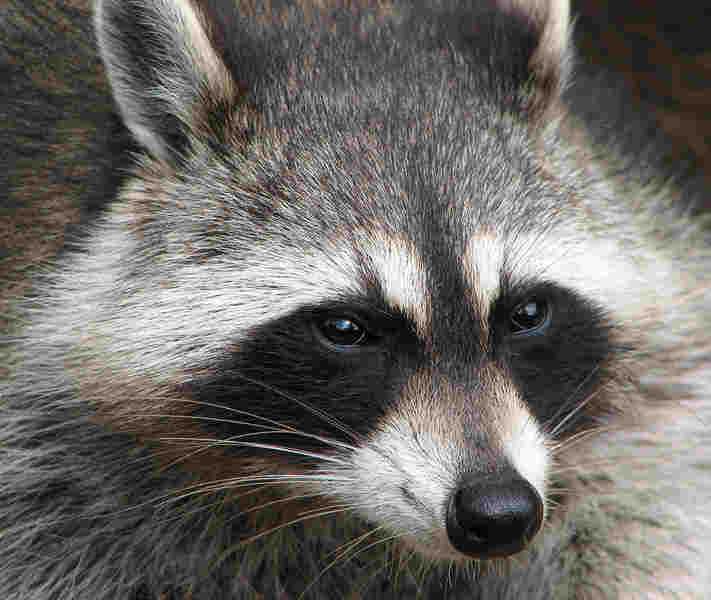
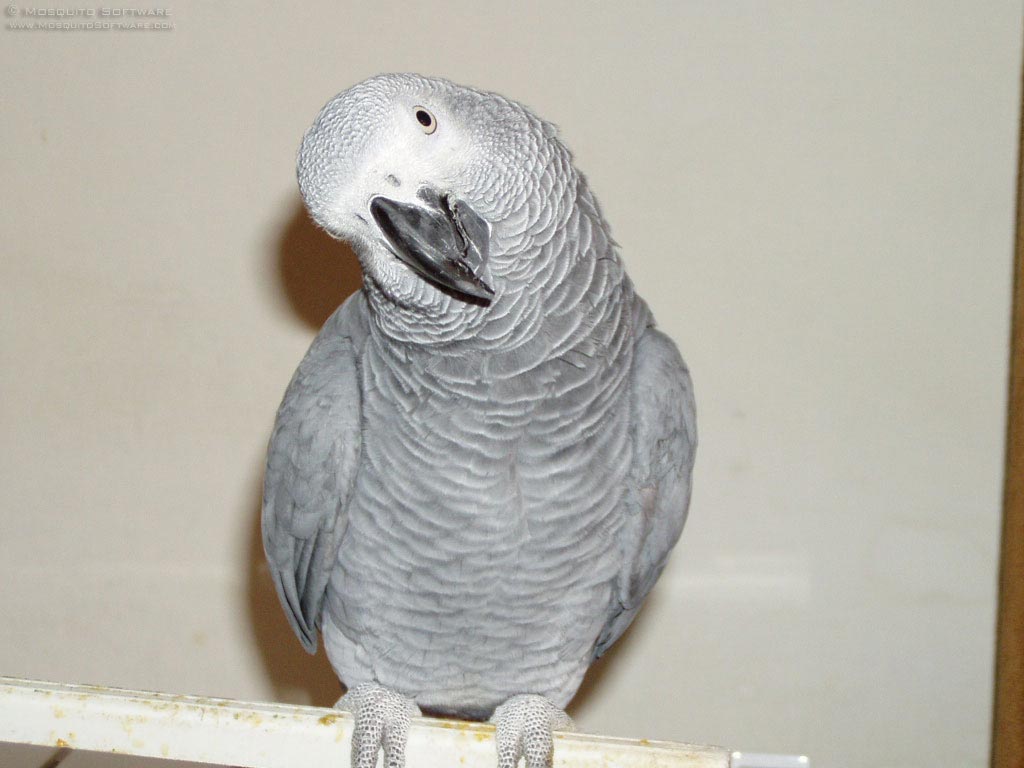
 An article in the May/June edition of Canadian Vet Newsmagazine (a magazine, not to be confused with Canadian Veterinary Journal, a scientific journal), described an interesting case of an indoor pet bird acquiring an infection from a wild raccoon, despite no direct contact.
The bird was an African Grey Parrot that was admitted
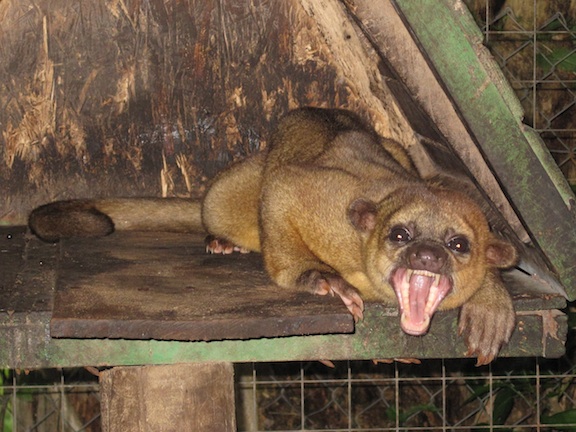 Kinkajous
 An interesting paper in the journal
  Recently, I was speaking with a physician who mentioned that a colleague has recommended that people with raccoons in their yard get rid of their dogs because of the risk of Baylisascaris procyonis. This parasite, also known as the raccoon roundworm, can cause severe neurological disease in people that ingest infective parasite eggs from the
 There was another paper published in the August issue of the
  We’ve written various posts about raccoons,
  If you live in the suburbs of Chicago (or probably many other cities as well), chances are pretty good that you live close to a raccoon latrine. Raccoons like to defecate in specific areas (raccoon latrines) which can become highly contaminated with eggs of Baylisascaris procyonis,
  A reader posed this question, with respect to having raccoons living around the house:
 Spring appears to have finally sprung in earnest in Southern Ontario (although we may still get one more frost on the weekend, so I hear) and people are getting back out into the garden. An increasingly popular trend in recent years, particularly this year now that