
Last month, the Public Health Agency of Canada (PHAC) issued a somewhat vague notice about an ongoing outbreak investigation of Salmonella infections linked to dog food and treats. At the time they were still unable to identify a specific brand or manufacturer to which the outbreak had been linked.
This week PHAC posted an update on the outbreak investigation, which has linked some (but not all) outbreak cases to Puppy World and Puppy Love brand dog treats. So far, the outbreak strain of Salmonella Oranienburg has been identified in Puppy World Lamb Lung Treats, Puppy Love Chicken Wing Tip Treats, Chicken Breast Treats, Beef Chew Treats and “Twisty Jr” Beef Treats.
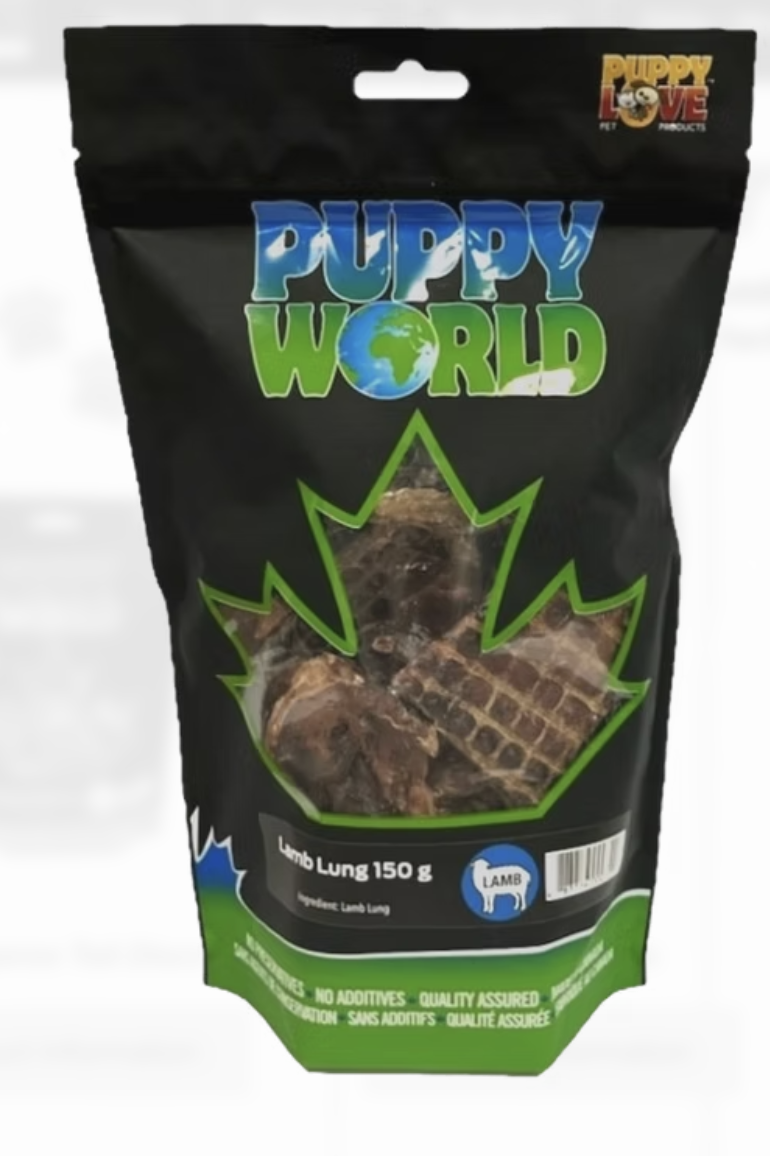
People often forget that many dog treats are in fact raw animal-based products. Even if they are freeze dried or dehydrated, they are still raw and therefore associated with increased risk of contamination with Salmonella and other pathogens (including H5N1 influenza virus, as has been seen in the US). Salmonella-contaminated dog treats may pose more risk to people than contaminated dog food as people tend to have more contact with treats. I’d guess (or at least hope) that most people feeding raw diets would handle the food carefully and use basic hygiene practices to prevent cross-contamination of surfaces, hands and human food. But when treats don’t look or feel overtly “raw,” it’s easy to see people skipping those basic measures (like hand hygiene).
The number of human infections in the current outbreak is now up to 31 (including a second case in Ontario). That means the true number is probably in the hundreds, as it’s been estimated that 26 people are infected for every reported case of salmonellosis (which would be up to 806 cases for this outbreak). The other cases are still mostly from BC and Alberta, and one case from the Northwest Territories, showing the widespread exposure and highlighting the challenges of such an investigation, even when tied to a fairly small manufacturer. This outbreak has been slowly burning along from February to September, and is potentially still ongoing. Other sources of the outbreak strain may still be identified as well.
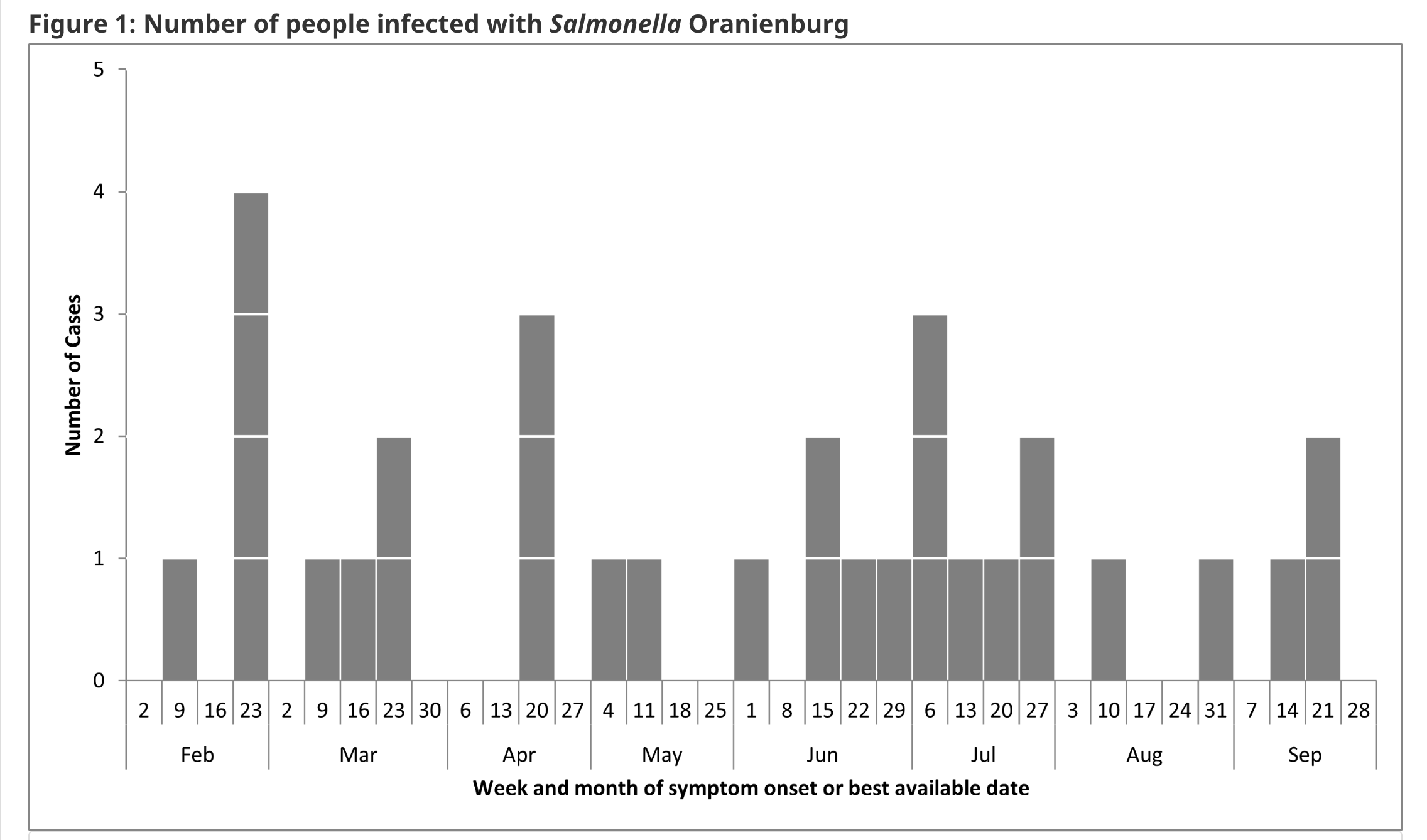
Seven people have been hospitalized, with still no deaths to date. Hospitalized cases are unlikely to be missed, as patients in hospital are much more likely to be tested so the outbreak Salmonella strain would be less likely to go undetected compared to a less severe case in the community. The age range of cases remains unchanged (0-87 years), but is another important reminder about the risk of indirect spread and the need for basic hygiene – an infant is unlikely to be feeding a dog treats (although people do strange things), so cross-contamination of surfaces (including the floor) or peoples’ hands would be the likely source of exposure (or possibly picking up a dog treat left behind by the dog).
There’s been no recall of the implicated treats. The company does not put expiry dates on their products, so that complicates tracking and messaging. There’s no mention in the Public Health Notice about specific lots, just the product names. To be safe, for now I would assume that any bags of those products, and realistically anything from that company, is contaminated.
As is unfortunately typical with websites of raw food companies are implicated in disease outbreaks, there’s currently no mention of this risk or the investigation anywhere I can find on the manufacturer’s website. I will give them credit for at least mentioning Salmonella and the need for hygiene when handling their products; the information isn’t very comprehensive and some is a bit questionable, but it’s a start, and it’s better than other companies that ignore or blatantly misrepresent the risks from their raw products.
Treat image from Puppy Love Pet Products.