
The title from Food Safety Newslatest report says it all: "After eight expansions, how big is the Diamond Pet Foods Recall?" It’s disturbing that we can’t answer that question, considering the contamination stretches back to 2011 and now it’s apparent that there are problems with another one of their plants.

Accordingly to Food Safety News, the FDA has indicated Salmonella contamination has been found in Diamond’s Meta, Missouri plant, in addition to the South Carolina plant that’s been at the heart of the recall. However, the Missouri Salmonella contamination is from Salmonella Liverpool, a different strain from the South Carolina plant where Salmonella Infantis has been involved. So, there’s no evidence that the two recalls are linked, although you have to wonder whether deficiencies that were found by the FDA at the South Carolina plant might also be present at other plants, thus creating an increased risk of Salmonella contamination.

Anecdotal information about sick animals and people associated with this recall abounds, in stark contrast to information from Diamond Pet Foods. It would be nice to have some clear communication from the company about this outbreak, and some information about what they are doing to control it and prevent it from happening again. The continued expansion of the recall and contamination is concerning, and in the absence of clear communication from the company it’s hard to have confidence in the safety of any more of their products.

A 50-year-old UK woman, the first of two recent travel-associated rabies cases in the UK, has unfortunately but not surprisingly succumbed to the infection.

The woman was bitten by a puppy while traveling in India. Given the widespread nature of rabies in dogs in India and the large number of human rabies deaths associated with canine rabies there, this was a high-risk exposure. I still haven’t seen any information about whether she sought medical care in India or not. Too often, people don’t bother to go to a doctor after being bitten, especially if the bite appears minor – but even a minor bite can transmit rabies. Furthermore, people don’t always get the care they need, since rabies treatment is astoundingly not always offered after dog bites in India, and rabies vaccine and antibody may sometimes be in short supply.

Whatever happened in India, the woman was reportedly turned away twice by doctors back home at Darent Valley Hospital in Dartford, Kent. It’s not clear why, and an investigation is underway, but it’s not necessarily surprising since signs of rabies can be very vague at first. Initial signs could mimic a range of minor illnesses, and if the doctors didn’t know that the woman was bitten by a dog in India, rabies presumably (and reasonably) wouldn’t be considered, especially since it’s not present in the UK.

In what is hopefully a case of misquoting or misinterpretation, Dr. Ron Behrens of the London School of Hygiene and Tropical Medicine is quoted as saying that there is a 24 hour window after a bite when antibody treatment can prevent the virus from entering the nervous system. In reality, it’s not that quick and the incubation period can be very long in some cases. Post-exposure treatment can be highly effective even if it’s given well after exposure, as long as it’s before signs of rabies occur. Prompt treatment is always best.

It’s apparent that there’s an ongoing outbreak of LDDD, a potentially fatal dog-associated problem in people in this area. It seems to be a seasonal disorder, with nice weather bringing out more cases. I’ve seen a couple nasty cases in the past 24 hours, including one tonight that could have resulted in the deaths of an entire family.

What is LDDD?

A new bacterial infection? No.

A new virus? Nope.

Contrary to the focus on this site, it’s not even an infectious disease. It’s lap dog/dumb driver syndrome

Tonight’s case was fairly classic, involving the driver of an SUV and a small dog…on the driver’s lap with its head out the window. The driver had one hand (and I’m not sure how many eyes) on the dog, and the SUV swerved off the road, but fortunately not all the way into the ditch (or a pedestrian, cyclist or other vehicle).

In Ontario, it’s illegal to drive while using a cell phone. Restraining a small (or not so small) dog on your lap has to be at least as distracting and it’s far from rare. A little common sense goes a long way, but common sense isn’t always that common.

Just as I was getting ready to write about a recent case of travel-associated rabies in the UK, a second suspected case has been identified in the UK. They’re not linked and it’s just a co-incidence that the two have been identified in a short period of time, but they highlight the potential risks of rabies during travel.

The first report is about a confirmed case of rabies in a woman in her 50s who was bitten by a dog in India. At last report, she was being treated in hospital, although the prognosis is presumably extremely poor if treatment was started after the onset of disease. Public health officials have investigated people who were in contact with the woman to determine who needs post-exposure treatment.

There’s not much information in the most recent report, beyond the fact that a suspected rabies case was detected in a person in Leeds following a dog bite that occurred abroad. There’s no information yet (at least that I’ve seen) about where the bite occurred, the condition of the patient or whether the person received medical care after the bite.

While travel-associated rabies is very rare, it’s almost always fatal. It’s almost 100% preventable too, and any cases that occur typically reflect a breakdown in knowledge, communication or medical care.

Knowledge/Communication: People need to know about rabies, and be aware that any bite from a mammal in a rabies-endemic area should be investigated as a potential rabies exposure. They need to know about the risk of rabies in areas they visit, and avoid situations that might lead to a bite. Travelers and non-travelers alike need to know to go to a physician after any bite and to ensure that rabies exposure is duly considered. Individuals traveling abroad need to know how to access the healthcare system where they are, communicate the problem and act as their own advocate to make sure things are taken care of properly.

Medical Care: With proper post-exposure treatment, rabies is almost 100% preventable. The problem is getting the treatment in a timely manner. Knowing to go to a doctor is one issue. Getting proper care once there is another, particularly in some countries where access to rabies vaccine may be limited or where the healthcare system is poor. Rabies exposure is a medical urgency, not an emergency (although the more severe the bite and the closer to the head, the more important it is for a prompt response). If someone has had a potential rabies exposure and they aren’t getting proper care, they need to get home (or somewhere else) where they can obtain the appropriate treatment. That doesn’t mean panicking and getting on the first flight out of the country, but it also doesn’t mean waiting until your planned vacation is over. It means getting home in good time, while not freaking out if it takes a day or two.

There have been various news reports from different parts of North America describing distemper outbreak in raccoons. Distemper is a viral infection caused by canine distemper virus, which is related to the human measles virus (but the canine version can’t infect people). A variety of animal species in addition to dogs can get distemper, most notably raccoons.

Distemper outbreaks are not uncommon in raccoons, and one big problem with distemper is that the neurological signs cannot be distinguished from rabies. Yes, there may be some general trends in how a raccoon with distemper behaves that differ from one with rabies, but it’s far from definitive. That creates issues because distemper is of absolutely no human health concern while rabies can be transmitted to humans and is almost invariably fatal.

A Windsor-Essex (Ontario) outbreak of distemper in raccoons highlights some of these issues and the care that must be taken with regard to public communications.

Authorities are “urging the Windsor-Essex public not to worry about a rising number of incidents with strange-acting raccoons: The poor scavengers are suffering from distemper, not rabies.”

  • This is bad communication in my opinion. I’d rather see something like authorities are "urging the public the avoid raccoons because of the risk of rabies exposure, but to be aware that a raccoon that is behaving abnormally probably has distemper, not rabies." Telling people not to worry is okay, but making it seem like there’s no issue whatsoever is another. No one can say for sure that all of these affected raccoons have distemper, not rabies.

A good statement appears later in the article ”(Executive Director of the Windsor-Essex County Humane Society Melanie) Coulter stressed that although the disease is highly contagious among animals, it can’t be passed to humans. But she added that raccoons with distemper are still capable of sudden aggression, especially if they feel cornered. As well, the symptoms of distemper are similar to those associated with rabies — and the difference can’t be determined without lab testing.”

  • That’s much better. It highlights the problem and explains that it’s probably not a risk to people, but also makes it clear that you can’t be sure it’s not rabies.

The key thing is avoiding contact with raccoons all of the time, with particular attention to raccoons that are acting abnormally, since they are more likely to have rabies and they can be unpredictable. Some other things to consider:

  • Don’t keep raccoons as pets (common but illegal, at least here).
  • Don’t encourage raccoons to live around your home.
  • Keep pets away from wildlife.
  • Ensure dogs (and cats) are vaccinated against rabies and distemper, in case they have an unexpected incident with a raccoon.

Image: Two Northern Raccoons (Procyon lotor), taking refuge in tree, Ottawa Ontario (photo credit: D. Gordon E. Robertson)(click image for source)

I’ve written before about infectious disease concerns associated with animal smuggling. It’s usually focused on the large-scale smuggling of reptiles, birds and other small critters, but it can happen in larger animals as well.

Some parts of the US/Mexico border appear to be rather popular smuggling routes for cattle and horses.  US Border Patrol agents recently seized 14 horses that were being smuggled into the US across the Rio Grande River, south of El Paso, Texas. USDA officials tested them for a range of diseases and found that all 10 adult horses were positive for equine piroplasmosis, a potentially fatal bloodborne parasitic disease. This is an important disease that’s common in Mexico but has been considered a foreign disease in the US (although recent recurrent outbreaks make it clear that it is established in some parts of the country). Regardless, smuggled horses come in with no testing, no documentation, not contact tracing and no controls, so they represent a great way to either bring in new diseases or spread existing ones around.

In 2011, approximately 280 cattle and around 160 horses (including donkeys and mules) were seized along the Rio Grande. I’m not sure what percentage of smuggled animals get caught. However, it’s probably a minority, so it’s likely safe to assume that lots of horses and cattle make their way into the US as illegal aliens and potential disease vectors every year.


The large recall and salmonellosis outbreak associated with a variety of foods produced by Diamond Pet Foods continues to expand, in terms of species involved, the number of cases, the number of recalled products and geographic scope. The only thing that’s not expanding in information from the company.

Reports (of varying strength) of Salmonella cases in dogs have been cropping up, but it’s not just a US problem or a problem only involving people and dogs anymore. Two cats from a Montreal animal shelter have apparently died. At least two people in Canada have also been infected, one each from Quebec and Nova Scotia.

As with many outbreaks, the depth of information is variable when it comes to potential cases and it’s hard to say if everything that’s reported in the press is real. Just because an animal has been eating recalled food and gets sick, that doesn’t mean that the food caused the disease. Testing is required to make the diagnosis of salmonellosis and confirm the involvement of the outbreak strain. However, enough reports are coming in to be fairly convincing that this is a very large, wide reaching outbreak involving people, dogs and cats, and multiple countries.

Communication is critical when managing an outbreak. It can let companies show they are doing everything that’s necessary (and more), demonstrate their commitment to correcting the problem, show how they are helping people with affected animals, and provide confidence that once the problem was identified, it was (or will be) rectified and the product can be considered safe. Some companies shine during outbreaks. Some don’t.

Here, communications don’t seem to be ideal.

  • Another product was added to the recall list, without too much publicity.
  • We know recalled food is in the US, Canada and Puerto Rico (with sick people and animals in at least Canada and the US), but has contaminated food gone any further? Importantly, has information about the potential risk gone anywhere the food might have gone, since the FDA’s mandate ends at the US border. eFoodAlert reports some concerning information in that regard. The Taste of the Wild website lists over 50 countries where the food is available and a correspondent for the site apparently bought a recalled product in Ireland. What is actually being done to correct problems that lead to the outbreak is also unclear.
  • I also haven’t seen any press releases from the company addressing the numerous FDA violations that were identified in the outbreak investigation.

Outbreaks happen. Sometimes they’re not preventable. Sometimes mistakes happen. That’s an unfortunate aspect of life. However, how a company deals with those issues, both in terms of correcting the problem and restoring consumer confidence, is critical, and seems to be lacking here.

A good adage when it comes to outbreak communications is "never announce a problem without announcing a solution." That doesn’t mean hide outbreak information (something that is done too often). Rather, it means don’t just say that you have a problem. Be clear about your problem and at the same time be clear about what you are doing to fix it. Hopefully, Diamond Pet Foods has an aggressive ongoing response to correct these problems, and that’s what consumers need to know about. In the absence of any clear information, we’re left wondering whether they are doing anything at all.

People might assume that diagnostic tests are created when researchers identify a condition that needs a new or better test, then develop the test and prove that it works (and helps with patient). However, sometimes it’s more a matter of a new test looking for a market rather than a disease looking for a test. Sometimes, it’s a matter of an old test trying to maintain a market in the face of new information or better testing. Whatever the situation, the bottom line is that not all available diagnostic tests are useful in all situations.

Bartonella testing is a good example. Bartonella is a strange Genus of bacteria that can cause various diseases in people. Of these diseases, the one most commonly associated with pets is cat scratch disease caused by Bartonella henselaeIt usually causes only mild illness, but serious complications can occur, so it’s something to which we need to pay attention.  

National Veterinary Laboratory, a private diagnostic testing company in the US, is currently promoting their Bartonella test, an old test that only indicates previous exposure to the bacterium, as a way to keep yourself and your family safe. In their promotional materials, they state "We recommend that all healthy pet cats, especially those obtained as strays, from shelters or animal rescue organizations, and those that have had flea infestations, be tested for Bartonella infection."

It’s not surprising that they recommend testing, since they make money off the testing. But what does the evidence say, and what do experts recommend?

They certainly don’t say the same thing as the diagnostic lab. In fact, Guidelines for the prevention and treatment of opportunistic infections among HIV-exposed and HIV-infected children: recommendations from CDC, the National Institutes of Health, the HIV Medicine Association of the Infectious Diseases Society of America, the Pediatric Infectious Diseases Society, and the American Academy of Pediatrics states:

"No evidence indicates any benefit from routine culturing or serologic testing of cats for Bartonella infection or from antibiotic treatment of healthy, serologically positive cats."

So, if an independent group of experts doesn’t think that testing of cats owned by this high risk population is necessary, why would we test every cat?

Why not test all cats? For me, it comes down to what the results tell me, and what I’d do with them. For this type of testing:

  • A positive result means the cat has been exposed to Bartonella at some point, and may or may not be shedding the bacterium. There are no guidelines that recommend treating healthy cats, so I’d focus on flea control along with bite and scratch avoidance.
  • A negative result means that the cat has probably not been exposed to Bartonella, but the test isn’t 100% sensitive. It also only tells me the status of the cat up to the point that the test was performed, not it’s future status. So, the cat could theoretically pick up Bartonella at any point. As a result, I’d ‘d focus on flea control along with bite and scratch avoidance.

Why do a test if the end result is going to be the same either way?

Bartonella henselae (along with some other Bartonella species) is an important zoonotic pathogen which warrants our attention.  However, what we need is greater awareness amongst physicians of Bartonella, better cat bite and scratch avoidance and better flea control practices for pets, not unnecessary testing of healthy cats.

Good diagnostic testing is critical for people and pets that might have disease from Bartonella, but not for healthy individuals.

Ichthyotherapy is a fancy name for sticking your feet in a bucket of doctor fish (Garra rufa) and letting them gnaw on your dead skin. While it’s not something I’m planning on doing (for various reasons), it’s a popular spa treatment in some areas. It’s also spawned (pardon the pun) controversy because of infectious disease concerns. Specifically, spa "instruments" are supposed to be cleaned and sterilized between clients, but you can’t really autoclave fish. (Well, you can autoclave fish… just don’t expect them to do any more foot grazing when you’re done.)

Some people have pushed back, saying there’s no evidence that these fish pose any risk, although some infections have been reported. A paper published in the latest edition of Emerging Infectious Diseases (Verner-Jeffreys et al. 2012) provides some interesting new information. It involves an investigation in 2011 by the UK’s Fish Health Inspectorate into an outbreak of disease amongst 6000 doctor fish that had been supplied to spas in the UK. The outbreak had a high mortality rate (amongst the fish, not the spa clients) and the bacterium Streptococcus agalactiae (a Group B Streptococcus species) was isolated from sick and dead fish. This bacterial species can cause a range of illnesses in people, but the strain that was found was most closely related to a strain previously found in a sick fish and is not necessarily a risk to people. However, it raised questions about the bugs that may be found in these fish.

Researchers followed this up by doing checks of doctor fish arriving at Heathrow Airport from Indonesia. A variety of different bacteria known to cause disease were isolated from the fish, including some multidrug-resistant bacteria. While it’s not particularly surprising, this provides more evidence that most or all of these spa fish are carrying bacteria that can cause disease in people. When people put their feet in water containing these fish (and the fish feces), there’s a chance of exposure. Disease seems to be rare, but it can happen, and the risk is probably highest is people with underlying skin disease, as well as people with compromised immune systems.

The easiest way to avoid these risks is to avoid ichthyotherapy. But, if you can’t go without your foot fish treatment, how can you reduce the risk? There’s no solid information but the following precautions and measures make sense:

  • People with cuts, scrapes or other foot lesions should not undergo ichthyotherapy.
  • People with diseases that affect their immune system (including diabetes) should similarly avoid close encounters of the fishy kind.
  • Consideration should be given to commercially raising pathogen-free doctor fish for spa use under high standards of infection control and hygiene.
  • Good management practices to deal with cleanliness of water and health of the fish should be developed and followed.

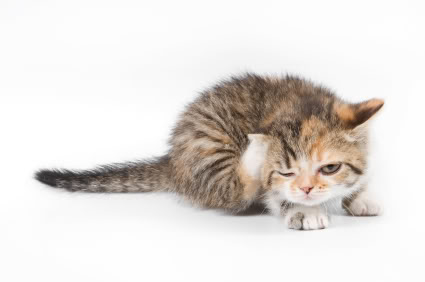
An Albany, Georgia woman is fortunately recovering from necrotizing fasciitis (flesh eating disease) that developed after a cat bite. The cat presumably wasn’t the source of the bacterium that caused the disease, but it was the source of the wound that let the bacterium (usually Group A Streptococcus sp) get into her body in the first place, and from there the infection spread rapidly.

In this case, the woman was bitten on the hand by her cat. There’s no mention of what she did after the bite, but often people don’t take adequate precautions after cat bites because they can appear minor. While the trauma can be minor, cat bites are notorious for causing infections because they can drive bacteria deep into tissues, making it easy for infections to develop.

Four days after the cat bite, the woman’s hand "blew up" and she was rushed into surgery. It’s an emergency situation because death rates can be high, and those people lucky enough to survive can still have serious complications sometimes requiring measures as drastic as limb amputation, and the extensive tissue damage can lead to chronic problems for the rest of their lives.

People shouldn’t worry about getting flesh eating disease from their cat (in part because people don’t actually get this kind of infection from cats, it’s just that bites can predisposed them to this (and other) kind of infection). However, people should be aware of potential issues associated with bites (from cats in particular, but also from any kind of animal). This case is just one more warning about a range of potential problems that can develop following a cat bite. Any cat bite should be taken seriously and at a minimum promptly and thoroughly cleaned. Bites that occur over the hands, feet, face, joints and similar high risk sites or that occur in people with compromised immune systems should be evaluated by a physician – and sooner rather than later. It’s much easier and better to prevent an infection from developing than to try to control an established infection, and while most cat bite infections are mild, serious problems are far from rare.

More information about cat bites can be found on the Worms & Germs Resources – Pets page.