
A Chapel Hill, North Carolina woman is suing Orange County in response to quarantine of her dog because of possible rabies exposure. This lawsuit highlights some of the inconsistencies in application of current rules, along with some misunderstandings.

In February, her dog Russell was barking at something under her deck, and that something ended up being a raccoon with rabies. There’s no evidence of a fight or contact, but it can’t be ruled out. Because of this, the dog was considered potentially exposed. Russell was overdue for his rabies booster, so a strict six-month quarantine was required, and the county required that this be done at an approved facility, not in the home. (The alternative option was euthanasia.)

  • The lawsuit is based on the inconsistent application of the rules by various counties. The owner is seeking permission to quarantine the dog at home. This is allowed in many regions, provided there is confidence that the owner is responsible enough to properly quarantine the animal.
  • It’s a reasonable argument that’s based on subjective and variable application of rabies guidelines. Certainly, formal quarantine in a facility offers more containment. The question is when household quarantine is appropriate, in terms of the animal’s risk of exposure and the ability of the household to properly quarantine the animal.

Some other highlights:

Russell was overdue for his rabies vaccine by 46 days.

  • Dogs don’t immediately go from protected to unprotected. Certainly, we want animals to be up-to-date on their vaccines, but some thought needs to go into dealing with potentially exposed overdue animals. The NASPHV Rabies Compendium states "Animals overdue for a booster vaccination need to be evaluated on a case-by-case basis (e.g. severity of exposure, time elapsed since last vaccination, number of prior vaccinations, current health status, local rabies epidemiology)."
  • Knowing the age of the dog and the number of previous vaccines would help, but the news article reports vaccinations (plural), suggesting that he’s been vaccinated more than once in the past. In a dog with a relatively low index of exposure that was only overdue by 46 days, it would seem reasonable to consider it protected and treat it as vaccinated (although it’s hard to say this definitively based on a news report that doesn’t give the whole story). It’s a critical point because considering the dog up-to-date would only result in a 45 day observation period as opposed to a strict six-month quarantine. 

The owner’s veterinarian stated that research shows that an animal that is vaccinated regularly is protected for many years, if not a lifetime.

  • Yes and no. Vaccination is quite effective and in most animals probably confers long-lasting protection. However, I’m not aware of research that really shows this. This isn’t a disease where we have good research data about duration of effect of vaccination. I suspect that most dogs that have been regularly vaccinated are well protected. Most does not equal all, and with a disease like rabies, you have to be quite sure.

A rabies antibody titre was measured. This is a blood test indicating the level of anti-rabies antibodies. The veterinarian indicated that the titre showed Russell is currently protected from contracting rabies.

  • Unfortunately, no. TItres tell you antibody levels, but we don’t have good data about what is actually protective. Higher is better, but we can’t say a certain number is absolutely protective. Back to the NASPHV guidelines: "Titers do not directly correlate with protection because other immunologic factors also play a role in preventing rabies, and our abilities to measure and interpret those other factors are not well developed. Therefore, evidence of circulating rabies virus antibodies should not be used as a substitute for current vaccination in managing rabies exposures or determining the need for booster vaccinations in animals". That statement was echoed by North Carolina’s state public health veterinarian, Dr. Carl WIlliams.

This is a tough situation. In many circumstances, home quarantine is a reasonable option. It’s easier on everyone involved, by not separating the dog from the household. It’s also less expensive. However, it inherently comes with some degree of risk to the household and the community. It’s only a reasonable option when it’s certain that people will take "strict quarantine" seriously, and truly quarantine the animal. That’s hard to assess, and regulatory bodies are presumably afraid of assuming liability should they allow someone to quarantine an animal at home and something bad happens (e.g. it develops rabies and exposes people in the household, the owners take it outside where it encounters other animals or people, it escapes…). Determining whether someone can and will properly quarantine an animal isn’t easy, and those issues presumably lead some people to err on the side of caution, and require formal quarantine at an approved facility.

The easiest way to avoid all this: Ensure your pets are properly vaccinated.
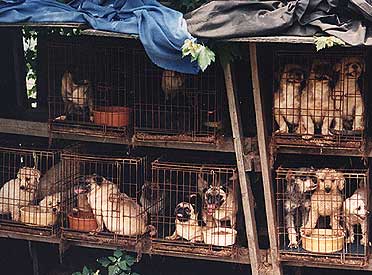
The British Columbia SPCA has seized 71 dogs, including 43 puppies, from a Vancouver Island woman and is planning on recommending cruelty charges. The dogs were seized from Green Acres Kennels because of various health problems that were believed to be the result of bad breeding and inadequate care. Numerous congenital abnormalities were identified, strongly suggesting poor breeding practices. Other problems like infections and severe dental disease were found, including one dog that will need most or all of its teeth removed.

As reported by The Province, SPCA Manager of Cruelty Investigations Marcie Moriarty explained "A good breeder would never breed those dogs. It’s not fair to the dogs and it’s the public who suffers when they have to spend thousands of dollars on vet bills."

Owner Nancy Kitching responded with the ever informative "That’s a bunch of crock. The dogs are not in distress."

There are a number of problems associated with buying animals from poor breeders. Beyond the ethics of supporting these kinds of practices, poorly bred and raised puppies tend to be at increased risk of various health and behavioural problems. They also may be at higher risk for carrying a range of infectious agents, particularly bacteria and parasites.

Here are some red flags when it comes to identifying problem breeders/puppy mills:

  • Lots of dogs available at any time. Most good breeders rarely have puppies available on demand.
  • No scrutiny of potential buyers. Good breeders want to make sure their puppies go to good homes. If the only thing you need to show to get a puppy is your wallet, that’s a bad sign.
  • You don’t see all the dogs that are advertized and/or the parents. If there’s a barn in the backyard, lots of puppies for sale and no dogs in sight, the dogs may be all caged out of the way. Ask to see the parents and the rest of the litter.
  • They won’t tell you the name of their veterinarian. A good breeder has a good relationship with a veterinarian. A bad breeder may do a lot of their own "vet" work (often with internet-sourced drugs and vaccines), shuttle between multiple veterinarians and have a poor reputation amongst the veterinary practices in the area.

Buying a puppy should be a 10-year-or-more commitment, so it’s worth doing right. If someone wants a dog from a breeder, it’s better to put the time, effort and potentially more money into doing it right, because a bad choice can result in lots of extra cost, frustration and heartache.

As for Ms. Kitching, she’s not getting the dogs back because she can’t afford the costs associated with covering the legal, boarding and veterinary costs. However, she has plans on offering laser treatment for dogs with skin problems (which sounds like practicing veterinary medicine without a license) and may still ‘dabble‘ in breeding. Beware.

When it comes to public health concerns about staphylococcal bacteria from pets, most of the attention gets paid to methicillin-resistant strains like MRSA. That’s not surprising considering how important MRSA is in human medicine. However, staph that aren’t methicillin-resistant can also be a problem, since they can cause the same types of infections that resistant types can (they are just easier to treat). Another issue that often gets overlooked is staphylococcal food poisoning.

Staphylococcal food poisoning is one of the most common foodborne illnesses and results from growth of certain strains of staphylococci in poorly handled or stored foods. If staph get into food and the food is kept at improper temperatures, the bacteria can grow. If the strain of staph that’s in the food is one that can produce enterotoxins, these toxins can accumulate in the food at high enough levels to cause food poisoning when eaten. In most cases, people are probably the origin of enterotoxin-producing staph that contaminate food, but pets are another possible source.

A recent study in Vector-borne and Zoonotic Diseases (Abdel-moein et al 2011) looked at enterotoxigenic staph in 70 dogs and 47 cats. Swabs were collected from the mouth, nose and wounds. Nasal swabs were also collected from 26 people. The researchers isolated enterotoxigenic Staphylococcus aureus (strains of S. aureus that possessed genes for enterotoxin production) from 10% of dogs and 2.1% of cats, as well as 7.7% of people. Most of the positive samples from pets were oral samples.

This study shows that dogs and cats can be potential sources of strains of S. aureus that cause food poisoning. Since the staph are often in the animals’ mouths (and therefore presumably shed in saliva), animals can potentially contaminate food with these enterotoxigenic staph fairly easily, but it’s unknown how often this occurs.

Prevention measures are pretty basic but should be considered, including:

I’ve written numerous times about risks (mainly infectious disease risks) associated with some types of exotic pets. I’m not against all exotic pets, but I am against keeping improper pets and doing so in improper situations. The latter largely involves keeping species at high risk for certain pathogens like Salmonella in households with high-risk people (e.g children under five years of age and people with compromised immune systems). The former involves keeping pets that are just not appropriate as pets because of they are large, hard to care for or venomous, or where keeping them in captivity is otherwise risky to either the owner or the pet.

Some good examples of these issues were reported this week:

  • English snake "expert" Luke Yeomans died after being bitten by one of his pet king cobras. He kept 24 snakes in a compound behind his home and was planning on opening the space up to the public. He had stated that the trust he had built up with the snakes by feeding and caring for them ensured they would not turn on him. Famous last words.
  • A South Dakota man was bitten by his (or a visiting relative’s… there’s some controversy) pet copperhead snake. Along with what was characterized as an "exceedingly painful bite" he could face criminal charges for owning a dangerous animal. Fortunately, copperhead bites are rarely fatal, but they are far from pleasant. One expert described it as "go ahead and light your hand on fire and put the fire out with a hammer for several weeks."
  • A Florida man (note a gender bias here?) was bitten by his African Puff Adder. Neighbours heard his screams of "Help, my fingers are turning black!" as the ambulance arrived. Fortunately, a local serpentarium met them at the hospital to provide anti-venom to counteract the venom from this somewhat small but bite-prone snake that accounts for more than 50% of snake bite deaths in Africa.
  • A Putnam Lake, New York woman was found dead in her bedroom, with the prime suspect being a pet Black Mamba, one of 75 snakes she and her boyfriend kept. Black Mambas are described as one of the fastest and most venomous snakes in the world, a great combination for a predatory snake, not a good combination for a pet.

Some people may argue that these incidents are Darwin-in-action. However, while people have some degree of right to be stupid, they don’t have the right to put other people at risk. There are too many instances of dangerous exotic pets escaping, with potential risk of exposure of members of the general public. At the moment, Ipswich, UK police are on the search for a 7.5 foot boa constrictor that’s on the loose. They’ve warned that children and pets should be kept indoors, particularly since the owner describes the snake as "unfriendly" at the best of times and, having last been fed 3 weeks ago, "is due a feed." The risks to the public are limited, but people have been killed by pet constrictors in the past, so erring on the side of caution and awareness is justified.

Yes, exotic pets can be interesting and unique. People are sometimes attracted to something new and different, but often it’s the ‘look at me!’ aspect of having something completely different. However, novelty should not be a justification for keeping pets. Our ability to safety and humanely take care of them, and manage potential risks to the public have to be part of the equation.

Image: A Black Mamba (Dendroaspis polylepis) (source: http://en.wikipedia.org)

An Irish woman has won a record, multi-million Euro settlement after developing severe disease while working at a pet store. Patricia Ingle was a healthy 19-year-old when she was working in a Limerick, Ireland pet store. Then she developed psittacosis, an infection caused by the bacterium Chlamydophila psittaci, which she most likely contracted from a cockatiel at the store. It doesn’t sound like the source of infection was confirmed, but the bird-associated nature of the bacterium (and presumably no other high-risk source of infection for the person) and the timing of disease with respect to contact with the cockatiel, are strongly suggestive. 

Exposure to C. psittaci is an ever-present risk when working with psittacines, especially when they come from various sources and are mixed and stressed, as often occurs in pet stores. Human infections are rare, and they are usually treatable if diagnosed and managed properly. Usually, flu-like disease develops in people, however Ms. Ingle developed severe and permanent neurological disease (malpractice in management of her infection was also alleged).

This is yet another example of the need for proper education and training. Not all infections are preventable, and not all infections indicate liability. If this store had a proper training program in place, adequately informed staff of potential risks and had sound protocols in place to reduce the risk of exposure, it would have been possible to argue that this was an unavoidable infection in someone that knew the risks. In the absence of proper training, education and protocols, however, there’s no way to successfully argue that any infection was not preventable, and the liability should shift to the employer. Hopefully this is a wake-up call for pet stores (as well as other facilities like veterinary clinics) that while you can never eliminate infectious disease exposure, you have a moral and legal requirement to take practical measures to protect staff, visitors and other people.

Urinary tract disease is a common reason for use (and misuse) of antibiotics. In veterinary medicine, one thing that we lack is clear clinical guidelines (particularly regarding antimicrobial use) to help manage specific types of diseases. In human medicine, there are some excellent guidelines of this kind (e.g. the Infectious Disease Society of America guidelines) available for a range of diseases, and these can greatly assist with proper management of cases.

Because of the lack of veterinary guidelines, the International Society for Companion Animal Infectious Diseases has started a guideline development program. Using a committee of international experts in the fields of infectious diseases, internal medicine, microbiology and pharmacology, from both human and veterinary medicine, and extensive discussion, debate and revision, specific treatment guidelines are being developed for different types of infectious diseases. The first set, Antimicrobial Use Guidelines for Treatment of Urinary Tract Disease in Dogs and Cats, has now passed peer-review and the guidelines have been published in Veterinary Medicine International, an open-access journal available to all veterinarians.

To download the guidelines, you can also click here.

A Minnesota woman has died of Powassan virus encephalitis, a very rare neurological disease transmitted by ticks. Powassan virus is most often found in parts of Ontario, Quebec and New Brunswick, but there is evidence of it in many other parts of North America as well, and as far away as Russia. Human infections are very rare, but when they occur neurological disease is severe, mortality rates are high, and survivors often have residual neurological problems.

Powassan virus is a flavivirus, related to St. Louis encephalitis virus and West Nile virus, but unlike these, the reservoir of Powassan virus seems to be wild small mammals, with transmission via ticks (as opposed to a bird reservoir and transmission via mosquitoes for the others). The virus has been detected in mosquitoes but it’s not known whether they can transmit the virus.  Ticks are considered the major (and possibly only) route of infection.

The risk to animals in areas where Powassan virus can be found is very limited. Natural infections of dogs, cats or horses have not been reported, as far as I know.  However, that doesn’t 100% rule out the possibility of disease, since you have to look in order to find, and specific investigation of Powassan virus transmission is uncommon. Neurological disease has been reproduced experimentally in horses, but not dogs and cats.

Overall, the risk to pet owners and pets posed by Powassan virus is very low. Taking measures to avoid ticks is the key, and such precautions should be taken for many reasons beyond Powassan virus exposure.

The Tennessee Aquarium in Chattanooga is being sued for $2.4 million by the parents of a child who allegedly acquired an infection after petting stingrays and sharks. The news report contains very little information, but the reference to "fish-handler’s bacteria" means the infection was presumably caused by the bacterium Erysipelothrix rhusiopathiae. This bacterium can be found in various animal species, particularly pigs, and can be spread to people. The risk of infection is greatest in people with pre-existing skin lesions, since these allow the bacterium to bypass the normal skin barrier. It can also be found in/on fish, and infections in fish handlers tend to occur because they have close contact with fish and they often have skin lesions from fish, knives or other sharp objects, hence the name fish-handler’s disease. When infection occurs, it is usually limited to a local skin infection, but more invasive infections involving deeper tissues or infections that spread to other parts of the body can rarely occur. In this case, the child must have had a deeper infection since according to the report he’s had to undergo multiple surgeries.

Aquarium officials (unsurprisingly) refute the suggestion that the aquarium was the source, pointing to five negative water tests after the child’s visit to the facility. Unfortunately, water tests taken after the suspected time of exposure don’t really tell you much. It’s going to be hard to prove anything, but it’s reasonable to suspect that the aquarium was the source. This is a rare infection that can be associated with contact with fish and their environment, and the child had that kind of contact. Looking at other potential sources of exposure like pig contact is also necessary.

Even if no other potential sources of exposure are identified, it’s still not definitive that the child acquired the infection at the aquarium, nor does it necessarily mean that the aquarium is at fault. Every contact with an animal or its environment (just like any contact with a person) carries some degree of infectious disease risk. The key issue is whether the facility took reasonable precautions to reduce that risk. In particular, this would include providing easy access to a handwashing or hand sanitizer station immediately after the contact occurred, and clear signs indicating the need for hand hygiene. Any animal contact event, be it a traditional petting zoo, pony rides or aquatic contact exhibits like this one, need to take those basic precautions. If proper measures are used, infections can still occur, but that’s a fact of life. We cannot prevent 100% of infectious diseases. What we try to do is reduce the risk as much as possible, while maintaining the benefits of activities that involve animal contact. It’s a balancing act and it’s never perfect, but that’s all we can do and what we need to expect from animal contact events.

The more we look, the more we find when it comes to MRSA (methicillin-resistant Staphylococcus aureus). As people start looking for it in different animal species, it’s often found. We’ve found it in many species already, including dogs, cats, rabbits, pigs, walruses, dolphins and alpacas, so it’s not a big surprise to see a recent paper in the Journal of Clinical Microbiology (Ferreira et al 2011) about suspected MRSA transmission between a human and a hamster.

The case report describes a person with advanced cystic fibrosis who had undergone a lung transplant and had various other medical problems. Prior to another surgical procedure, MRSA was identified through routine pre-operative screening. Nasal and rectal swabs were then collected from the person’s three pet hamsters, one of which was positive. The MRSA isolates from the human and hamster were the same, supporting transmission from one to the other. Given the person’s underlying health problems, frequent contact with the healthcare system, the typical human origin of the strain that was found, and limited contact of hamsters with other animals or people, it is most likely that MRSA was transmitted from human to hamster in this case.

The paper concludes with: "Should testing of the pets of MRSA-positive patients be recommended? At this point, we recommend that MRSA-positive patients be informed that their companion animals can be potential sources of infection or reinfection. In the presence of a MRSA-positive human or animal, heightened hygiene practices should be instituted and unnecessary close contact should be avoided. Screening of household pets might be indicated in situations of recurrent MRSA infections despite adequate treatment or when immunocompromised patients live in the household."

That’s consistent with our standard recommendations and hits most of the key points:

  • Awareness is critical. People need to know what the risks might be and what they can do about them so that they can make informed decisions and realize why recommendations are being made.
  • Testing of pets is rarely useful, particularly in the absence of a recurrent MRSA problem.
  • Good hygiene practices are critical.

I don’t really agree with the comment that testing of pets might be indicated when immunocompromised people are in the household (although the comment is properly hedged by saying "might be indicated"). A large percentage of the population has some degree of immunocompromise, and there’s a huge spectrum from minimal risk to tremendous risk. Even in high-risk patients, screening is questionably useful to me because it doesn’t really change what I’d do.

  • If I screened a hamster from a high-risk person and found MRSA, I’d say that it probably came from the person, that it’s possible it could be transmitted back to the person, that good hygiene practices should be followed and close contact should be restricted. There’s no indication (or ability, in reality) to treat the hamster.
  • If the hamster was negative, I’d say it was possibly negative because screening is not 100%, that the hamster could be exposed to MRSA from the owner at any time, and so to manage unknown colonization and reduce human-hamster transmission, I’d recommend good hygiene practices and restriction of close contact.
  • If I’m going to do the same thing with a positive and negative result, I don’t do a test.

This paper should be yet another reminder that we live in a complex relationship with our pets, including microbiologically. While we need to consider the role of pets in human infection (and the role of humans in pet infection), and we need to balance that with the positive aspects of pet ownership in order to maximize the benefits while minimizing the costs.

Using logic akin to "Chocolate cake? It has flour, eggs and milk. It’s virtually health food. You should eat it every day.", AllPetNews.com has an article on its site entitled "Dog saliva has healing properties." The article focuses on potential beneficial compounds in saliva, with specific reference to a University of Florida (Gainesville) discovery of nerve growth factor (NGF) in saliva (although I can’t find any reference to nerve growth factor in dog saliva on PubMed).

The article states "Wounds that were treated with NGF actually healed twice as fast as untreated wounds, indicating that if a dog does lick a humans wound, it could in fact lead to a faster recovery."

The problem here is taking some controlled research data and spinning it out of control. Putting synthesized or concentrated nerve growth factor on a wound in a controlled manner is different from putting saliva on a wound, which is also different from having a dog lick it. You have to consider the whole picture when evaluating potential treatments. For example, rubbing alcohol kills bacteria nicely but that doesn’t mean it’s a good idea to put it on a wound to prevent infection. It hurts and it damages tissue. While it may kill superficial bacteria, the tissue damage can ultimately increase the risk of infection.

While there are certainly some compounds in dog (and human) saliva that stimulate healing, those potential benefits need to be weighed against the potential adverse effects, particularly infection. The oral cavity of the dog contains billions of bacteria from hundreds of different bacterial species. Many of these are able to cause infection given the right circumstances. A wound helps create the right circumstance by breaking down the body’s normal protective barriers.

The article does mention some dangers, although only with licking of deep wounds (a wound doesn’t have to be deep to become infected), and concludes with:

"Although the healing properties outweigh the negative impacts there will always be a number of people that find it in their best interest to treat a wound by cleaning it with soap and water…."

  • At this point, there’s no evidence that the beneficial properties of dog saliva outweigh the negative impacts. In reality, people would be better off if they carefully cleaned wounds with soap and water. Licking may not cause a problem in many (or even most) situations, but it can lead to serious infection, and the lack of clear evidence of benefit alongside documented risks indicate that this is an inappropriate activity.