Infection control isn’t rocket science. Wash your hands, don’t eat that, keep your finger out of your nose… things you learned in kindergarten go a long way to preventing infections. The basic nature of the core infection control concepts is also a barrier – hand washing isn’t fancy, new or associated with some fancy machine.
Worms and Germs Map Update
A few years ago, we launched WormsAndGermsMap to help track certain emerging and endemic diseases. Data are entered by participating veterinary clinics, surveillance programs and the WormsAndGerms team. While we certainly can’t capture every case, we do collect some interesting information about the presence of certain diseases.
Using the “Report Filter” bar on the left,
Canine Importation Working Group Recommendations, and Rio2016 Adoptions
Last year, a Working Group was established to review the issue of importation of dogs into Canada and to come up with options and recommendations to:
- Mitigate the risks to animal health (domestic and wildlife) and public health posed by the current system through which dogs are imported from abroad.
- Mitigate the same risks posed
Mapping Zoonotic Disease Emergence Risk
Predicting the future is a dodgy proposition at the best of times. It’s particularly hard with infectious diseases, which tend not to behave as expected. Yet, it’s important to plan surveillance, education and response. One approach is to assess where certain types of problems are more likely to develop. That can help direct resources (time,
Moving Dogs, Moving Bugs
 I’ve written a lot about the issues of dog importation and the diseases that can sometimes “come along for the ride”. However, high risk movement doesn’t need to be international. Any movement from a high risk area can be a concern. A recent article in Canadian Communicable Disease Report (Curry et al. 2016)
There’s a Test For That! But, Is There a Need?
 Some diagnostic tests that are available are more of a situation of a test looking for a market rather than filling a clinical need for additional information. That complicates matters since providing new information isn’t necessarily useful if we don’t know what to do with it. In some situations, it can even lead to bad
New superbug in dogs and cats: mcr-1
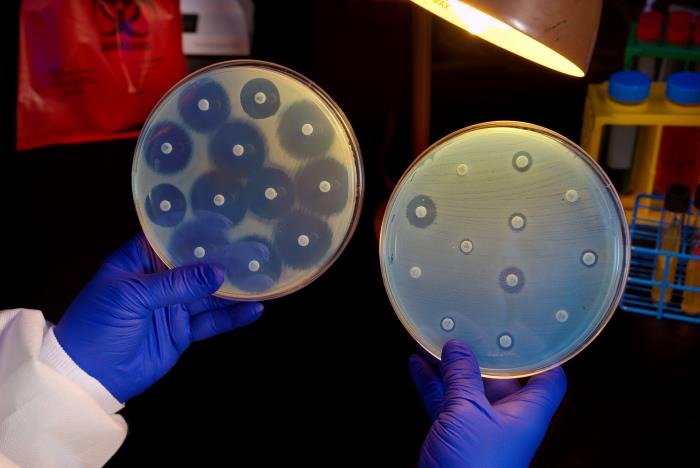 A few years ago, the New Delhi metallobetalactamase-1 (NDM-1) antibiotic resistance gene attracted a lot of attention. This resistance gene can be found in (and passed between) a variety of bacteria, and bacteria possessing this gene are resistant to a wide range of drugs. A drug of last resort for those infections is colistin (a
Lyme Disease and Dogs Infographic
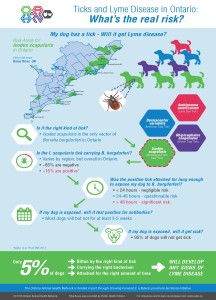 The Ontario Animal Health Network – Companion Animal has released a new infographic on Ticks and Lyme Disease in Ontario: What’s The Real Risk? It’s obviously Ontario-centric but some of the messages apply more broadly. It’s important to consider what the real risk of exposure is, and that involves thinking about things like how common
Tiny Turtles, Big Problems
The CDC has updated information on the ongoing (if not ever-present) salmonellosis outbreaks linked to pet turtles. At last count, there were 133 illnesses (although it’s likely that this represents a fraction of the people that actually got sick), with 38 of those requiring hospitalization. Forty-one percent (41%) were kids under the age of
Animals in Child Care Facilities: New Guidance
Animals are not uncommonly found in daycares and other childcare settings.
- Sometimes, it’s good: animals can be entertaining, animal contact can have various benefits to children, and animals can be part of learning activities.
- Other times, it’s not: such as the presence of species at higher risk for shedding certain pathogens, poor management that increases