
These days, there’s more and more doom-and-gloom information about multidrug-resistant bacteria. They’re in our hospitals, medical tourists, people on the street, our pets, our food, and pretty much anywhere else you can think of. We can now add crow poop to the list too.

It’s almost to be expected, really. We know that birds can carry various resistant bacteria, and the more contact birds have with human environments and food animal environments, the greater the chance these bacteria are going to be transmitted between them (in one direction or another). It’s important to remember that resistant bacteria are also present in nature, independent of human activities.

A recent report of a pretty high profile multidrug-resistant bacterium – vancomycin-resistant Enterococcus (VRE) – in birds wasn’t all that surprising. The study (Oravcova et al, Environmental Microbiology 2013) reported finding enterococci carrying the vanA resistance gene in 2.5% of 590 crows sampled in multiple US states.   It was quite interesting though, because VRE is (in North America) a human-associated bacterium. It’s a little more muddled in Europe where VRE was an issue in food animals, in part due to former use of a drug related to vancomycin (avoparacin) in some food animal species. Here though, we rarely see VRE in anything species but humans. This raises some interesting questions about where these crows picked up VRE, if they are able to carry the bacterium for long periods of time, and if they can act as a source of human or animal infection.

Does this bother me? No. It’s of academic interest, but not something that’s going to pose a real risk to me. I tend not to walk under trees full of crows with my mouth open, and I’m pretty sure I’d wash my hands if a crow pooped on them. Yes, there’s the chance that I could have unnoticed contact with contaminated crow poop remnants on an outdoor surface, but the odds of it containing viable VRE are pretty low, and there are lots of other things that I’m more likely to pick up in my daily activities. In terms of VRE, I’m presumably more likely to be exposed in other ways than from crows. However, the study is still important in that it shows how widespread antimicrobial resistance is, how complex the issue is and how we need to do more to understand the ecology and epidemiology of various resistant bugs.

There’s no need to go exterminating crows, but Johnny Depp may want to consider an alternative style of hat.


Last week, I mentioned the antibiotic use plenary session at the ASM-ESCMID conference on methicillin-resistant staphylococci in animals. The session was designed to discuss the use of "critically important antibiotics" in companion animals – drugs like carbapenems (imipenem, meropenem) and vancomycin, which are used for treating serious multidrug-resistant infections in people as well. After the (very lively) session, I was asked when I was going to write a follow-up post, so here it is.

The session went well and I’ll hit on some highlights.

I was on a panel with good colleagues Ulrika Gronlund-Andersson (Sweden) and Engeline van Duijkeren (Netherlands). Both are extremely well versed in the field and come from countries with different, but in general restrictive, policies pertaining to antibiotic use in animals. They also (not completely coincidentally) come from countries with less antibiotic resistance in companion animals, which means they don’t see the same degree of resistant bugs in patients that I do.

I was there as the guy from North America where we have absolutely no control over antibiotic use. It was strange being the one supporting more liberal use of antibiotics, since I’m often seen as being on the other extreme when I speak in North America. As I wrote earlier, I think (at least in my patient population) that we need to use some "big gun" drugs at times, but we also need to use them right.

It was a tough crowd. There were some nice differences in opinion, partly reflected in individuals’ backgrounds (clinical vs non-clinical, northern Europe vs other regions), but there were some great points too.

At one end, there was the opinion that banning the use of these drugs in animals altogether is acceptable. (A comment along the lines of "there are lots of dogs and cats available in animal shelters as a replacement if a pet gets a multidrug-resistant infection" was made, to varying degrees of agreement and outrage). I was at the other end of the spectrum, which really wasn’t at the other end of the whole spectrum, meaning I think we need to use these drugs at times, but we certainly don’t want unrestricted, imprudent use. We need to use them right, and very sparingly. I emphasized the point that every culture result is attached to a patient AND there’s a moral obligation to make sure that patient doesn’t suffer AND every patient is attached to an owner AND that attachment might be profound, with definite emotional and even health effects for the person associated with the animal’s presence and condition.

An interesting set of comments came from a clinical colleague in southern Europe who said something along the lines of “I see vets in my country misusing these drugs so badly that I think we need to ban them. People won’t do it right so they shouldn’t do it." That’s hard to argue, and shows how we need to improve antibiotic use in veterinary practice. If it’s clear they’re being used poorly, we should lose access to them.

Another comment was along the lines of “I’m not concerned about OVC, where they have awareness, some restrictions and someone [me] as both a monitor and resource. But, that’s not the way most of the world works.” Again (taking the compliment and not trying to sound arrogant here), it’s hard to argue that point. However, it again comes back to figuring out how to improve antibiotic use and do things right. I think we’ve done at good job at our institution reining in use of important drugs, through education, peer pressure, surveillance and a bit of internal restriction.

There were a couple of comments like "If you only use them very sparingly, there can’t be any realistic risk, particularly compared to massive use in humans" and “Our hospital only uses them a couple of times a month,” supporting the general notion that internal restriction can be effective, and that makes sense, at least to me.

At the end, the moderator (another good colleague and expert in his own right, Luca Guardabassi from Denmark) polled the audience: Should these drugs be banned completely from animals or allowed with restrictions?

It was a pretty even split, but I think banning them came out ahead (with the disclaimer that the audience was biased towards people from countries with fewer resistance issues and more restrictions, and fewer clinical people). (A few people also came up to me after and said “I agree with you, but I was too chicken to say anything.”)

It was a great discussion, and I think it made both sides rethink their positions somewhat. I still think we need to have access to these drugs, since otherwise we’ll be saying "Sorry, your dog has a multidrug-resistant infection but I can’t use the antibiotic that would treat it, so we need to euthanize him now." At the same time, the status quo can’t continue. Misuse and overuse of critically important drugs is a problem in North America and beyond, and we have to figure out how to deal with it. Ultimately, restriction might be required, but it’s much better for the veterinary profession to deal with it internally, by improving practices on their own and internally restricting or regulating how they are used.

One question I posed to the audience was, rank these actions in terms of what you think their impact would be on antibiotic resistance in people and animals:

  • 1% reduction in fluoroquinolone use in humans
  • 5% reduction in amoxicillin/clavulanic acid use in humans
  • 5% reduction in ceftiofur use in food animals
  • 1% reduction in fluoroquinolone use in companion animals
  • 5% reduction in amoxicillin/clavulanic acid use in companion animals
  • 75% reduction in carbapenem use in animals
  • Ban on vancomycin use in animals

More food for thought (and maybe for a future post).

Yes, Ulrika, Engeline, Luca and I are still on speaking terms. A little wine and a (4 hour) Italian dinner heal all wounds.

Pet aquatic turtles have been implicated in three outbreaks of salmonellosis involving 43 US states over the past year and a half.  Disappointing, but not surprising.

Disappointing, obviously, because people are getting sick. Disappointing also because these outbreaks have occurred over and over, despite availability of good information on how to reduce the risks.

It’s not surprising, though, because it’s happened so often.

Why? It’s a combination of people not researching these animals properly before buying them, pet stores not providing information, turtle farmers in denial that there is a problem, people flouting the small turtle ban, and poor overall awareness (and application) of basic infection control measures (more on that in a minute).

The Michigan Department of Community Health (MDCH) has reported that 5 people from Michigan have become ill as part of these outbreaks. As is typical, most were kids.

So, if you own a pet turtle, what do you do?

“We don’t recommend that they release them into the wild. Instead, we recommend that you contact a pet retailer, a pet store, to talk to them about it. Also, you can speak with a local animal shelter or a veterinarian for other options as well.” said MDCH spokesperson Angela Minicuci.

That’s not bad advice. However, the pet store and vet probably aren’t going to take the turtle. The humane society might (and those that do might try to find it a home or might just euthanize it right away). There’s another step here that’s forgotten: doing a risk assessment.

Are there high-risk people in the household (kids less than five years of age, elderly, pregnant women, people with compromised immune systems)?

  • If yes, the turtle should be re-homed.
  • If no…

Are you willing to accept some degree of risk, risk that can be mitigated with some basic practices?

  • If no, the turtle needs a new home. (There’s always some degree of risk with turtle (and any animal) ownership).
  • If yes…

Are you willing/able to take some basic measures to reduce the risk of Salmonella exposure, on the assumption that your turtle is Salmonella positive?

  • If no… (take a guess here) the turtle needs a new home.
  • If yes…

…Get some good information about reducing the risk and decide whether you want to keep the turtle. A good place to start is our turtle fact sheet on the Worms & Germs Resources – Pets page.


A little knowledge can be a bad thing. We see that with zoonotic diseases. Awareness is great. However, a little bit of awareness can be a problem if it’s enough make people paranoid but not enough to help them understand the real risks. This can lead to excessive and illogical responses (often ending with "…get rid of the cat").

Sound guidelines for preventing infections written by authoritative groups help a lot. An example of that is the recently updated Guidelines for the prevention and treatment of opportunistic infections in HIV-infected adults and adolescents. As a collaborative set of guidelines from the US Centers for Disease Control and Prevention (CDC), the National Institutes of Health, and the HIV Medicine Association of the Infectious Diseases Society of America, it carries a lot of weight – as it should.

It’s a monster of a document of 416 pages. Pet contact gets a little bit of room and probably just the right amount. Enough to say "it’s something to think about," "we’ve considered the issues" and "here are some basic things to consider.”

Here are their specific recommendations:

Hand-washing also should be recommended in association with the following activities: after handling pets or other animals, gardening or having other contact with soil; before preparing food or eating; and before and after sex (BIII).

HIV-infected individuals—particularly those with CD4 counts <200 cells/μL [i.e. people who have advanced disease]—should avoid direct contact with diarrhea or stool from pets (BIII).

Gloves should be worn when handling feces or cleaning areas that might have been contaminated by feces from pets (BIII).

HIV-infected individuals also should avoid other sources of Cryptosporidium oocysts as much as possible (BIII). These include working directly with people with diarrhea; with farm animals such as cattle and sheep; and with domestic pets that are very young or have diarrhea. If exposure is unavoidable, gloves should be used and practices for good hand hygiene observed.

The letters and numbers indicate the strength of evidence. B means there’s moderate evidence supporting the recommendation and III means it’s based mainly or exclusively on expert opinion, not research trials.

Note that nowhere does it say "get rid of the pet" or "avoid contact with animals altogether." Rather, it endorses the use of basic hygiene practices and common sense.  In reality, all these recommendations could apply to any individual, not just people with HIV infection.

The preamble to the pet section includes a great statement:

Health-care providers should advise HIV-infected persons of the potential risk posed by pet ownership. However, they should be sensitive to the psychological benefits of pet ownership and should not routinely advise HIV-infected persons to part with their pets. Specifically, providers should advise HIV-infected patients of the following precautions.

…and those precautions are:

HIV-infected persons should avoid direct contact with stool from pets or stray animals. Veterinary care should be sought when a pet develops diarrheal illness. If possible, HIV-infected persons should avoid contact with animals that have diarrhea.

When obtaining a new pet, HIV-infected patients should avoid animals aged <6 months (or <1 year for cats) and specifically animals with diarrhea. Because the hygienic and sanitary conditions in pet-breeding facilities, pet stores, and animal shelters vary, patients should be cautious when obtaining pets from these sources. Stray animals should also be avoided, and specifically those with diarrhea.

Gloves should always be worn when handling feces or cleaning areas that might have been contaminated by feces from pets. Patients should wash their hands after handling pets and also before eating. Patients, especially those with CD4 cell counts < 200 cells/μL should avoid direct contact with all animal feces to reduce the risk for toxoplasmosis, cryptosporidiosis, salmonellosis, campylobacteriosis, E. coli infection, and other infectious illnesses. HIV-infected persons should limit or avoid direct exposure to calves and lambs (e.g., farms, petting zoos). Paying attention to hand hygiene (i.e., washing hands with soap and water, or alcohol-based hand sanitizers if soap and water are unavailable) and avoiding direct contact with stool are important when visiting premises where these animals are housed or exhibited.

Patients should not allow pets, particularly cats, to lick patients’ open cuts or wounds and should take care to avoid any animal bites. Patients should wash all animal bites, animal scratches, or wounds licked by animals promptly with soap and water and seek medical attention. A course of antimicrobial therapy might be recommended if the wounds are moderate or severe, demonstrate crush injury and edema, involve the bones of a joint, involve a puncture of the skin near a joint, or involve a puncture of a joint directly.

Cats

Patients should be aware that cat ownership may under some circumstances increase their risk for toxoplasmosis and Bartonella infection, and enteric infections [although I’d argue data supporting a broad statement of cat ownership increasing those risks that are largely lacking]. Patients who elect to obtain a cat should adopt or purchase an animal aged >1 year and in good health to reduce the risk for cryptosporidiosis, Bartonella infection, salmonellosis, campylobacteriosis, and E. coli infection.

Litter boxes should be cleaned daily, preferably by an HIV-negative, non-pregnant person; if HIV-infected patients perform this task, they should wear gloves and wash their hands thoroughly afterward to reduce the risk for toxoplasmosis. To further reduce the risk for toxoplasmosis, HIV-infected patients should keep cats indoors, not allow them to hunt, and not feed them raw or undercooked meat. Although declawing is not usually advised, patients should avoid activities that might result in cat scratches or bites to reduce the risk for Bartonella infection. Patients should also wash sites of cat scratches or bites promptly and should not allow cats to lick patients’ open cuts or wounds. Care of cats should include flea control to reduce the risk for Bartonella infection. Testing cats for toxoplasmosis or Bartonella infection is not recommended, as such tests cannot accurately identify animals that pose a current risk for human infection.

Birds

Screening healthy birds for Cryptococcus neoformans, Mycobacterium avium, or Histoplasma capsulatum is not recommended.

Other

HIV-infected persons should avoid or limit contact with reptiles (e.g., snakes, lizards, iguanas, and turtles) and chicks and ducklings because of the high risk for exposure to Salmonella spp. Gloves should be used during aquarium cleaning to reduce the risk for infection with Mycobacterium marinum. Contact with exotic pets (e.g., nonhuman primates) should be avoided.

I’m getting ready for next week’s ASM/ESCMID conference on methicillin-resistant staphylococci in animals, for which I’m involved in a plenary session about critically important antibiotics in companion animals. The whole area of antibiotics and animals in complex and controversial (and made worse by political agendas, lack of evidence and confusion about different issues).

Anyway, one thing that often gets overlooked is the difference between companion animals and food animals in how antibiotics are used, what regulations are in place, and what differences should be present between species. Just discussing antibiotics "in animals" isn’t adequate, because a pet dog is very different from a feedlot steer in many respects, and many of the issues around antimicrobial use are different as well.

One question that’s going to be up for debate is "should antibiotics that are used in serious resistant infections in people be used in animals?"

My answer to this important question has evolved a bit over the years. It’s "yes, but…"

The but is the important part.

  • As a veterinary clinician, I see the need to treat my patients (or the patients I’m providing advice on).
  • As someone who works in the field of antimicrobial resistance, I see the issues with drug use and resistance.
  • As a parent, I don’t want my kids to develop a serious infection that I may have played a role in fostering.
  • As a pet owner, I understand the desire to try to save the life of a pet.

That doesn’t even cover all the issues, but it shows the variety of standpoints that need to be considered.

Back to the question at hand.  As I said, my answer is yes, but with disclaimers:

  • We need to use antimicrobials only when required.
  • We need to use antimicrobials properly.
  • We need to take measures to reduce infections overall (so that less antimicrobial use is required).

At our veterinary teaching hospital, we have a restriction policy for vancomycin, an important human drug. For it to be used in an animal, the following criteria must be met:

  • The offending bacterium must be susceptible to vancomycin (duh!).
  • There must be no other reasonable antibiotic options that are likely to work.
  • There must be a reasonable chance of survival with treatment.
  • Systemic treatment of the infection is needed (i.e. it can’t just be treated with local therapy).
  • The clinician must get approval from infection control (i.e. me).

That has happened twice in the past 12 years. Both cases were dogs with life-threatening abdominal infections; they were each treated with a short course of vancomycin and survived.

That’s probably 10-14 days of vancomycin use per ~200 000 patients. I don’t know what the comparable numbers would be for people in Guelph General Hospital down the road, but their use would be staggering compared to ours. Also, the risk of resistance with each use is presumably much higher for each human patient since they are in an environment where vancomycin resistant bugs are present (and therefore can be selected for with treatment). Vancomycin resistance is exceedingly rare in our hospital population, further decreasing the risk.

Is there some risk? Certainly. Use inevitably carries some risk.

Does our 2 / 200 000 use constitute a reasonable human health risk? I can’t see how it does.

So, is antibiotic use in animals something we can just ignore? Absolutely not. It’s a big problem, just like antibiotic use in people. However, just as all animal species issues aren’t the same, all types of antibiotic use aren’t the same.

Are there other things we can focus on to reduce resistance? Absolutely.

  • A 1% improvement (i.e. decrease) in use of fluoroquinolones in animals would probably have a dramatically greater effect on resistance in human and animal pathogens than a complete ban on vancomycin. Fluoroquuinolones are a commonly used drug class in animals that is also important in people, and one in which resistance is certainly an issue.
  • A 1% improvement (i.e. decrease) in use of of fluoroquinolones in humans would probably have an even greater effect.
  • Better infection control, preventive medicine and other practices could potentially have an even greater impact by reducing infections and therefore the need for any drug therapy, and delaying the treat-resistance-more treatment-more resistance cascade.

Some people would say that any drug that’s of any relevance in humans should not be used in animals. Some veterinarians would say no one should control their prescribing practices. Like most things, I think there’s a happy (and more effective and practical) middle ground. It’s not the status quo, though. We need to have discussions about how to control antimicrobial use in all species, including humans, and not just pointing fingers at the other side.  We also need to discuss how to improve infection control to reduce the need for antimicrobials, and how to improve the way we use antimicrobials when they are required.  In order to have good discussions, we also need proper data (something that’s still lacking).

Different opinion? Feel free to comment (or show up in Copenhagen next week).

When it comes to hand hygiene, there is an unfortunately all-too-common misconception that wearing gloves makes hand washing or using alcohol-based hand rub unnecessary. In veterinary and human medicine, gloves, like hand hygiene, are typically used for two reasons: to prevent spread of germs or chemicals from a patient/person/object/surface to a person’s hands, and/or to prevent the spread of germs or chemicals from a person’s hands to a patient/person/object/surface. However, gloves are not the infallible barrier to germs that many people would like to think they are. Here are a few reasons why:
  • Even new gloves can have holes in them: The accepted quality control limit for defects in medical gloves large enough to leak water is 1.5%. That may seem relatively low, but when you consider the hundreds of gloves that may be used over time in a veterinary (or human) clinic, that can add up to a lot of potential hand-to-patient or patient-to-hand pathogen transmission.
  • Gloves can be damaged during use: Glove tears or punctures during use can be extremely common, particularly for certain procedures involving anything pointy or sharp (e.g. equipment, teeth, claws) or long procedures.  Studies have shown that glove punctures that may occur during surgical procedures are frequently undetected by the person wearing the gloves. Even though gloves may provide an added layer of protection for a time, proper hand hygiene before and after glove use helps reduce the risk of transmission when that barrier breaks down.
  • Bacteria can multiply under gloves: Anyone who has ever had to wear any kind of rubber, latex or vinyl gloves for more than 5-10 minutes knows how sweaty and hot it can make your hands, so you can imagine the kind of sweaty soup that can accumulate when gloves need to be worn for even longer than this. That’s why hand hygiene before putting on gloves is so important for “clean” procedures like surgery, because it helps decrease the number of bacteria on the hands to start, and ultimately the amount that will grow back by the time the procedure is done. Hand hygiene after glove removal is important so the “soup” isn’t being spread to the next patient, person or object.
  • We use gloves for the highest-risk procedures: Glove use is typically recommended for the cleanest procedures (i.e. surgery) and the dirtiest procedures (i.e. things with a high “ick” factor, like handling feces). A glove puncture in surgery could potentially lead to contamination of sterile tissues, resulting in a surgical site infection. A glove puncture (or contamination of the hands when removing gloves) when handling high-risk material like feces can lead to transmission of fecal pathogens to anyone or anything that person may touch afterward (including themselves). In a sense, hand hygiene is actually even more important in situations when gloves are typically worn!

Although proper glove use and hand hygiene applies primarily to veterinary and healthcare workers, there are times when glove use is also recommended at home (e.g. caring for pets with certain kinds of infections, higher-risk individuals performing certain tasks like cleaning up pet messes). Remember that gloves are not a substitute for hand hygiene – always wash your hands or use hand rub after taking gloves off. It is also important not to touch anything with your gloved hands that will later be touched by someone without gloves, and be sure to put used disposable gloves directly in the garbage.
 

In my line of work, I deal with feces from a lot of different species. Never once, however, have I thought to model defecation pressure and distances.
Maybe I’m just strange.

A few years ago, German researchers felt the need to model the defecation habits of penguins. The title of the paper, published in Polar Biology, was “Pressures produced when penguins pooh – calculations on avian defaecation" (Meyer-Rochow et al 2003).

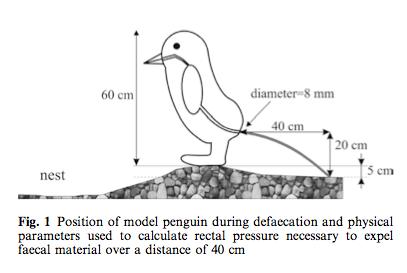
The authors considered the fact that penguins don’t leave their nests to defecate (probably preferring not to freeze every time they need to poop). Rather, they observed that penguins move to the edge, “stand up, turn their back nest-outward, bend forward, lift their tail, and shoot. The expelled material hits the ground maximally 40±12 cm away from the bird and then leaves behind a whitish or pinkish streak that can end a few centimetres from the nest’s periphery and may be up to 1 cm wide.

That observation lead (perhaps fostered by some alcohol?) to questions about the exit velocity of the feces.

Given their protected status, you can’t run around poking and prodding penguins, so much of the research is done from a distance. The researchers in this case used pictures to estimate the "aperture" and determined it to have a "maximal diameter of 8 mm at the moment of "firing"."

Using the size of the "exit" and an estimate of average penguin poop viscosity, along with the angle and distance of firing, they used mathematical models to determine the "penguin-generated pressures" associated with defecation.

I won’t get into all the of the calculations. Suffice it to say, the image at right will probably not been seen in too many other scientific papers.

They concluded that "fully grown chinstrap and Adelie penguins generate pressures between 10 kPa (77 mmHg) and 60 kPa (450 mmHg) during the evacuation of their faeces on land. The process of defaecation commences with the highest pressure initially and then rapidly drops to zero, hence the production of faecal streaks (and not ‘‘blobs’’). In water, different parameters would apply, although (as in air) the smaller the cloacal diameter, the higher the pressure."

And to wrap it up…

"All birds, penguins included, spend a considerable time preening and cleaning their feathers. It seems therefore that these birds propel their faeces as far away as possible (with a minimum amount of effort) lest they soil their plumage. Birds could theoretically increase their projectile defaecation range by squirting 45° up-wards. However, their upright posture and position of the vent prohibit this in penguins, but in eagles and other birds-of-prey the squirt is, indeed, directed upward by ca. 15–30° (unpublished observation). The forces involved apparently do not lead to an energetically wasteful turbulent flow. It is interesting to note that the streaks of the faecal material radiate from the edge of the nest into all directions (no preference is noticeable). Whether the bird deliberately chooses the direction into which it decides to expel its faeces or whether this depends on the direction from which the wind blows at the time of evacuation are questions that need to be addressed on another expedition to Antarctica."

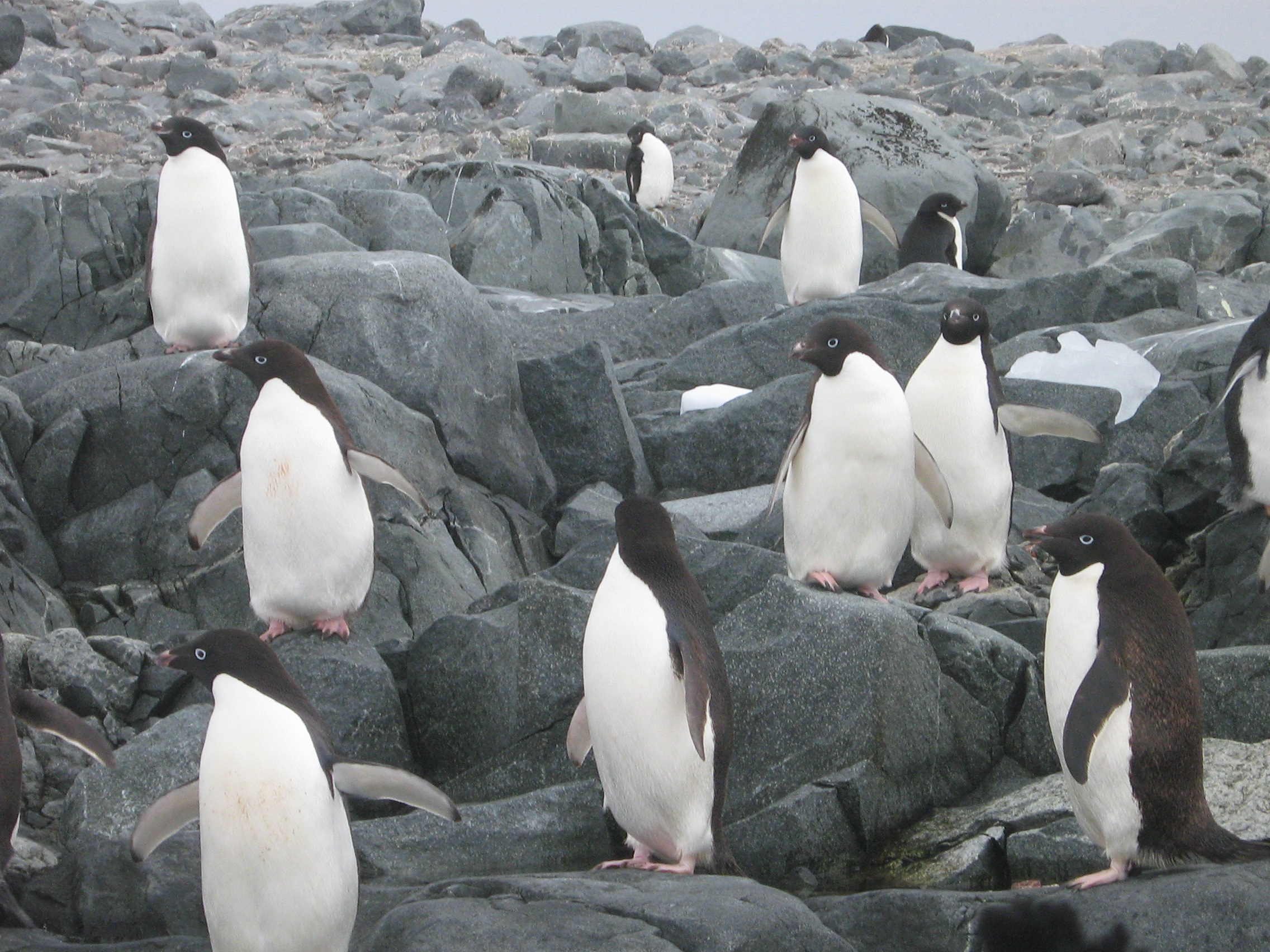
Photo: Adelie penguins, Antarctica (credit: JHB Anderson)

A few days ago, I received a question about whether bathing a young child and a dog together in the bathtub is a bad idea.

It’s not really something I had considered before because, despite having 3 kids and 2 dogs, it’s never crossed my mind to toss them in the tub together. Anyway, I guess it’s a reasonable question since apparently some people are doing it. So, here’s my thought proces:

Is there a risk?

Sure. We know there’s always some risk of disease transmission when interacting with an animal. Generally, the risk is quite low and therefore the pet contact is still worth it because of all the other positive aspects, but in some situations, the risk goes up. We know that risks are higher with young children, and that bacteria present in the intestinal tract of dogs are probably the most common issue.

Is the risk a realistic concern?

Yes I think so. When a dog is bathed, presumably there’s going to be some contamination of the water with fecal-origin bacteria from the animal’s rear end and/or haircoat. There’s also a pretty good chance that contaminated water would be ingested by the child, considering how often toddlers put bath toys in their mouths or drink the water.

What’s the benefit?

Of bathing a child and dog together? None that I can think of.

Is it an avoidable risk?

This one’s easy. Yes. Don’t bathe pets and children together. That’s the best way to avoid the risk and seems like a common sense recommendation to me.

A local county newspaper had a front page headline about a zoning amendment that was approved to allow for a feeder rodent facility that will produce about 10 000 rodents a week (I know, apparently there aren’t a lot of big things happen around here). Co-incidentally, a couple days later, I received an alert and fact sheet from the Ontario Ministry of Health and Longterm Care and the Office of the Chief Veterinarian of Ontario about Salmonella and feeder rodents because of an increase in human Salmonella Typhimurium infections in people in Ontario and a link to feeder rodents in some cases.

It’s not really a surprise. Large and sustained outbreaks of salmonellosis associated with feeder rodents have been reported for a while. These rodents are often produced at large facilities with hundreds of thousands of rodents, and if Salmonella gets in the facility, thousands (or millions) of biohazardous small-and-fuzzy snake snacks can get shipped around the world.

The fact sheet is attached here, and it contains good information about the standard reptile and rodent handling practices that I always keep coming back too: wash your hands, keep high risk people away, prevent cross-contamination of snake food with people food (e.g. don’t thaw frozen rodents in an open container in the fridge (yuck… but it happens) or cross contaminate kitchen surfaces) and other basic hygiene practices.

Infection control isn’t complicated, it’s often just ignored.

Cat hoarding has been in the news in the Toronto area a few times lately. Multiple incidents of serious cat hoarding have been identified in the past month, involving large numbers of cats being kept in horrible conditions. It’s not hard to see how cat hoarding can create infectious disease challenges. I can’t see how anyone could keep a large number of cats in a house without problems, even if they worked very hard to keep things under control. Add together the  issues of keeping massive numbers of cats in a confined space, no veterinary care, poor nutrition and limited hygiene, and you can see how the cats and the building would quickly become biohazardous. Add in mental health issues and hoarding of other objects (both or which are also common in such situations), and you get a house that’s a cesspool, fire hazard and no place for humane housing of any animal or person.

When cat hoarders are investigated, there are often dead cats found in or around the house. There are also often cats that end up being euthanized promptly because of severe disease. A wide range of diseases can be encountered in such cat-dense and hygiene-deficient situations. Mostly, the typical feline diseases are found, including vaccine-preventable illness and a whole range of opportunistic bacterial infections. However, these cats can be very compromised and therefore prone to rare infections as well. A recent report describes one of these unusual infections. The report (Brooks et al, Veterinary Microbiology 2013) describes extraintestinal pathogenic E. coli (ExPEC) infection in one of about 60 cats from a hoarding situation. The cat died and the bacterium was found to be the cause of pneumonia and kidney abscesses.

Is this a major concern for feline health? Not really. This is presumably a rare infection that occurred in a highly compromised cat, and not the crux of a new problem. However, it shows the wide range of diseases that can occur and, probably most importantly, that some of these infections are zoonotic: ExPEC is actually a significant human health concern, since it can cause similarly severe disease in people. It’s been previously shown that people and pets can share the same strains of ExPEC within households, and pets have been suggested as being a potential source of some human E. coli urinary tract infections (another form of ExPEC infection).

In the hoarding situation with the ExPEC-infected cat, there was concern not only for people who had contact with the cat, but a wide range of emergency responders, public health personnel and probably many other people who entered the house (since one cat with disease probably means many cats shedding the bacterium in their feces, which means lots of contamination in the hoarder’s house).

Dealing with hoarding is a complex problem because of typically weak laws, reluctance to enforce laws, mental health issues and a range of other challenges. Early identification of hoarders with proactive intervention – before the place becomes a disaster – is important, but easier said than done.