
test

Tritrichomonas blagburni (formerly T. foetus) is a frustrating cause of diarrhea in cats. This parasite causes chronic diarrhea that will most often ultimately resolve on its own, but it can take months (or longer). During that time, most cats are largely healthy but with very messy feces (and they’re infectious). Some cats do feel sick, and can have a range of problems such as abdominal pain, vomiting, weight loss and complications from having a constantly diarrhea-stained rear end, or from straining. So while many cats may seem fine, we’d rather treat them, both for the cat and to reduce transmission risks.

There are no licensed treatments for this disease, and no drugs that are licensed for use in cats for other diseases are effective. Traditionally, we’ve treated these cats with a drug called ronidazole, which was obtained from compounding pharmacies (a valid approach when there’s no approved product). However, there’s currently a global issue with access to the base drug, so it’s no longer accessible in most areas.

Tinidazole is plan B in these cases, but it’s not great for a few reasons. The drug has not been well studied and doesn’t seem to work as well as ronidazole. It probably helps infected cats, but is far from a preferred option. However, we are now also have problems accessing tinidazole (and I haven’t been able to find a source in Canada).

Are there any other options? I’ve wondered about using secnidazole, and would consider it. We know nothing about efficacy (or safety), which is a significant concern, but it could be an option in some countries where a human oral version is available… which does not include Canada, so we have to keep moving down the options.

Most often, we end up trying to manage these cases with diet to try to minimize diarrhea and keep things tolerable until the cat ultimately gets rid of the parasite on its own. Sometimes, the diarrhea is pretty bad though, so we’d really like to try something more in those cats in particular.

That leaves the bottom of the barrel option, pradofloxacin, a fluoroquinolone antibiotic. It’s a higher-tier antibiotic so I really hate considering it for this disease, but some infected cats are pretty miserable, so we have to consider it in severe cases. Efficacy data are lacking, so it’s more of a “this might work, you could try it if you really need to” situation, than something based on even preliminary data. If cats are sick enough and not responding to dietary management, I’m okay with that. The treatment duration that’s typically used is 7 days; if there’s not a good response after 7 days, I wouldn’t extend it, at that point we’d just have to accept that we’ll need to wait it out for that patient.

Are there any ways to get ronidazole?

The internet is an interesting place. You can find pretty much anything somewhere, but it’s very much buyer beware. Whether anything you order is actually ronidazole (and at the stated concentration) is always going to be in question. There are also legal issues with importing drugs. As veterinarians, we are able to get permission to import drugs on an emergency release basis. However, that system is focused on licensed drugs that are available in other countries but not here in Canada. It’s not meant for accessing unapproved drugs and compounded drugs. We were able to get permission to import antivirals for the treatment of FIP in cats, but that took some time, the drugs came from a well established company, and due diligence was done on that company as part of the review process. Importing from an established compounder that has clear quality control procedures and testing is different than buying a drug from some random company that provides no information (at least not in English or French). I’d be interested in exploring some of these products more to see if we can get enough information to pitch an Emergency Drug Release request, but I haven’t been able to find anything that would give me confidence to make such a request yet.

So, the answer to the common “how can I treat this cat with tritrich?” question is still currently ”feel free to call around and see if any pharmacies have been able to get ronidazole. If not, and they can’t get tinidazole (or maybe secnidazole) either, try dietary management. If that doesn’t work, consider a course of pradofloxacin. If that doesn’t work, you have to try to wait it out for now.”

I don’t like the “see what happens, it will hopefully get better soon” approach, but that’s unfortunately where we sometimes end up.

test

A couple of days ago, I mentioned that Jason Stull and I have done a scoping review of human Baylisascaris procyonis (raccoon roundworm) infections. The paper is published in the Canadian Veterinary Journal, but won’t be open access until October, so I’ll provide a preview of some of the findings here. Here’s a snapshot of what we covered:

  • 60 infections in people were described.
  • 47 had neurological disease, 9 also had ocular disease, 11 just had ocular disease, and there was one case each of eosinophilic cardiac pseudotomour and an incidental finding during an autopsy.
  • Most cases were from the US (52), followed by Canada (5), Germany (2) and Brazil (1)
  • 75% of cases were male, with a median age of 2.9 years (range 9 months to 73 years)
  • 12 (25%) of people had been observed to eat feces, dirt or other potentially contaminated material; 75% of these cases were less than 5 years of age.
  • 5 patients had developmental delay and 1 had Down’s syndrome.
  • Of the people with neurological disease for which an outcome was reported, 19% died, 10% fully recovered and 71% had mild to severe residual neurological deficits.
  • 70% of patients with ocular disease had permanent vision loss.

Hopefully that sets the scene a bit. Today, I’ll focus on sources of infection / exposure. I very often get questions from people asking if “X” creates a risk for B. procyonis exposure. Most often, it’s really unlikely but I usually can’t say “never.” That’s not always well received, since people are typically looking for re-assurance, so the messaging can be tough. “Non-zero but as close to zero as you can get” is my somewhat convoluted but honest answer in a lot of situations.

But, what do the data say to support that answer? Not a lot, unfortunately. Data support what we think of as high risk exposures, but also show that there’s some degree of risk from more casual situations.

The data from our review were limited, since source of infection was only investigated for a subset of cases, and retrospective investigation of sources can be tough – particularly when a large subset of affected people are young children or others who can’t provide a reliable history. Our relatively small number of reported cases (60) dwindled to 37 with an attributed source, and many of those sources weren’t proven, but just logical assumptions.

Prior to this review, I would have said that young kids or people with developmental delay that are prone to eating inappropriate items outside were the highest risk groups, and that casual contacts with the environment (and even raccoons) were low risk. That still largely holds true. The presumed sources in these cases were:

  • pica (inappropriate ingestion) in an area where raccoons were observed (n=10)
  • having abundant raccoon activity in the area (n=8)
  • hiking or working in areas with many raccoons (n=4)
  • having raccoon latrines on the property (n=4)
  • having a pet raccoon in the house (n=4)
  • a history of pica but unknown raccoon exposure (n=2)
  • storing raccoon pelts where a child played (n=1)
  • raccoon infestation of a fireplace (n=1)
  • ingestion of food scraps from public garbage cans (n=1)
  • seeing raccoons in the neighbourhood (n=1)
  • possible source not reported (n=23)

If we look at the two most recent reported cases that were not in our scoping review, one was a child with pica whose home had a raccoon latrine on a roof that allowed feces to drop to the ground below. The other was a young child that was known to (as per normal for young kids) put soil and bark mulch into their mouth. There were no known raccoon latrines in the area, but raccoons were active locally. This largely fits with my assumptions that risk is highest in a definable population that is prone to ingesting things they shouldn’t outside, amplified by the presence of a local raccoons and raccoon latrines.

Some cases had no clear route for ingestion of parasite eggs, but there was a high level of environmental contamination locally, particularly in the form of a local raccoon latrine. That makes sense too since the egg burden can be really high around latrines. If people touch the ground in those areas then inadvertently touch their mouths (a very common event), infection would be possible.

Having a pet raccoon… that’s obviously a problem. It’s one of the reasons we emphasize that raccoons should not be pets (aside from it being illegal in Ontario). Wildlife should be left in the wild or transferred to a proper rehabilitation facility. (Though a recent experience of one of my daughter’s friends finding a baby raccoon and not being able to find a rehabilitator to take it for weeks shows some challenges with that too.)

The people who got infected with no clear source beyond knowing there were raccoons in the area are the most challenging part of the puzzle. Millions upon millions of people live in areas where there’s abundant raccoon activity. These data show there may be some risk from being in those environments. At the same time, while published reports are only a subset of true cases, the number of infections in people is still really low. When you have a situation where millions of people are exposed and a handful get sick, it’s tough to find the right message. The risk isn’t zero, but it’s really, really low.

What this tells me is that the general public shouldn’t fear Baylisascaris and freak out if they see a raccoon walking across their yard. They should take it as a reminder that there are lots of diseases out there in nature, and that we should use common sense (e.g. stay away from raccoons, don’t eat poop) and hygiene (wash your hands) to minimize our risk of exposure.

Who’s not on the list of cases in this report? Raccoon rehabilitators.

The case linked to a pet raccoon shows that keeping a raccoon can create risk, which isn’t surprising. However, there are lots of wildlife rehabilitators that have abundant contact with raccoons and raccoon feces. Previous study has reported antibodies against the parasite in 5-7% of raccoon rehabilitators, showing they can be exposed, but the risk of disease is clearly limited. That’s an important thing to keep in perspective – simply encountering the parasite isn’t enough to cause infection. There’s likely a dose component (more eggs ingested mean more larvae that migrate and cause tissue damage) and a chance component (migration is random, and if the larvae don’t happen to end up in the brain or eye, there may be no issues).

What can the average person do to avoid Baylisascaris?

It comes down to don’t eat raccoon poop:

  • Supervise kids and people with developmental delay when outside, especially young kids and anyone prone to inappropriate ingestion.
  • Avoid putting high risk people in areas where contamination with raccoon feces is likely (e.g. near a latrine, or where feces have been observed).
  • Stay away from raccoons.
  • Discourage raccoons from living around people’s properties and public places like parks (e.g. don’t feed them).
  • Identify and properly clean up raccoon latrines.
  • Don’t keep raccoons as pets.
  • Use good hygiene practices if there is any contact with raccoons (e.g. rehabilitators).
  • Use good hygiene practices, especially hand hygiene, after contact with soil (which is a good general practice that protects against other diseases too, like toxoplasmosis)

These data support the need for hedging, unfortunately. That means we usually can’t say a scenario has zero risk. However, near-zero risk is common, and we have to keep things in perspective. I’m still going to have to answer most with “the risk is really, really low and I wouldn’t worry about it” vs “there’s no risk.”

For a parasite that rarely causes disease in people, the raccoon roundworm Baylisascaris procyonis gets excessive attention. I get an email every few days from people who are worried because:

  • a raccoon pooped on their deck/garage/yard
  • they found a raccoon latrine on their property
  • they found unidentified feces floating in their pool
  • they ran over a raccoon with their car
  • just saw a raccoon walking across their yard

These scenarios all come with different degrees of risk, from zero to low. That said, the reason it gets so much attention is because in the rare instances it does cause infection, the disease can be severe and have long-lasting consequences. Like a lot of zoonotic infections, kids bear the greatest burden of disease; with B. procyonis, that’s because they are more likely to put things in their mouth that may be contaminated with parasite eggs from raccoon feces.

Here are a few quick facts about B. procyonis to keep in mind:

  • It’s a roundworm that lives in the intestinal tract of raccoons.
  • It’s very common in raccoons in North America and is expanding in Europe since the introduction of raccoons (along with the parasite). If you have raccoons in your area, you almost certainly have B. procyonis too.
  • It’s generally harmless to adult raccoons. It probably mainly causes disease in young raccoons with large worm burdens.
  • Raccoons poop out large numbers of B. procyonis eggs all the time. Once these eggs have matured in the environment for a few days, if a person ingests them, the eggs can hatch and the larvae then migrate through the body. Since we’re not raccoons, the larvae don’t know where they’re going, so they can migrate just about anywhere and can cause tissue damage in the process. The damage can be particularly devastating if the reach the eye (ocular larva migrans) or brain (neural larva migrans).
  • Dogs can be infected with B. procyonis too. It’s rare, but sometimes they can develop the intestinal infection with mature roundworms after eating raccoon eggs. In that event, they pass eggs in their feces, just like raccoons do. Fortunately, routine dewormers easily eliminate these roundworms in dogs.

Now onto the real story (Moe will complain that I’m already writing too long of a post and I haven’t even gotten to the main event, but some background is good).

A couple of weeks ago (yes, I’m behind, it’s been a busy month), there was a report of B. procyonis infection in two (unrelated) children in Los Angeles County, California. The cases are pretty typical, but still worth highlighting.

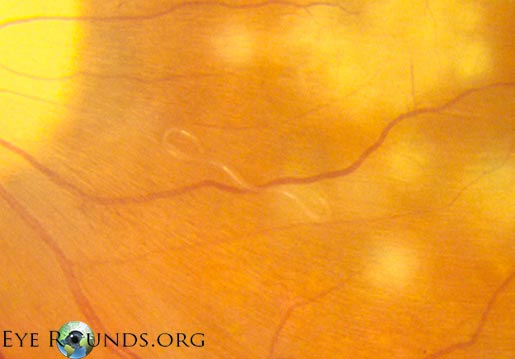
Case 1 was an adolescent with autism spectrum disorder who had a history of pica (eating non-food items). He was hospitalized because of progressive behavioural changes, sleepiness, decreased activity, confusion and abnormal gait. As part of what I assume was a very extensive workup, eosinophilia (an increase in a certain type of white blood cell) was noted in a blood sample, which suggests some type of parasitic infection. Eosinophilia was also noted in a sample of spinal fluid, which essentially screams “neurological parasitic infection.”  An ocular exam also identified a parasite larvae in the back of the eye. The image below (not from this patient) shows what this looks like.

These findings, plus the changes noted on MRI, lead to a very solid presumptive diagnosis of B. procyonis infection. This was confirmed later through detection of antibodies against the parasite in the patient’s blood.

Laser treatment was used to kill the parasite in the eye, and a combination of albendazole (an antiparasitic) and a corticosteroid (to reduce inflammation) was used to treat the neurological component. Very fortunately (since this is often a devastating disease that causes irreversible damage), the child made a full recovery.

The family’s property was investigated to look for a source of infection, and a raccoon latrine was identified on a rooftop, which allowed feces to fall to the ground. Since the child had a history of pica, it’s assumed that he ingested feces or contaminated soil from that area.

Case 2 was an otherwise healthy 15-month-old child who was hospitalized because of acute onset of neurological disease, with weakness, altered gait and changes in muscle tome. Profound eosinophilia was noted in the blood and spinal fluid, but it doesn’t seem like parasitic disease was flagged at that time. A wide range of treatments for different possible causes was implemented initially, none of which included anti-parasitics.

Three months later, the child was taken to a follow-up appointment where he happened to be examined by the same doctor that treated Case 1. An ocular exam was performed and a parasite larva was seen. He was then finally treated with albendazole and corticosteroids. He also had antibodies against B. procyonis in his blood, rounding out the diagnosis. Unfortunately, this patient had serious neurological sequelae, possibly due to the delay in diagnosis and treatment. The eosinophilia should have been a trigger to think about parasitic disease, but it’s not clear why that wasn’t explored. Even with prompt treatment, the prognosis can be poor, but with late treatment, it’s worse.

No source of infection was found at the home of case 2, but raccoons were known to be present in the area. The child had been noted to put soil and bark mulch into his mouth, so presumably this is a really rare and really bad luck situation where a raccoon had defecated in the same area or where the mulch was obtained.

Take-home messages

  • Raccoons should be discouraged from hanging around homes. Not feeding them and preventing them from accessing any food source are key steps (and also helps avoid other diseases raccoons may carry, like rabies!).
  • People with a tendency to stick things in their mouths outside (including soil and feces) are at higher risk of infection. Proper supervision is important. If someone like that lives on or visits the property, there should be extra efforts to prevent raccoons from entering in the yard, and the yard should be inspected regularly for animal feces.
  • Physicians need to have better awareness of zoonotic diseases in general. It’s hard to improve education about oddball diseases like this, but an obvious flag for potential parasitic disease seems to have been missed.

Jason Stull and I recently did a scoping review of human B. procyonis infections. It’s not open access until October, but I’ll write a follow-up post soon highlighting the main findings.

Image from eyerounds.org (University of Iowa)

test

Pathogen contamination of raw pet diets isn’t surprising. We know it’s a risk. So a new issue with Darwin’s Natural Pet Products isn’t really surprising either, since they’ve had multiple issues in the past, including ignoring an FDA recall request. They’re back in the news again, but this time it’s because of human illness (with a side of another ignored request). Maybe serious illness in a person will prompt more action, but I don’t see anything about this situation or a recall on their website, so that’s not encouraging.

The latest FDA advisory follows detection of E. coli O157 from a beef-based raw dog food and Salmonella from one duck-based and one chicken-based dog food marketed by Darwin’s. But the really concerning part of the story is how the problem was identified:

  • In August 2024, a four-year-old child was hospitalized with hemolytic-uremic syndrome, a severe and life-threatening consequence of E. coli O157 infection.
  • The investigation led to testing of raw pet food samples from the child’s household, and the E. coli O157 from the pet food was a genetic match to the one from the child.
  • A dog in the household had been sick the day before the child fell ill. The dog’s disease was minor and so it wasn’t taken to a veterinarian. It could have been related to E. coli or Salmonella from the diet, or it may have been unrelated. A link to the diet makes sense though, particularly since the child had direct contact with the dog but not the dog food. There are lots of ways for contaminants from the raw pet to make it into the child, such as cross-contamination in the kitchen, or contact with used food bowls, but the dog is a logical high-risk source.

The time frame is a bit unusual though. The child got since in August 2024, but the pet food wasn’t tested until May/June 2025. The reason for that is not explained, but maybe the family found the old pet food in the freezer and decided to see if it was a potential source, or didn’t think about the pet food until later, and then were able to find some left in the freezer. It seems like the parents directed the testing through a private (but accredited) lab, with info then being reported to the FDA. However, with the genetic match between the bacterium in the diet and the child, and the time frame of when that food would have been purchased (and fed at least in part to the dog) and the child’s illness, it’s a pretty solid story.

Another concerning aspect of this case is detailed in the FDA notice:

The FDA recommended that Arrow Reliance, Inc [the company that manufactured the diet for Darwins] recall the product lots that tested positive for E. coli O157:H7 and Salmonella. To date, the firm has not recalled the affected products. These products, which were manufactured in May or June 2024, were sold frozen, have no expiration date on the label, and could still be in consumers’ freezers. Therefore, the FDA advises consumers to check their freezers for the affected lots of Darwin’s Natural Pet Products prior to feeding to pets.

How companies can get away with ignoring an FDA request to recall a product that has likely infected someone and caused severe illness is beyond me.

The FDA’s recommendations to consumers are straightforward and are copied below:

  • If consumers have any pet food on the list below, they are advised to throw it away in a secure container. Do not feed it to pets. Do not donate the food.
  • Clean and disinfect all pet supplies and surfaces that the food or pet had contact with.
  • E. coli O157:H7 and Salmonella can affect both people and animals. People with symptoms of E. coli O157:H7 or Salmonella infection should consult their health care providers. Consult a veterinarian if your pet has symptoms of E. coli O157:H7 or Salmonella  infection. See information about human and animal symptoms below.

Here is the product information on the affected lots, also from the FDA notice:

The affected lots of pet food were sold in frozen 2-pound white and clear plastic packages with four separate units. The beef and chicken BioLogics dog food have orange labeling, and the duck Natural Selections dog food has blue labeling. Product lot codes are printed on the front of the lower left unit of the package. The affected varieties and lot codes are:

  • Darwin’s Natural Pet Products, BioLogics All-Natural and Grain Free, Beef Recipe for Dogs
    • Lot 10662, MFG Date: May 30, 2024
  • Darwin’s Natural Pet Products, BioLogics All-Natural and Grain Free, Chicken Recipe for Dogs
    • Lot 10683, MFG date: June 05, 2024
  • Darwin’s Natural Pet Products, Natural Selections Duck Recipe for Dogs
    • Lot 10638, MFG date: May 22, 2024

As someone who works a lot with infectious urinary tract disease in animals and has led urinary treatment guidelines, I guess it’s fitting that my dog got an infection.

To start, I’ll slap myself on the wrist for saying it was a urinary tract infection (UTI). We’ve been trying to improve the terminology in this field by using more precise terms. His specific issue was bacterial cystitis. I’ll use that for the rest of the post, but since UTI is commonly understood, I still use it for some audiences, for now at least.

Ozzie’s peeing predicament

Regular followers of the W&G blog have read about Ozzie more than once in the past. He’s a now almost-3-year-old (and definitely obnoxious) neutered male Labrador retriever.

The male part is relevant. As in people, bacterial cystitis in dogs is most common in females. However, that doesn’t mean that males can’t get bacterial cystitis, or that something particularly unusual is going on if they do. It’s just less common.

Oz also has a risk factor for infectious diseases: He has atopy (environmental allergies) and is therefore on oclacitinib (Apoquel), a drug that’s meant to modulate his immune system to reduce the allergic response, but also causes some degree of immunosuppression. Dogs on this drug aren’t severely immunosuppressed, but there is some increased risk of infection. It’s hard to say if that played a role here, but I suspect it did.

Back to Ozzie’s predicament

Oz went out in the morning and had a big pee. He then urinated small amounts a few more times. Then, throughout the morning, he kept going out to urinate small amounts. He’s a “grass is greener on the other side of the door” dog, who constantly wants in or out, but this was extreme, even for him, and the urination was abnormal. Since he was peeing a lot, it was easy to get a sample – it was turbid with a reddish tinge and some blood clots. That’s clearly not normal.

Stranguria (straining to urinate), pollakiuria (frequent urination) and abnormal-appearing urine scream “bacterial cystitis” but that’s not the only possible cause of these signs. We also always need to bear in mind that there can be other underlying issues (e.g. bladder stone, tumour) that may need to be addressed. That said, common things occur commonly. The fact that he’s male brings in some concern, but run-of-the-mill infections happen in males too, and his oclacitinib treatment provided a potentially straightforward explanation for an uncommon situation.

I looked at the urine under a microscope and there were lots of red blood cells, white blood cells and cocci bacteria within the white blood cells, all of which are supportive of bacterial cystitis involving a Staphylococcus sp.

Then the question becomes “to culture, or not to culture?” In a perfect world, we’d always do a culture. However, culture is expensive (very expensive in some places) and the value of the culture has to be considered. I want to do a culture when I’m not confident in what’s going on, when the odds of empirical treatment failure are high and/or when the implications of treatment failure are high. Let’s break those down.

What’s going on?

At that point, I was pretty confident Ozzie just had bacterial cystitis. While he could have something going on at the same time, odds are he didn’t, and culture wouldn’t really help me figure anything out at this stage.

Treatment failure potential

Since we have good guidelines for treatment of infectious urinary tract disease in pets from ISCAID (Weese et al. Vet J 2019) to help us pick approrpiate initial (empirical) antimicrobial therapy, the issue with treatment failure revolves around antimicrobial resistance. Resistance can occur in any infection, but in a young dog with no previous antimicrobial use history, no raw meat or raw treats in his diet, no hospitalization (apart from when he was neutered 2 years ago) and no contact with people that are likely to be shedding a antimicrobial resistant bugs, the odds of him having a resistant infection are really low. So once again, not much value in doing a culture for that reason.

Treatment failure implications

The question I ask regularly is “what will the status of this patient be over the next few days if I guess wrong with my antimcrobial?” If the answer is “likely dead,” I really want a culture and I really want to be confident in my initial drug selection. For Ozzie, the answer is simply “still uncomfortable and peeing a lot.” I’d rather not have that, but the in the grand scheme of things the implications of treatment failure are low. If the initial drug doesn’t work, we have lots of runway to figure out what will work before Ozzie’s in any serious trouble.

Generally I’d like to get a culture done routinely in cystitis cases, but for understandable infections that seem pretty run-of-the-mill in patients at low risk of a resistant infection, I’m fine with empirical treatment (as is common practice in people too).

That said, I did a culture anyway (more out of curiosity than anything else).

Next, I did exactly what we do NOT want people to do: I found some leftover antibiotics in the house and gave that to Ozzie. (Merlin, our previous Lab, had a root canal at one point and was sent home with 14 days (!!!) of antibiotics that we used for a total of 0 days… ignoring instructions from their veterinarian is another thing we do NOT want dog owners doing, but I’m pretty well versed in this area so I changed the treatment).

So Ozzie got amoxicillin-clavulanic acid for 5 days. If I’d had to get a new prescription for him I would have just used amoxicillin, but it was Sunday and I’m lazy, and amox/clav is also a recommended first line drug.

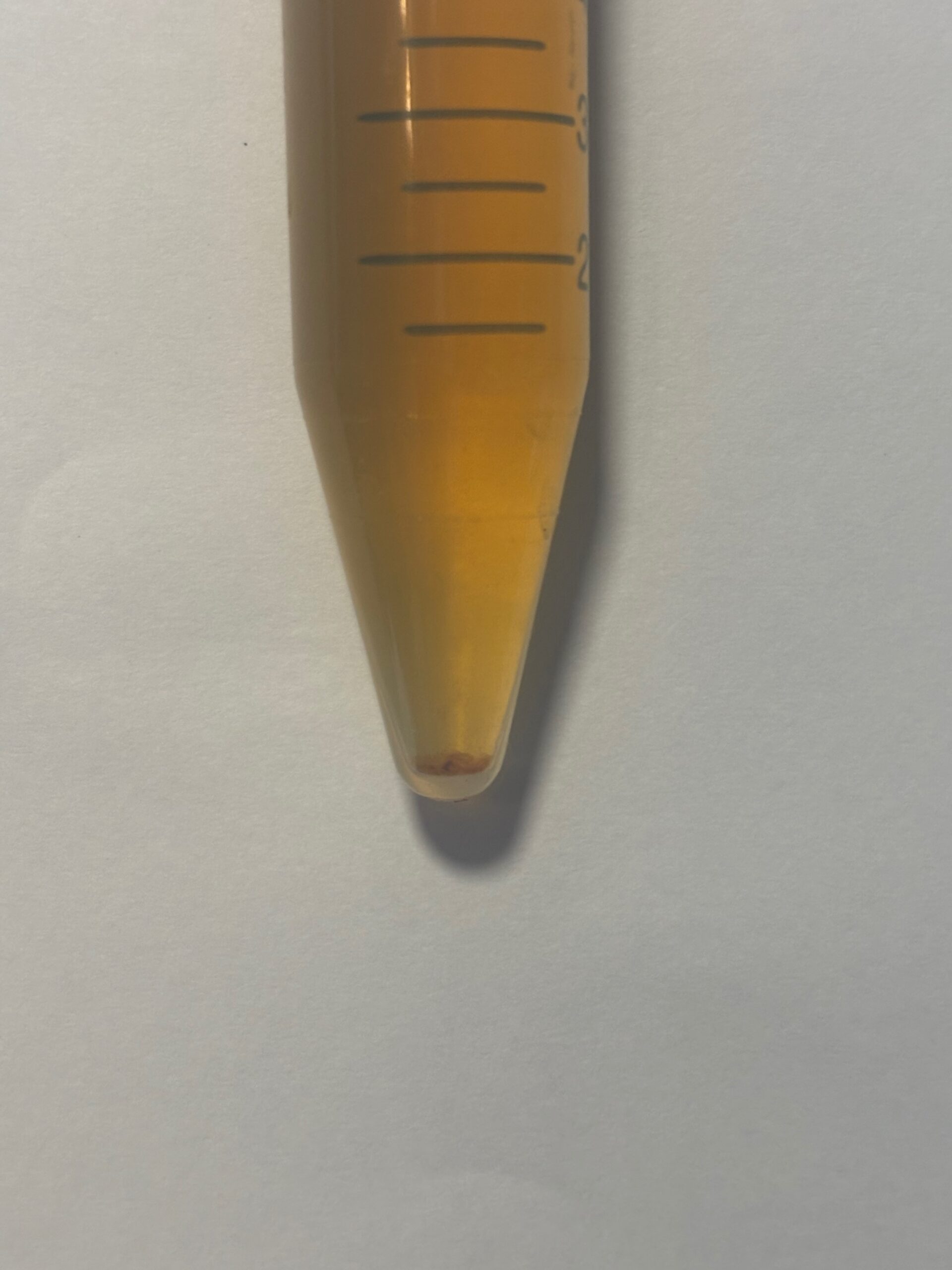
The next day, Ozzie was already looking better. He was peeing less frequently and his urine looked pretty good. There was still a bit of blood, as you can see by the little pellet of red at the bottom of the tube in the picture below. I checked the culture and could already see heavy growth of bacteria. The picture second picture below is the culture plate after 48 hours, which shows a nice, heavy, pure culture of Staphylococcus pseudintermedius.

Ozzie finished his antibiotics and… that was it. He responded well and there wasn’t a need to do anything more. If he relapses, then we need to do more investigation to see what else may be going on, especially since he had a staph infection, which can be associated with development of struvite bladder stones. But, our treatment goal was a healthy dog and since I got that, that was the end. So far, so good since then too. It’s been a couple weeks and he’s had no further issues. Hopefully it was a one-off infection, but we’ll see what happens.

The other thing we want to consider in any infection is whether there’s a risk factor we can mitigate to prevent it from happening again. Here, it’s tough. We could stop his Apoquel, but then he’ll be itchier (uncomfortable) and prone to secondary skin infections from scratching himself. His atopy is fairly seasonal though, so we can get him off treatment for a good part of the year, which helps.

Ozzie was a pretty straightforward case, which is actually a reason to talk about it. We tend to focus writing and and reporting and talking on the weird and wonderful, but routine disease causes most of the problems. Thinking about how we handle those cases is really important, but easy to overlook because they’re so routine.

test

Our emerging concerns about Rocky Mountain Spotted Fever (RMSF) in Long Point, Ontario, have led to a variety of questions from veterinarians and dog owners. (It’s also led to a lot of rumours, and sorting out what’s real illness vs internet chatter and hype is tough – but that’s another story.)

We’re still trying to figure out what’s really going on, but in the meantime we also need to increase awareness about the disease itself and our tracking efforts. Better awareness can lead to earlier testing and treatment, which can save lives (of both dogs and people). So here’s a quick rundown of what you need to know about RMSF.

What causes RMSF, and what signs does it cause?

RMSF is caused by the bacterium Rickettsia rickettsii, which is transmitted by a few different types of ticks. Here in Ontario, the most common tick vector for this bacterium is the American dog tick, Dermacentor variabilis. In other areas, the brown dog tick (Rhipicephalus sanguineus) and the Rocky Mountain wood tick (Dermacentor andersoni) are the main vectors. Historically, the American dog tick has largely been considered a nuisance but not a disease threat in Ontario, with most of the attention focused on the black legged tick (Ixodes scapularis) which transmits the causative agents of Lyme disease and anaplasmosis. That thinking needs to change a bit now, at least around Long Point.

The signs of RMSF are quite variable and often vague. Mild cases are probably missed regularly as they’re easily overlooked or dismissed, with vague signs such as lethargy, decreased appetite or non-specific pain or stiffness. Fever is probably pretty common at some point in disease but is not often detected by owners. More severe cases can involve a wide range of signs, including neurological disease, ocular disease, rash or other skin issues, enlarged spleen or liver, enlarged lymph nodes and increased bleeding tendencies. The latter is related to one of the more consistent findings on bloodwork in affected dogs: thrombocytopenia (decreased platelet count). Severe thrombocytopenia can lead to bleeding in any tissue, but may first be noticed due to petechia or ecchymoses (small dots of patches of bruising) on the gums or on the belly.

How long does it take an infected dog to get sick with RMSF?

The incubation period is the time from exposure to the development of the first signs of disease. That’s particularly relevant in dogs that may have transient exposure to high risk areas (like Long Point), but may not get sick or be tested until they’ve returned to a lower risk area. For RMSF, the incubation period is about 2-14 days. The cases we’ve seen so far in dogs that visited Long Point all developed disease within that window.

How is RMSF diagnosed in dogs?

Most often, PCR is used to detect the DNA of the R. rickettsii in the blood of infected dogs. This test is commonly included in some of the “vector borne” or “fever of unknown origin” PCR panels offered by commercial veterinary diagnostic labs.

We can also test blood samples for antibodies against the bacterium, but detecting antibodies alone is not enough to confirm infection. To do that, we need to test two blood samples, one at the start of disease and one a few weeks later, and show at least a 4-fold increase in antibodies (which is what we’d expect soon after and active infection). This is less less commonly used compared to PCR, and there are fewer labs that offer this kind of serology, because it can only provide a retrospective diagnosis several weeks after the dog gets sick.

It’s important to consider running a PCR for RMSF in any dog that has recently visited Long Point or adjacent areas (or anywhere else RMSF might be present) that also has compatible clinical signs such as fever, decreased platelet count and/or pretty much any non-specific disease of unknown cause. Since signs of RMSF can be so variable, querying exposure history and knowing where the disease is present are important to help know when to test.

Is it easy to miss RMSF in a dog?

Yes, and that’s the big concern because RMSF is very treatable IF it is caught early, but it can be very serious if it’s not.

One of the big diagnostic challenges right now is making sure it’s on the radar for veterinarians and dog owner. In areas where RMSF is endemic, it’s pretty high on the list for sick dogs, so dogs get tested and will even start empirical treatment before test results are available in highly suspect cases. In areas where it’s not a currently known issue (like most of Ontario), it’s easy to miss, which is why it’s so important to spread the word about the current situation. Dogs (and people) may visit areas that are high risk but live in areas that are low risk, where their local veterinarian (or physician) may not have RMSF on the radar at all.

Another major challenge is the often vague clinical signs in dogs, especially early in disease. Most often, RMSF is but one of many potential causes, and the signs of RMSF often overlap with those of immune-mediated diseases, particularly immune-mediated thrombocytopenia (IMTP), a disease caused by the immune system attacking the body’s own platelets. The main treatment for IMTP is immunosuppressive drugs, which are the last thing we want to give a dog with a serious infectious disease. So it’s critical to figure out which disease may be the cause of thrombocytopenia is a dog has potentially been exposed to RMSF before starting treatment.

Does being on a tick preventive rule out RMSF in a dog?

Wouldn’t that be nice… but no it doesn’t, for a few reasons:

  • Compliance. Sometimes people forget to give their dog its preventative, or they get off schedule. Even when they think the dog is up-to-date, a close review sometimes finds lapses.
  • Efficacy. Tick preventives are very good, but they are not 100%. We definitely want dogs on them, but they are not a guarantee that tickborne disease cannot occur, especially diseases where it takes less attachment time for the tick to infect the dog (see below).
  • Speed of kill. How long it takes for a tick to transmit the bacterium and how quickly tick preventives work to kill a tick once it bites has to be considered. The transmission time is very well described for dogs; the Companion Animal Parasite Council says a tick must attach for 5-20 hours to transmit R. rickettsii, although some data from other species suggests the transmission time could be even shorter. Some tick preventives for dogs work very quickly and should kill ticks within minutes to a couple hours, but others can take 12 hours. That’s fine for preventing Lyme disease, since it takes 24-48 hours for Borrelia burgdorferi to be transmitted after a tick attaches, but it may not be quick enough to prevent transmission of RMSF.
    • Even shorter acting tick preventives should still only be be considered a very important aid in the prevention on RMSF. Regardless of the product, it’s still important to avoid ticks, do regular tick checks, and consider RMSF if the dog is sick and has visited a potentially high risk area.

Can RMSF be treated?

RMSF can be effectively treated, but catching it early is very important. The sicker the dog is when treatment is started, the poorer the prognosis. Doxycycline is the treatment of choice, but other things might be needed depending on the type and severity of disease. Usually, the response to doxycycline is quick and obvious, and the prognosis is good if treatment is given early enough.

Spread the word!

We’re continuing to investigate this situation, in both dogs and ticks in the Long Point area, and we have a great team of colleagues working together nationally, provincially and locally, in human and animal health, to maximize the response and communication.

As ever, we’re trying to walk the line between increasing awareness and causing paranoia. We want people (dog owners, veterinarians, general public, physicians) to have RMSF on the radar, and take tick avoidance seriously as always. At the same time, we don’t want to cause panic, feed internet rumour mills, or make people afraid of going outside. It’s always a tricky balance with emerging infectious diseases.

test

Lately, there have been quite a few news reports about canine parvovirus in London, Ontario. Overall the report have been pretty balanced, highlighting the fact that parvo is causing problems but not overplaying the issue (which happens all too often). Some reports have said there’s an “outbreak” of parvo in an area.

Sometimes a situation like this may be a true outbreak, but most often, it’s a small cluster among the baseline of endemic disease, or it’s just an “outbreak of discussion,” not disease. My guess is that the issue here is the typical small cluster of cases in a group of inadequately vaccinated dogs that’s gotten some extra attention and media chatter, but that the overall parvo rate and risk in the city is pretty much unchanged. Unfortunately (and as usual), we don’t really know for sure, since data are sparse, anecdotes can be misleading, and we don’t have any formal surveillance for parvo in dogs.

Canine parvovirus is an endemic virus pretty much everywhere on the planet where there are dogs. When it first emerged, it was devastating, causing widespread illness and death. Now, it’s largely controlled in areas where there’s good vaccine coverage in the canine population, but cases still occur because of incomplete vaccine coverage and infection of puppies before they can develop protection from their vaccines.

Vaccination is undeniably the cornerstone of parvovirus control where it’s available. We have really effective and safe vaccines for this very serious disease, that’s caused by a virus that’s highly transmissible and hard to avoid. In one article, a veterinarian was quoted as saying parvo vaccination for dogs is “non-negotiable” in her practice, and that’s a fair position to take.

Our parvo vaccines are incredibly effective. It’s exceedingly rare to see parvovirus in a properly vaccinated dog. Almost invariably, if a “vaccinated” dog gets parvo, it’s a dog that didn’t get a full/proper vaccine course.

Most of the parovirus vaccines currently available on the market are modified live virus (MLV) vaccines which are very effective, and can produce robust immunity with a single dose. However, vaccine response in puppies can be unpredictable. If their mother was vaccinated against (or previously infected with) parvo, she will pass antibodies on to her puppies. Those antibodies hang around for a while, providing some protection but also interfering with vaccine response. That’s why we typically vaccinate puppies at 8, 12 and 16 weeks of age – not because they need multiple doses or a specifically timed series, but rather because we want to start young to try to get the puppy protected ASAP in case those maternal antibodies are starting to disappear, and continue to an age where we’re pretty confident that the puppy will produce its own active immune response to the vaccine.

I want to get at least one dose of parvo vaccine into any puppy at 16 weeks of age or more. An extra booster at 20 weeks of age is a bit of an insurance policy – it’s probably not needed if the puppy got a dose at 16 weeks, but it provides an extra buffer in case the puppy is one of those rare cases that didn’t response to the previous dose because of lingering maternal antibodies.

After that 16 or 20 week dose, we give the dogs another dose in 6-12 months of age. With that, we have given 2 doses that we are quite confident will stimulate an active response and provide immunity, and given over a relatively long time frame (which typically produces a better immune response than a condensed series of vaccines). That should give the dog very solid immunity for at least 3 years (and probably more, but we don’t know how much more in any given dog).

If an adult dog hasn’t been vaccinated before (or it’s vaccine status is unknown), it should respond nicely to a single dose of parvo vaccine. A second can be given a month later, but it’s probably unnecessary. An additional dose 6-12 month later will then establish nice long-lasting immunity.

So, if you have a puppy:

  • Make sure you talk to your veterinarian about vaccinations ASAP. Sadly we see cases of parvo in young puppies where the owner just didn’t get around to getting the dog vaccinated as early as possible (life’s busy and it’s easy to forget…). Parvo can then be fatal, and/or can be very expensive to treat (particularly relative to the cost of a vaccine appointment…).
  • If your puppy has gotten a parvo vaccine, and it’s less than 16 weeks of age, one is NOT enough. We need to makes sure the dog gets that dose at 16 weeks or more. Most “of ‘”vaccine failures” I see are dogs that got their last dose at 12 weeks. That’s not a vaccine failure in my mind, that’s a dog that didn’t get vaccinated properly. Since rabies vaccination can be done (and is ideally done) at 12 weeks of age, some people forget or are less motivated to get the 16 week parvo vaccine, but critical to ensure that gets done. It can be a life-or-death decision for some dogs.

As with most of these “outbreaks,” things will likely die down in London ON, likely from a combination of improved vaccination, the infection burning through the high risk group, and waning attention and discussion. That’s the usual routine. However, we will see similar incidents elsewhere. Parvo will always be a risk wherever there are dogs, so we need to maintain vigilance and vaccine coverage.

Vaccine hesitancy is a challenge in veterinary medicine, just like human medicine. So is complacency. When vaccines work, people don’t see the devastating disease, and they forget why those routine vaccines are so important.

test

I recently wrote about a couple cases of Rocky Mountain Spotted Fever (RMSF) in dogs in Ontario. It’s not a disease we expect to find here, but we’re concerned about this tick-borne disease because it can be very nasty, and we do have the ticks for it. Ticks and the diseases they transmit are a evolving issue, especially with the impacts of climate change. We’re seeing more ticks and more disease, both in terms of numbers and ranges.

At the time, I pointed out the possible considerations for a situation where we’d found a small number (2) of unexpected cases in dogs. To recap:

It’s possible this current situation is:

  • A single unusual but precedented case, plus online chatter
  • A cluster of cases from a point source of exposure that will die out
  • One or a cluster of cases from exposure to infected adventitial ticks (i.e. ticks from high risk areas that dropped off traveling birds)
  • An indication that RMSF is emerging in some areas in Ontario

BUT now we’re up to 5 affected dogs. Four had a history of being at Long Point, Ontario, an area that has long been at the forefront of ticks and tickborne disease in Ontario. The other dog had more of a vague history, but may have been in that area too.

Whether it’s 4 or 5, that’s enough of a trend to suggest there might be a local focus in Long Point of ticks carrying Rickettsia rickettsii (the bacterium that causes RMSF, which is transmitted by certain ticks).

Obviously we need to investigate this more. It also means we need to be more aware of this disease and pay even more attention to the ticks. In Ontario, RMSF can be transmitted by the American dog tick, Dermacentor variabilis, which is well established here, but a different species from the tick that typically get the most attention, the black legged tick Ixodes scapularis, which is associated with transmission of Lyme disease.

For dog owners:

  • Be aware of the risk of tickborne diseases. For RMSF, be particularly aware if you spend time at Long Point.
  • Talk to your veterinarian about tick prevention medication.
  • Try to avoid high risk areas (e.g. lots of leaf litter, long grass).
  • Perform regular tick checks on your dog after being outside.
  • If your dog has been around Long Point and is sick, don’t be afraid to ask your veterinarian about the possibility of RMSF.

Also for dog owners:

  • Realize that if your dog is exposed to ticks, so you are (but you’re not on tick preventative medications). People can get RMSF too, and it can be serious.
  • If you are exposed to ticks and are sick, make sure your physician knows about your tick exposure and where you’ve been.
  • Perform regular tick checks on yourself after being outside.

For veterinarians:

  • Realize that we may have to consider RMSF in dogs that have not travelled outside Ontario.
  • Be prepared to test dogs that could have RMSF (PCR is the usual approach).

For physicians:

I’ve heard of a few possible cases of Rocky Mountain Spotted Fever (RMSF) in dogs in Ontario in the past week. It’s pretty preliminary information, but it’s relevant to both dog and human health so it’s worth getting some information out about it now. At least one case was a pretty solid diagnosis: Rickettsia rickettsii was identified on PCR, and the dog had clinical signs that fit with RMSF. I’ve also heard rumours of a couple of others from the same general area; in these situations it’s always tough to know how much stock to put into online comments about other cases, but I’m still trying to chase down more information to confirm.

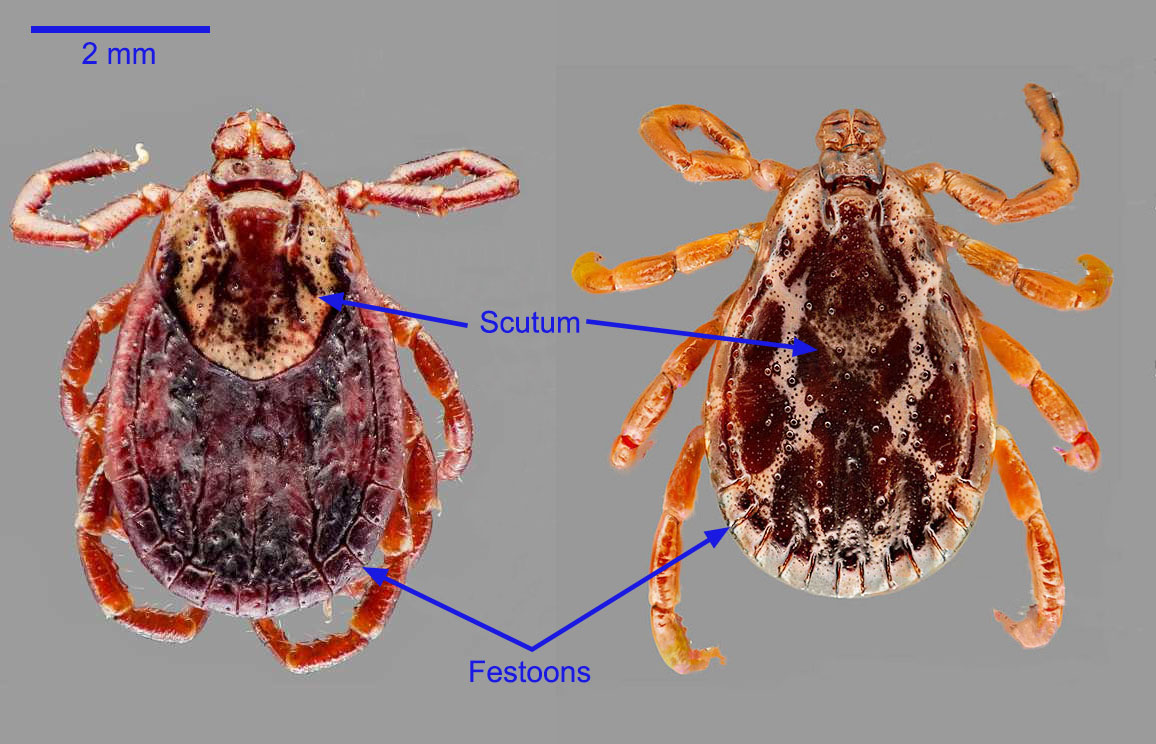
RMSF isn’t considered an endemic disease in Ontario.  We do have one of the main tick vectors (Dermacentor variabilis, the American dog tick, see image) in the province, and locally acquired cases have occasionally been found in dogs and people, but it’s not a disease that’s generally considered much of a risk locally. That’s probably because, despite having a competent tick vector, the causative bacterium (R. rickettsii) wasn’t really prevalent in our wildlife reservoirs (e.g. rodents, rabbits). However, when ticks move they can bring pathogens with them, so it’s possible for new pathogens to gradually work their way into an area and start building up in the reservoir hosts before we recognize the problem.

It’s possible this current situation is:

  • A single unusual but precedented case, plus online chatter
  • A cluster of cases from a point source of exposure that will die out
  • One or a cluster of cases from exposure to infected adventitial ticks (i.e. ticks from high risk areas that dropped off traveling birds)
  • An indication that RMSF is emerging in some areas in Ontario

It’s hard to say which of those is most likely. Strange disease events occur all the time, and most often aren’t the harbinger of a new ongoing problem, but tickborne diseases are changing and we have to be concerned about the last possibility.

Sorting out dog origin and travel history in these cases can be challenging too. At least one of the affected dogs most likely acquired the infection in the Long Point area, a location in Ontario that was one of our first high risk regions for ticks and tickborne disease, and one that would be a logical place to find something new or evolving. More time is needed to sort out how many cases there actually are, and where the dogs might have been exposed.

RMSF is a concern because it can cause severe disease. At least one of these recently affected dogs died. RMSF can also kill people. The prognosis is worse when diagnosis and treatment are delayed, so it’s important for veterinarians and physicians to be aware of any changing regional potential for this disease to occur.

In dogs, RMSF infection can result in a wide range of clinical signs, from no apparent disease to rapid death. Classical signs include fever, weakness, petechia/ecchymoses (dots or blotches from bleeding under the skin), other signs of bleeding (e.g. in the eyes), a rash, joint pain/swelling, swelling of the spleen, and a range of other, often non-specific signs.

Decreased platelet counts are the most common abnormality on a complete blood cell count (CBC), but there may be changes in white blood cell numbers too. Sometimes, other tickborne diseases (e.g. Lyme disease, anaplasmosis) are considered first. Sometimes, it looks like an immune mediated disease, which is more common around here, and which is treated with immunosuppressant drugs – something we don’t want to give a patient with RMSF.

Diagnosis of RMSF is usually based on detection of bacterial DNA in blood by PCR. Serology (antibody testing) is nice to have too, but isn’t as readily available. Antibiotic therapy can be effective, and the prognosis is very good if antibiotics are started before disease is very severe, so early recognition is key.

People don’t get infected with RMSF from dogs, but a diagnosis of RMSF in dogs is relevant to human health since both people and dogs get infected the same way – from an infected tick. If a dog gets infected, it means there are infected ticks in the area that could also infect people. A case report from 2003 about presumptive cases of RMSF in two dogs and their owner highlights this.

  • The report is from the southern US, where a person’s two dogs died. The first had signs that fit with RMSF and was taken to a veterinarian, but because the dog died overnight, samples weren’t submitted for testing. Another dog in the family died 8 days later. A couple of weeks after that, the owner went to the ER with vague signs, then went to her doctor a few days later with progressive disease (that included a fever and rash, which are signs of RMSF). She then was admitted to hospital and shortly thereafter was started on antibiotics, including doxycycline (the drug of choice for treating RMSF). Unfortunately, she deteriorated quickly and died. She was ultimately diagnosed with RMSF. She had two other dogs that also got sick, and one was confirmed to have RMSF.
  • So, this person and their dogs had abundant exposure to infected ticks, and developed RMSF. The dogs got sick in advance of the owner, but that early warning sign was missed. If the person had known to think about RMSF (and mention it to her physicians), it’s possible she would have received earlier treatment and survived. But, the owner didn’t think about it, the veterinarian didn’t raise the issue when the dog was seen, and the physicians presumably didn’t query anything about pets. Multiple opportunities were missed to raise the question of “could this be RMSF?

That’s why we need to pay attention to animal and human diseases in parallel. There’s lots of talk about One Health, but the talk:action ratio is really high. That’s my ongoing frustration with it: while the One Health concept is great, there’s very little actually being done to improve animal/human/environmental health as a whole. This situation is an area where we can act to spread awareness to maybe help both human and animal health.

American dog tick image from: https://wcvm.usask.ca/learnaboutparasites/parasites/dermacentor-variabilis-american-dog-tick.php

test

In areas where ticks and fleas are a concern (which is much of the world), dogs (and to a lesser degree cats) may receive regular tick prevention medications. Some people would rather not use them, whether it’s because of cost, concern about adverse effects, a desire to use more “natural” products or internet misinformation. This, along with far fewer regulations for any compounds not marketed as “drugs,” opens the door for a lot of untested, unproven or downright ineffective products and devices.

Consider ultrasonic insect repellants. These devices are based on the theory that the high frequency sounds they emit are beyond our hearing (and therefore don’t bother us, or our pets) but are discernible to pests, and help drive them away. Various such devices are available commercially, and since they are not drugs and are not marketed as medical devices, the receive very little scrutiny.

Do ultrasonic insect repellants actually work?

The short answer seems to be no. Studies have shown no effect; for example, a study comparing two ultrasonic flea collars in cats found neither was effective (Dryden et al. JAVMA 1989).

In 2016, the New York Attorney General’s Office sent cease and desist letters to companies that were marketing ultrasonic mosquito repellents with claims of efficacy, further supporting that there seems to be no compelling evidence that they work.

Yet, there are still lots of these products around making lots of claims about what they can do.

To me, not having any data for a product related to healthcare is bad (and protection from fleas, ticks and other disease vectors is an important part of healthcare for people and animals, whether drugs, pesiticides or other means are use). Unfortunately there are lots of products on the market for all kinds of things that have absolutely no evidence of effectiveness, just someone who can spin a good story about them.

What’s perhaps even worse is using crap-tastic data to market a product and over-stating its efficacy. (Worse yet is when there is testing that shows something doesn’t work, and the company buries the unfavorable results.)

Overstating efficacy is not just a problem because it misleads consumers to spend money on something that doesn’t work, but also because it can steer people away from effective approaches (tick preventive medications) and ultimately result in increased disease risk.

I got a recent question about a product called Tickless, which is being marketed with claims that it works as a tick repellant for dogs. (Full disclosure: the question came from a pharma company employee. It was a question, not a request for a post. I don’t get any funding from them and got nothing for writing this. I’m writing it because I hate to see animals get preventable diseases because well-meaning owners were misled.) My comments below are focused on this product, but would apply to any similar product.

The company claims TICKLESS technology underwent rigorous testing and was proven effective by a clinical study at the School of Veterinary Medical Microbiology and Infectious Diseases Laboratory at the University of Camerino, Italy.

Let’s look at what’s available to support that.

The claim seems to be based on an unrefereed study from 2012 that looked at reduction in fleas and ticks on 30 dogs at each of 2 different shelters. There’s no mention of ethics approval for the study. Dogs had to have not recently received flea/tick medication (good) and had to have at least 4 fleas or ticks on them. A standard method to evaluate them for ticks was used (also good). The each group of 30 dogs was subdivided into 3 groups:

  1. Activated device (n=20)
  2. Treatment with fipronil and lufenuron (n=5), unactivated device
  3. Unactivated device (n=5)

The subjects included in the experimentation were kept in separate enclosures for the entire duration of the study, ideally in individual enclosures or with a number of other similar dogs

  • This is a bit hard to follow and potential variation in housing is really important for fleas, since dog-to-dog spread would be the big risk.
  • Tick exposure risk would likely be very low in a shelter. Most ticks are acquired from outdoor environments, so for them, it would be expected that ticks would finish feeding and drop off over time, and new ones would not likely be encountered. That’s a huge factor when assessing a tick preventive.

Their results claim to “…show the effectiveness of Tickles Pet in not permitting an increase in the number of ticks and fleas in all subjects studied and experimentation and to reduce the number of parasites in some subjects.” Specific data are limited:

  • Drugs and inactivated device: “drastic reduction in the number parasites” (expected since drugs work really well, but really vague. We need numbers.)
  • Inactivated device and no drugs: “number of parasites remained stable in so subjects but increased considerably in others” (again… need numbers.)
  • Active device: “number of parasites remained stable, and in some subjects a considerable reduction was observed” (yep… we still need numbers, and analysis!)

They concluded that the study confirmed “the effectiveness of the product in not permitting an increase of the parasites and in reducing the number of parasite (sic) in some subjects, which can therefore be used, without side effects of any kind, on subjects for which an infestation of ticks/fleas has been confirmed, so as to avoid the worsening of the situations, and in healthy subjects so as to prevent infestation.”

That’s a stretch, and it’s not hard to see why this was never published.

They also report a study done using this device at the University of Milan from 1993. It’s a hot mess. They put the device on:

  • 5 parasite-free dogs
    • They were still parasite free (I’m guessing after a week but it’s not clear).
  • 5 “weakly infested” (not sure with fleas or ticks) dogs
    • 4/5 had no parasites after a week. How many of those would have naturally eliminated the parasite, since they don’t inhabit the dog forever? It’s hard to say.
    • No parasites were seen on day 35. There’s also no info about whether these dogs were treated with anything for their parasite infestation.
  • 15 “severely infested” (again, not sure with what) dogs
    • 76% reduction… but there were 15 dogs in the group so the numbers don’t fit. 11/15 would be 73%. 12/15 would be 80%. That’s another red flag.
    • There was 97% reduction by day 35. Again, how many would have eliminated parasites themselves? Plus, 14/15 is 93%, not 97%, and 15/15 is obviously 100%. Where does 97% come from? Are these numbers real? What’s the outcome measure if it’s not dogs that had their infestation eliminated?

They also say “The control at day 15th put in evidence a 80-90% reduction in parasites

  • What control? How many dogs? What kind of infestation?
  • Also, if there was an actual control group, why report results for it at day 15, and results for the test group at days 7, 9 and 35?

More red flags.

They also claim efficacy based on a 2018 study that was done by VCA, to see “whether or not the European-manufactured, ultrasonic pest-repellent technology of TICKLESS is as effective on pets in the United States as it is on the European counterparts.” But, there’s nothing published about this study, VCA personnel are not quoted in any of the study materials and I can’t see any reports by VCA about the results. That raises a few more red flags.

The content of this study also raises lots of concerns. It reportedly involved giving out collars to 100 dogs. Owners filled out a questionnaire before and after the study period. They said: “The outcome of the test gave a clear picture on the efficacy of the ultrasonic tick and flea repellent since 94% of all pets involved stayed totally free of ticks and 88% stayed totally free of fleas thru out the whole test period.” But…

  • What percentage of dogs without a collar would have been tick-free in these areas anyway?
  • Were any of these dogs also on tick prevention medication?

Without answering those two questions, we can’t interpret anything from this “study.” These results could mean the product worked, it did nothing, or that it was a tick magnet.

They also said that 6% of owners reported finding fewer ticks than normal and 12% reported finding fewer fleas. That’s not actually an encouraging number since there’s likely a placebo effect with subjective assessments like that.

A proper study would have had a control group of dogs with an inactive collar, randomization to provide dogs with either the active or inactive collar, specific criteria for whether or not the dog could be on tick preventive medications, and more detailed information on infestations. That’s a really basic study design, and as cheap and as easy as doing what they did. So why didn’t they do it properly? It’s hard to say… lack of understanding of the basics of study design? Not wanting to actually know whether it works? Not having confidence that it works? Just looking for something that can go on advertising materials (e.g. “scientifically tested”)? Who knows. All I can say is that this study had no hope from the start, and tells us nothing apart from the company can’t or doesn’t want to design a proper trial.

Are there concerns about overuse of anti-parasitics in pets?

  • Yes, absolutely. These products are quite safe overall but no drug is 100% safe. Some animals experience adverse effects.
  • There are also poorly understood but increasing concerns about the environmental impacts of these drugs (since they are excreted in urine and feces).

I’d love to have a non-pharmaceutical, safe, effective and affordable tick repellant. (I’d love one for me and my pets, especially if it kept mosquitoes away too!) But as much as l’d like this product or similar products to work, we don’t have any evidence that they do. Ticks, mosquitoes and fleas account for massive impacts on human as well as animal health. If we had a safe, effective non-pharma approach, we’d use it. That’s a multi-billion dollar market just waiting for the right product. The fact that we don’t have an effective product on the market even for people shows that we don’t have one that works.

These products themselves are likely relatively harmless, but there’s a potential harm component when people try to use them and therefore forego effective treatments.