When bacteria containing NDM-1 (New Delhi metallobetalactamase 1) were first identified a few years ago, I talked about it during presentations as something bad that’s coming our way. NDM-1 is an enzyme that gives the bacteria that possesses it resistance to a huge range of antibiotics, to the point that few or no viable treatment options are available. Given the close relationship between animals and humans, I figured it was only a matter of time before cases were identified in animals, especially household pets. A presentation by an FDA researcher at the 2012 Interscience Conference on Antimicrobial Agents and Chemotherapy (ICAAC) has confirmed the finding of NDM-1 in E coli from a pet cat in the US. I can’t take much credit for foresight because it was pretty predictable, but it re-affirms concerns about emerging diseases and how infectious pathogens can move between people and animals.

Not much is known about this current case, since the E coli isolate was submitted for testing as part of a large ongoing surveillance study by Dr. Dawn Boothe of Auburn University. At this point, it’s unclear whether the cat had been on antibiotics earlier, whether the owner had been diagnosed with the infection, whether the owner had traveled to areas where this bug was first found (e.g. India), and other relevant pieces of information remain unknown (or at least unreported).

The cat was positive for the NMD-1 E.coli on multiple samples.  The most intriguing aspect of this case is the fact that the culture samples from the cat were collected in 2008 and 2009 – at least a year before NDM-1 was first identified in the US. That’s strange and concerning, and raises lots of questions about where this super-E.coli originated.

Some possible origins of the NMD-1 E.coli in this cat include:

  • The owner may have traveled to an area where the bug was present, became a carrier and spread it to his/her cat upon returning home.
  • The owner could have been infected when traveling, but it the infection may have been minor such that it didn’t require medical care or a culture wasn’t taken (so no one knew it was being caused by a super-bug), and subsequently the owner passed it on to the cat. (Remember that NDM-1 is a major concern because very few antibiotics are effective against it. However, the enzyme doesn’t make the bacterium that carries it inherently more able to cause disease, so minor infections are possible.)
  • On ProMed, the moderator stated that he believes stowaway rodents from India or Pakistan likely carried the bug to the US and spread it amongst other rodents, with eventual exposure of the cat through catching an infected rodent. It’s possible but it’s a major stretch, in my opinion.
  • Perhaps the cat came from one of those endemic regions. That’s pretty unlikely but there’s a lot of animal movement around the world, with very little regulation, so it is possible.

We may never know how this cat got infected, but this case should be a reminder that we need to pay attention to animal populations in parallel with the human population. I keep saying it, but getting action has been difficult. People like to talk about "One Medicine," but actually getting people to practice "One Medicine" has been easier said than done.

I don’t know whether it’s because

a) there are more rabid beavers these days,

b) rabid beavers have always been around in these numbers but they have recently acquired a taste for human flesh, or

c) it’s just a fluke,

but another rabid beaver was recently reported in the US.

The latest incident involved a beaver in West Springfield, Virginia that chased after some kids at a nature centre. The kids had been swimming and saw a beaver swimming towards the dock. It’s not that unusual to see beaver’s swimming around in some areas, but like most wildlife, they typically stay away from people. Not this one though. It "leaped out of the water onto the dock, acting aggressively and chasing the children." Police shot the animal and testing confirmed it was rabid. Presumably, no one required post-exposure treatment since there were no bites.

While rabid beavers are rare, this and earlier incidents involving attacks by rabid beavers, otters and other critters highlight some basic principles regarding rabies safety:

  • Stay away from wildlife.
  • Mammalian wildlife that are acting abnormally, including displaying no fear of humans, should be considered rabid until proven otherwise.
  • Any bite by a wild mammal should be considered a potential rabies exposure. The animal should be tested whenever possible and if it can’t be shown that the animal wasn’t rabid, it must be assumed that there was rabies exposure.

Common sense goes a long way toward avoiding rabies exposure, but sometimes it’s not avoidable. Knowing what to do in the event of a bite from a wild and potentially rabid animal is important. The key is involving physicians and public health personnel who understand rabies exposure risks, so that a proper risk assessment can be done and treatment can be started promptly if it’s indicated.

Image: A North American Beaver (Castor canadensis), by Laszlo Ilyes (click image for source)

If you ask people about tapeworms, they typically think about the "ick" factor of having a  large worm in their gut, but they probably don’t get too concerned. However, some types of tapeworm infection can be serious health problems in humans and animals. One of the worst is infection by the tapeworm species Echinococcus multilocularis. A couple of recent reports about E. multilocularis in Canada have received a lot of attention.

With Echinococcus, the problem isn’t the worm living in the intestine. Adult worms live in the intestinal tract of only "definitive hosts," which are primarily foxes and coyotes in North America. The worms aren’t necessarily a problem for these animals, but they can pass large numbers of tapeworm eggs in their stool. The parasite’s normal life cycle continues when small animals (e.g. rodents like mice and voles) swallow a tapeworm egg. The parasite then develops into a cyst in the animal’s body, and if/when the little critter is eaten by a fox or coyote, the cyst gets eaten too and the fox/coyote develops a new adult tapeworm in the intestinal tract.

When it comes to people (and some other domestic species), the problem is what happens when they ingest tapeworm eggs. Like in rodents, the eggs hatch and the immature parasites migrate through the intestinal wall, and can then spread to virtually any place in the body. They can then develop into large cysts that, over a long period of time, result in serious disease. Large cysts and/or cysts in critical areas (e.g. the brain) can be devastating. Treatment is difficult, prolonged and expensive, and death rates are high.

Dogs are a bit of an oddity in this cycle, since they can carry adult tapeworms (not surprising, since they are similar to foxes and coyotes) but they can also get these large tissue cysts. From public health and infection control standpoints, dogs shedding Echinococcus eggs are the main concern, but cysts are potentially devastating in the rare dog that develops one, just as they are in people.

Recent concerns revolve around two papers, one that described a dog from British Columbia with Echinococcus cysts (Jenkins et al. Emerging Infectious Diseases 2012) and a study that identified E. multilocularis eggs in feces from 23/91 (25%) urban coyotes in Alberta (Catalano et al. Emerging Infectious Diseases 2012).

What’s the risk in Canada?

It’s low.  Actually it’s very low, and there have been only a handful of cases diagnosed even in people in North America. But with a serious disease like this, you can’t ignore it. If Echinococcus is spreading in coyotes and foxes, it creates the potential for exposure of other species (including humans). The risk gets higher as coyotes and foxes get closer and closer to people and dogs, as is happening in some areas because of urban sprawl. The more coyotes that are around and the closer they are to human populations, the greater the chance that a person or dog will inadvertently ingest a tapeworm egg from coyote feces. Dog parks may be of particular concern because of the high traffic through them and the potential for them to be a big mixing site between wildlife, pets and humans.

There shouldn’t be any panic because of this, as it still remains an extremely rare disease. But, it’s not much consolation that it’s a rare disease if you’re the one with a big Echinococcus cyst in the brain. So, while the risk is low, we don’t really know (yet) whether it’s changing, and it’s worth using some basic practices to reduce the risk. These include:

  • The standard: Don’t eat poop. Pretty straightforward but easier said than done, in many respects, since fecal contamination of the environment is pretty common. Avoiding inadvertent ingestion of feces can be done through proper handling of dog and wildlife feces and attention to handwashing.
  • Controlling rodents and preventing pets from catching and eating rodents.
  • Preventing dogs from eating wildlife feces.
  • Routine tapeworm deworming should kill Echinococcus and if a dog is at particularly high risk, more regular testing and treatment for tapeworms may be indicated. Not many dogs fit into that category at the moment, though.

Image: Echinococcus multilocularis isolated from a fox in Hungary.  Unlike the very long tapeworms of the Taenia genus, which are most commonly found in dogs and cats, Echinococcus tapeworms are quite small (the bar in the picture is 0.5 mm), but the eggs shed in the feces of animals with an intestinal infection (involving mature adult worms) are virtually identical to those of Taenia spp. (click image for source).

The annual US rabies surveillance report has been published in the latest edition of the Journal of the American Veterinary Medical Association (Blanton et al 2012). There’s not really anything earth-shattering in it, but it’s a good overview of the rabies diagnoses in the US from 2011. As always, it only provides a peek into rabies in wildlife (since only a small percentage of wildlife with rabies get diagnosed and reported) but numbers and trends in domestic animals, along with general wildlife data, provide useful information about the state of this virus in the US. Among the highlights:

  • Rabies was diagnosed is 6031 animals and 6 people, from 49 states and Puerto Rico (Hawaii remains rabies-free). This is a 2% drop in animal cases from 2010, but I don’t put much stock in that because the numbers are weighted towards wlidlife cases, and it’s hard to have confidence in year-to-year numbers of rabid wild animals (because it’s so dependent on what actually gets tested).
  • The main wildlife species that are involved in maintaining the rabies virus in the US (reservoir species) continue to be raccoons, bats, skunks and foxes on the mainland, and mongooses in Puerto Rico. The relative importance of these species varies between regions.
  • Raccoons were the most commonly affected species, accounting for 33% of all rabid animals reported. Other leading species were skunks (27%), bats (23%) and foxes (7%). Less common species included coyotes, bobcats, javelinas, deer, otters, mongooses, wolf hybrids, groundhogs and beavers.
  • Cats were the leading domestic animal, with 303 diagnosed cases. Dogs came in next with 70, followed by cattle (65), horses (44), and goats and sheep (12). There were also single cases in a domestic bison and an alpaca.
  • The six human cases represent the highest annual number of cases since 1994, if you exclude 2004 where four cases were associated with transplantation of organs from a single infected person. In a review of the 24 domestically-acquired human cases from 2002-2011, 88% were linked to bats.
  • Three of the six 2011 human cases were acquired outside of the US; one each from Haiti, Afghanistan and Brazil – and all from dogs.
  • Two of the three domestically-acquired cases were associated with bat contact. The source of the remaining case, an eight-year-old girl, is unknown, but contact with cats from a feral colony near the girl’s school is a possibility.
  • 5/6 people with rabies died. That’s actually an impressive survival rate, since any survival is still a very noteworthy event when it comes to rabies. The survivor was the eight-year-old girl, and she apparently has suffered no longterm cognitive impairment.

 Interestingly, we get a good synopsis of Canadian rabies data in this report too:

  • 115 rabid animals were identified, with 92% being wild animals.
  • There were three rabid livestock (two of which were horses) and six dogs and cats.
  • No rabid raccoons were identified, continuing a trend started in 2009.

And regarding rabies in Mexico:

  • 148 rabid animals were identified, mainly cattle (82%).
  • Rabies was diagnosed in 20 dogs, with evidence that the canine rabies virus variant (which has been eliminated from Canada and the US) is circulating in some regions.
  • There were three humans cases: two acquired from vampire bats and one from a skunk.

The Guelph Humane Society has re-opened after a temporary closure to manage a potential ringworm outbreak. The shelter took an aggressive, proactive approach to the issue, including testing and treatment of all animals and thorough disinfection of the facility.

Looking back on a proactive outbreak response like this one, it’s always hard to say if a bad outbreak didn’t develop because it wasn’t going to, or because of the early aggressive response (i.e. did it get better because of what they did or despite what they did). However, if you sit back and wait (or remain in denial), you can be sure that it’s much more likely that badness will develop.

Once things have settled down, people sometimes complain that an aggressive response was unnecessary because nothing bad happened, but they’re often the same people that complain that not enough was done when an major outbreak occurs. An ongoing challenge in infection control is fighting complacency, since successful infection prevention and control programs sometimes lead to people forgetting about the bad things that can happen and why such programs are in place to begin with. We should applaud facilities that "suck it up" and accept the negative PR, time and financial consequences of an appropriate response in order to protect the health and welfare of the animals for which they care and all the people (employees and public) who have contact with them.

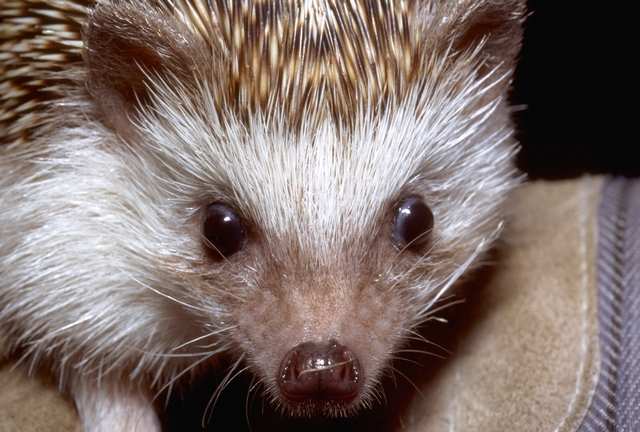
When I give talks about pet therapy animals, I talk about appropriate and inappropriate animals. On one slide I have a picture of a hedgehog, and I use it as an example of an animal that sometimes makes its way into pet therapy programs, despite standard guidelines to the contrary.  This is a species that raises significant infectious disease concerns because hedgehogs can carry an impressive array of microorganisms that can be spread to humans. A big one is Salmonella.

So, it doesn’t come as too much of a surprise that the CDC is reporting a multistate outbreak of salmonellosis associated with hedgehogs. Here are the highlights:

  • Fourteen infections have been reported between December 2011 and August 2012. There are probably many more because in most outbreaks, only a minority of affected people get tested.
  • People have been infected in six states (Alabama, Indiana, Michigan, Minnesota, Ohio and Washington), all with the same strain of Salmonella Typhimurium.
  • All 10 people that were interviewed reported contact with hedgehogs or their environments. Considering the rarity of hedgehogs as pets, that’s a pretty good indicator that hedgehogs were the source. The outbreak strain of Salmonella was detected in two households, in areas where the hedgehogs lived or were bathed.
  • No one has died, but three people were hospitalized.
  • As it typical, a large percentage (50%) of affected individuals were children 10 years of age or under.

The fact that this outbreak appears to have occurred over a long period of time and a large geographic area strongly suggests that this might be ultimately traced back to a common breeder or intermediary source. Many small pets like these are mass produced by large breeders and shipped across the country, creating the potential for a problem at a single breeder to have far-reaching consequences in other breeder colonies and in households. This has been shown repeatedly with species like hamsters and mice.

This report doesn’t mean that hedgehogs shouldn’t be kept as pets. However, hedgehogs do seem to be a higher-risk species than average, and households that include high-risk individuals (e.g. young children, elderly persons, immunocompromised individuals, pregnant women) should probably avoid them. More importantly, the potential for transmission of Salmonella and other pathogens indicates the need for good basic, routine hygiene practices, such as washing hands after handling a hedgehog, keeping them out of the kitchen, not bathing them in kitchen or bathroom sinks, and supervising contact between hedgehogs and kids.

I’m not really sure what to think about canine norovirus. Is it a rare, oddball infection or is it an important, overlooked and/or emerging problem?

  • There are only a few reports of norovirus infections in dogs, but I doubt many people are looking for it.
  • I’ve looked for it a few times during outbreaks, but not enough to convince me it’s not here.
  • Most outbreaks of canine gastrointestinal disease are not investigated, and norovirus testing isn’t commonly available.

So, I think it’s hard to say much about this bug at the moment.

However, another outbreak report involving canine norovirus (Mesquita and Nascimento, Transboundary and Emerging Diseases 2012) has been published, increasing concern that this might be an overlooked or developing issue. This latest report from Portugal describes an outbreak in a kennel that started after the introduction of some dogs imported from Russia (yet another example of the problems that can occur with dog importation, especially in the absence of good quarantine and infection control practices).

The outbreak started after two dogs from Russia were brought into a Portuguese kennel. Both had diarrhea at the time of arrival (strike 1 – introduction of new dogs, particularly sick dogs, is just asking for an outbreak) and were put into the general dog population (strike 2).  Two days later, the other five dogs in the kennel developed diarrhea (not surprising). All were positive for canine norovirus (ok, that’s surprising) and within one week, all the dogs appeared to have fully recovered.

There’s no mention of whether testing for other causes of diarrhea was performed, but I assume that’s the case. The sudden onset, rapid transmission and relatively short, self-limiting course of disease is consistent with norovirus infection.

Canine norovirus has been found in Portugal before, and the virus found in these dogs was very similar to previous Portuguese isolates. Whether that means the dogs acquired the virus in Portugal en route to the kennel or whether this virus is widely disseminated internationally isn’t clear (in large part because so few people have looked for canine norovirus).

Much more remains to be learned about this virus. It should be considered in outbreaks of diarrhea in dogs, especially outbreaks involving rapid transmission between animals. A major obstacle to obtaining more information about this pathogen is the general failure to investigate outbreaks in which it may be involved. While outbreaks are often dramatic, testing is usually limited because of the cost. That’s especially true when dogs aren’t dying. Often, testing for rare or potentially new problems only occurs when there’s a complete disaster and/or if an interested researcher or diagnostic laboratory gets wind of it and is willing (and able) to do some testing at no cost. That’s not often an option. I do testing as much as I can, but I don’t have any money dedicated to outbreak investigation so it depends on whether I have spare resources to put into an investigation at the time.

The risk to people from canine norovirus is not known, but is probably limited. There is some evidence of potential transmission of noroviruses from pigs or calves to people, but the risk from canine norovirus isn’t clear. Common sense practices to avoid contact with diarrhea (from any animal) should be used, as much to prevent exposure to the pile of other pathogens that can be in dog poop, as to prevent potential exposure to canine norovirus.

On my way to Beth’s soccer practice yesterday, I heard a blurb on the radio about how Frank Klees, MPP (Member of Provincial Parliament) told the legislature that the Newmarket OSPCA was going to euthanize all their animals because of a ringworm outbreak, and that three employees had been fired because they objected to the number of euthanasias. His statement that "We have a repeat now, at the same shelter, of what took place nearly a year and a half ago" was pretty concerning, given the severity of the earlier "ringworm" debacle. Klees, the veteran PC party MPP, has been a vocal critic of the OSPCA in the past.

Later that night, I found a little more information, which was mainly centred around complaints about the number of animals being euthanized for various reasons, and a subsequent statement by the OSPCA that there was no outbreak.

Now, it appears that a protest is being planned for today (Friday), although it’s not really clear to me what they are protesting. Maybe there’s more to it than is being reported and an outbreak or cull is actually underway. However, in the absence of that, their protest is better directed at the state of the animal population rather than OSPCA euthanasias.

While I don’t have a lot of confidence in Newmarket OSPCA management at this point, it’s hard to blame the them for euthanizing a lot of animals. It’s a function of supply and demand, as well as limited capacity.

North America wide, the euthanasia rate for cats entering shelters is about 50%. That’s a staggering number, but it’s not usually the fault of the shelter system – it’s because of the massive overpopulation of cats. When twice as many cats come in as there are available homes, something has to give. You can either build new shelters every year (obviously unrealistic), pack current shelters to the ceiling with cats crammed into crates in every corner (a perfect situation for a large outbreak and hardly fair to the cats) or euthanize many and focus efforts and resources on the most adoptable animals. As much as the "no-kill" concept has market appeal, it’s completely unrealistic for cats at this time because of the simple fact that millions of new cats are born every year with no hopes for a home. A small shelter can run as a no-kill shelter, but that just means that they limit their admissions and/or don’t accept cats with limited adoption potential. A large shelter like Newmarket that takes whatever cats arrive will euthanize many of them, even without an outbreak going on. In fact, to do things right, a large shelter has to euthanize lots of cats to allow them to properly care for and find homes for other cats. Sad but true.

So, while euthanasia is obviously undesirable and it gets people worked up, yelling at the OSPCA doesn’t do anything. They’re not going to stop euthanizing cats, because they can’t. Efforts are better spent helping deliver care to stray animals and preventing the cat population from expanding.

One of the most important things anyone can do to help the problem is make sure to (as Bob Barker used to say) have your pet spayed or neutered (and pass the message along to those you know as well!).

An 8-week-old puppy in Van Buren County, Michigan has died from infection by a virus that normally infects horses.  This is a rather rare occurrence of a nonetheless devastating infection. The puppy was euthanized after developing seizures and other neurological abnormalities, and Eastern equine encephalitis (EEE) virus infection was ultimately diagnosed.  Testing for this and other viruses was probably undertaken because of concerns about rabies.

EEE virus is a mosquito-borne virus that circulates in the bird population and is spread by mosquitoes. Horses are the main victims of infection but disease can occur in various other mammals, including people and dogs.

Canine infections are very rare and this can be considered an "oddball" infection. There’s no evidence that dogs are at any elevated degree of risk compared to previous years, but it is a reminder that while infections are rare, dogs can be susceptible to EEE. The puppy’s young age probably played a role and certain groups (e.g. puppies, elderly dogs, dogs with compromised immune systems) are presumably at greater risk of illness than the normal dog population. The other obvious implication of this report is that it is clear that EEE is circulating in mosquitoes in the area. That means other susceptible species, namely horses and people, are also at risk of exposure.

EEE in people is pretty high on the badness scale. It’s fortunately rare but when it strikes, it’s usually fatal. The same is true for horses. There is a vaccine for horses but not for people, so the main protective mechanism for people is mosquito avoidance.

As with EEE in horses, infected dogs pose no real risk to humans. The virus is not spread by regular contact and dogs don’t develop high enough viral levels in their blood to be able to infect more mosquitoes (who could then infect people). There’s a potential risk of transmission through contact with infected tissues during post mortem examination (necropsies) but standard practices used to prevent transmission of other diseases (e.g. rabies) should be effective for EEE as well.

The Ontario Ministry of Agriculture Food and Rural Affairs has issued a disease advisory to Ontario equine veterinarians about West Nile virus (WNV), but not in response to cases of WNV in Ontario horses. In fact, to date, there have been no reported cases in horses in the province this year. However, no reported cases only means no horses have become sick and WNV infection has been considered and WNV testing has been performed. It doesn’t mean that no horses in the province have been infected, and as much as anything else, the advisory is a reminder to be aware of WNV and ensure that potential cases are properly tested.

While not anywhere near as bad as the situation in some US states, Ontario has had a larger than expected number of human WNV infections this year, and it’s reasonable to assume that many equine infections have (and will) also occurred. Since the end of August is typically the start of the WNV season in horses in Ontario, the next few weeks will tell us a lot about the state of this disease in horses in the province this year.