As they say, when you look you find.

After a sick raccoon in Hamilton had an altercation with two dogs last week and subsequently tested positive for rabies, the Ministry of Natural Resources and Forestry (MNRF) tested an additional 14 raccoons and three skunks that were picked up by Hamilton Animal Services since then.  These animals were all either found dead or captured and euthanized because they were sick and/or injured.  Three of these raccoons also tested positive for raccoon-variant rabies on December 9.  This indicates that the virus is circulating to some extent in the local wildlife population.  The virus probably originated in New York State, where it is still quite prevalent, but no one is sure how the virus made it 80-90 km from there to Hamilton.  It is quite possible that an infected raccoon was transported to the area by accident on a truck or other vehicle.  If the virus had moved through the wildlife population, it’s likely that an infected animal would have been detected (and tested) before now, somewhere between Hamilton and Niagara.  Likely, but not guaranteed.

There are a few big jobs on the go right now:

  • rabies_vaccine_baitsTry to contain further spread of the virus.  To do this, the MNRF has been spreading oral rabies vaccine baits to vaccinate wildlife in the areas immediately around where the four rabid raccoons were found.  By the end of the week they will have spread approximately 46 000 baits (pictured right).  Click here for an infosheet about these baits from the MNRF.
  • It’s important to figure out how far the virus has spread.  The MNRF has increased surveillance efforts in Hamilton but also in surrounding municipalities.  Abnormal raccoons are the big target, but skunks and other wildlife (particularly if its acting strangely) will also be tested.
  • Increase public awareness.  It’s amazing how with any infectious disease (even one as deadly as rabies), people can get quite complacent after a while when they don’t see of hear about any cases.

Hopefully this outbreak will be a good reminder to the public about how important those simple, easy precautions we’re always talking about really are:

  • Vaccinated your dog(s) and cat(s) against rabies – and keep them up to date (it’s the law in most of Ontario!)
  • Keep away (and keep your pets away) from wildlife.
  • If you or another person has direct contact with wildlife, contact your local public health unit so they can assess your risk of rabies.
  • If your pet has direct contact with wildlife, contact your local veterinarian to assess the risk of rabies.
  • If you notice abnormally-acting wildlife (especially if you live in one of the areas around Hamilton), report it to your municipal animal control department.  Don’t try to capture the animal yourself as rabid animals can be very unpredictable (and it’s not worth risking exposure – let the professionals handle it!).

Click here for an updated veterinary alert from the Ontario Ministry of Agriculture, Food and Rural Affairs about the rabid raccoons.

Raccoon on treeLast week, a sick raccoon in Hamilton, Ontario got into an altercation with two bull mastiffs in the back of an animal services van.  The story quickly hit the media (and social media).  Because the raccoon was not acting normally (and was actually reportedly very aggressive), it was euthanized.  Because it also had direct contact with the two dogs (which both sustained wounds that broke the skin and could have come in contact with the raccoon’s saliva), the raccoon was tested for rabies.  And it was positive.

Not only is this the first case of terrestrial (i.e. not bat) rabies in all of Southern Ontario since 2012, it is the first case of terrestrial rabies in the Hamilton area since 1994.  The really interesting (though perhaps not altogether surprising) part is that when they typed the rabies virus it turned out to be raccoon-variant, making this the first time this strain has ever been detected in Southwestern Ontario.  The previous outbreak of raccoon-variant rabies in Ontario occurred from 1999-2005, but through the efforts of the Ministry of Natural Resources and Forestry (MNRF) it was contained to a 50 km radius in the Brockville-Prescott area.  The MNRF continues to drop oral rabies vaccine baits for wildlife along the US border in Niagara and along the St. Lawrence on an annual basis, to try to keep a “buffer” of vaccinated wildlife in case an infected animal crosses over from New York State (where terrestrial rabies is much more common).  Finding a positive raccoon-variant case in Hamilton is a significant breach of this protective zone.  However, it is unknown if the virus reached the Hamilton area through natural transmission or if the raccoon may have been inadvertently transported to the area by other means (e.g. a stow-away on a vehicle from across the border).

The Ontario Ministry of Agriculture, Food and Rural Affairs (OMAFRA), which helps private veterinarians handle domestic animal exposure cases since the Canadian Food Inspection Agency (CFIA) ended their rabies response activities in April 2014, has released a Veterinary Alert (also available in French) about the case.  It is particularly important for veterinarians in the Hamilton and Niagara areas to remain vigilant for cases of domestic animal exposure to potentially rabid animals, in order to help prevent any further spread of the raccoon-variant rabies virus, and of course to protect people who take care of the exposed animals.

The two most important steps for protecting people and animals are:

  1. Avoid contact with wildlife (especially abnormally-acting wildlife)
  2. Keep pets up-to-date on their rabies vaccinations

Lots more information on rabies and rabies response in Ontario, for owners and veterinarians, can be found on the recently updates OMAFRA Rabies website.

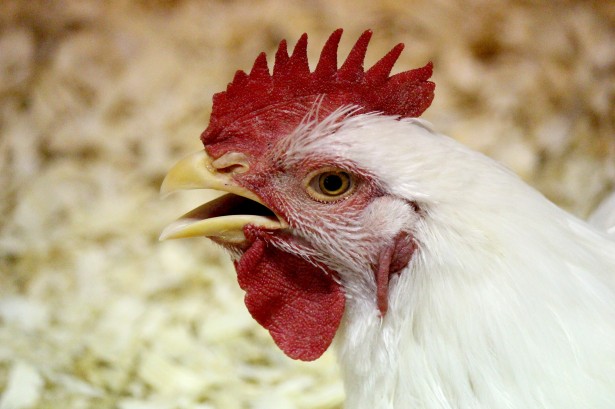
ChickenThere are very few absolutes with infectious diseases. The minute we think we are sure about something, a new angle becomes apparent.

Regarding rabies, we always say that its host range is mammals, but basically only mammals.

Maybe not.

There have been occasional (poorly corroborated) reports about rabies in birds, but when I first read headlines about this story, I figured it was some bizarre and misguided website. Then I saw that it was based on a paper in a reputable journal (Baby et al. 2015, PLOS Neglected and Tropical Diseases). It’s an interesting story that probably doesn’t really change the big picture approach but is intriguing.

The case report is about a bird that was attacked by a stray dog in India (where rabies is very common). The bird died a month after the attack, after appearing “droopy” and off-feed for a day.  Because of the history of the dog bite and the high level of rabies in the local dog population, the dead bird was (surprisingly) taken to a rabies diagnostic laboratory for testing. Here in North America, I doubt anyone would consider testing a bird for rabies. It would also be very unlikely (meaning not a chance) that I’d be able to get rabies testing done on a bird even if I wanted to.

Anyway, rabies virus was detected in the brain by two different tests.

This is an interesting scenario because it is a clearly demonstrated natural infection in a chicken, which likely was the cause of the bird’s death. The lesions in the brain were different than what is typically seen in mammals, since the classical “Negri bodies” were not identified. Regardless, the virus was there and since birds are almost never tested for rabies, it’s hard to say if this is an extremely oddball case or whether this could be more common than is realized.

Despite the fact that the bird was infected, there’s no indication that the bird was infectious (i.e. able to transmit the virus). That’s an important distinction since the odd bird dying of rabies is a minor issue (unless you’re the bird), but if there is another potential source of human infection, it’s a bigger deal. It also raises questions about whether there could be a risk from slaughtering infected birds or handling tissues from infected birds. However, most likely, the rare bird that is infected poses no risk to people.

It just goes to show how strange things can happen with infectious diseases and how we need to keep an open mind and be diligent.

Dog on blanketI’ve had a lot of emails about some news reports describing a program at Juravinski Hospital in Hamilton (Ontario) that allows personal pets to visit. Zachary’s Paws for Healing is touted as the first of its kind in Canada (which is far from true, but perhaps it’s the most formal).

Animals in healthcare facilities are nothing new. In a study we did a few years ago, the vast majority of Ontario hospitals had some type of animal visitation program (albeit usually poorly designed and operated). Things have improved, in part because of increased awareness and in part because of better guidelines.

There are some advantages and disadvantages of using personal pets vs formal pet visitation programs:

Advantage

  • The person probably gets a much greater benefit from visiting with his or her own animal.

Disadvantage

  • These animals and their handlers are not trained and screened like dogs in visitation programs.

The cost-benefit for the facility as a whole really depends on the program and how it’s run. If there is a formal mechanism to approve pet visitation, there are guidelines about which pets can and cannot visit, and there are clear visitation rules in place, the risks can typically be minimized. One very important rule is making sure that the pet only interacts with its owner. That’s easier said than done, since it’s not easy to walk a dog through a hospital without someone coming up to it wanting to pet it (or the dog trying to walk up to other people to get attention, depending on the dog’s personality).

There are some guidelines to help these programs. The most recent is an “Expert Guidance” document prepared by the Society for Healthcare Epidemiology of America (SHEA). This was an evolution of the international guidelines that we published in 2008 (Lefebvre et al, Am J Infect Control 2008). In the 2008 guidelines, we just addressed visitation programs, not personal pets. In the 2015 SHEA document, we covered more than just visitation program, including personal pets. The information about the program on the Zachary’s Paws for Healing website is pretty basic, but they’ve covered some of the important aspects of the current guidelines.

More and more evidence supports the health (physical and mental) benefits of animal contact in healthcare facilities. That’s balanced by zoonotic disease risks. Good programs (and good adherence to policies) can help make sure that the benefits outweigh the risks. I suspect we’ll see more of these programs in the future.

AVMA_Antibiotics_Flyer_110315_Cats_ColorSince their discovery in the mid-1900s (which really wasn’t that long ago in the grand scheme of things), antibiotics have revolutionized human medicine, veterinary medicine and even food production.  They save lives and prevent illness, helping to make both people and animals healthier, happier and more efficient at what they do.  But if we want our antibiotics to work and continue to provide these amazing benefits for another century (or more!) then we all need to Get Smart About Antibiotics and how and when we use them.

This week (November 16-22)  is the 2015 Get Smart About Antibiotics Week, as promoted by the US Centers for Disease Control and Prevention (CDC).  The goal is to raise awareness about the threat of antibiotic resistance and the importance of proper antibiotic prescribing and use.  It’s part of the CDC’s ongoing “Get Smart: Know When Antibiotics Work” program, which has components targeting both the public and healthcare professionals.  The CDC also has a sister program called “Get Smart: Know When Antibiotics Work on the Farm” (sometimes just called Get Smart on the Farm”) which they launched over ten years ago in 2004. This program focuses on promoting appropriate antibiotic use in animals and educating veterinarians and veterinary students about how to be good stewards of antibiotics.

The American Veterinary Medical Association (AVMA) has also been working hard on this issue to provide additional guidance and resources to pet owners and veterinarians.  They convened a Task Force for Antimicrobial Stewardship in Companion Animal Practice to help develop practice guidelines for small animal vets.  They have put together a resources page that includes some new quick-reference materials on antimicrobial do’s and don’ts for dogs and cats, client education posters (like the one pictured), as well as links to use guidelines from the International Society for Companion Animal Infections Diseases (ISCAID) for urinary tract infections and canine superficial bacterial folliculitis, and recommendations from the Federation of European Companion Animal Veterinary Associations (FECAVA).

We ALL have a role to play in preserving the effectiveness of these very important drugs, from patients to pet owners, from physicians to veterinarians, from backyard hobby farmers to large-scale food animal producers.  Antibiotic use is changing, so let’s all get smarter about it!

Syringe w needleVaccination discussions can get pretty heated. It’s not as bad with animals as with humans (thanks in part to the discredited (and formerly Dr.) Andrew Wakefield). Yet, there is still a reasonable number of people who are opposed to vaccination of pets, and probably a bigger number who are wary. There are various reasons for this, but a big one is the fear of adverse effects or reactions.

No, vaccines aren’t completely innocuous. Any vaccine can cause an adverse event. It’s rare, but it’s a fact of life that when we try to stimulate the immune system for good reasons, sometimes it doesn’t do what we want. Some vaccines may pose a greater risk of causing problems, and one that frequently gets discussed is leptospirosis vaccines. The concern is based on some reasonable history, since older lepto vaccines did seem to be associated with higher rates of adverse effects (especially among small breed dogs). However, the newer vaccines are both much more effective and seem to pose a much more limited risk of adverse effects. Data now provide more support to this last statement.

A paper in the latest edition of the Journal of the American Veterinary Medical Association (Yao et al 2015) looked at records from 130,557 (yes, over 130 thousand dogs!) that did or did not have a history of lepto vaccination. Retrospective studies using medical records are always a bit dodgy because of the (sometimes poor) quality  of medical record data, but a large and well-designed study helps limit those problems. The authors looked at records from dogs that were vaccinated during their veterinary visit. They then evaluated adverse events that developed within the 5-day period after vaccination. Not all those adverse events would have been caused by vaccination. However, it’s assumed that adverse events not associated with vaccination (e.g. diarrhea caused by some other issue) would be evenly distributed among the groups. It’s likely that this approach underestimates adverse events, but realistically, it probably only missed some mild ones. If the dog developed an adverse event of any consequence, odds are greater that this would be recorded in the medical record.

The results of the study showed:

  • The rate of adverse events in all dogs was 26.3/10,000 (just over 23 dogs out of every 10 thousand had some issues in the five day period after vaccination).
  • The rate in the dogs vaccinated against lepto was 53/10,000. The most common adverse event recorded was “nonspecific vaccine reaction.”
  • The rate in dogs vaccinated against anything else was 22.1/10,000, with “non-specific reaction” again being the main adverse event recorded.
  • Some breeds had higher rates of adverse events. The “winner” was American Eskimo Dogs, with a rate of 110.5/10,000

So, at first glance, this might raise some concern, with a rate of adverse events in lepto-vaccinated dogs that’s double the non-lepto-vaccinated dogs. Even when the analysis controled for other differences between groups, such as unequal distribution of breeds, age and weight, lepto-vaccinated dogs still had adverse events at a rate of 2.13 times that of other dogs.

But, let’s make sure this is put in perspective. This would indicate that vaccination increased the risk by ~26 events/10,000 dogs. So, if you lived long enough to own 400 dogs (or if your dog lived long enough to get 400 lepto vaccinations), you’d eventually get one that developed a complication. Further, most of those were ‘nonspecific’ and presumably mild. There was no significant difference in the incidence of hypersensitivity reactions (which is the more severe and concerning type of vaccine reaction).

The authors’ conclusion is reasonable: “These data suggest that vaccination against leptospirosis should be performed for all dogs at risk of the disease except those that have had hypersensitivity reactions previously.

Lepto vaccination isn’t needed for all dogs, but if you live in an area where lepto is present, vaccination should be considered. It’s a nasty disease, and a quite safe and effective vaccine. Don’t let internet hype lead to an increased risk of disease.

More information about leptospirosis can be found on the Worms & Germs Resources – Pets page.

pinto-horse-in-pastureAnother Ontario issue to report: this one is in a horse.

Recently, a case of anaplasmosis was identified in a horse in Eastern Ontario.

People in some places may say “so what?”

The reason it’s noteworthy is that anaplasmosis has historically been a very rare disease in Ontario. It’s a infection caused by the bacterium Anaplasma phagocytophilum, which is primarily transmitted by the tick Ixodes scapularis – the same tick that spreads Borrelia burgdorferi (the cause of Lyme disease).  Anaplasmosis is therefore something that we expect to see more of in areas where this tick (and Lyme disease) is becoming established. In Ontario, that’s the eastern part of the province, particularly along the north shore of Lake Ontario and the St. Lawrence River. The expansion of tick ranges over the last decade or more has been pretty impressive, and it’s likely to continue. So, as ticks spread, and pathogens spread with them, anaplasmosis is something that equine veterinarians and horse owners may need to be more aware of in coming years.

More information on the recent Ontario case can be found in a report by the Ontario Animal Health Network.

Disease status

  • Collie soccerThings seem to be slowing down. Whether that’s because of a true decrease in disease or “reporting fatigue” is a good question. However, I’m pretty certain that the outbreak is burning itself out in the areas that were most affected.
  • Sporadic reports of sick dogs are still coming in from a few areas, but no major clusters are being reported to me, unlike a week ago.
  • Fortunately, very few severe infections seem to be occurring. Most cases are fairly mild and dogs recover with simply time or basic treatment. Complications such as bacterial pneumonia have occurred, but at a rate that is similar to or lower than what I’d expect for typical canine respiratory disease cases.

Diagnosis status

  • No definitive cause has been found so far, but that doesn’t mean no progress has been made. Given the number of tests that have been performed, I think we are at the point where we can say that the “usual suspects” such as canine parainfluenza, canine influenza and Bordetella bronchiseptica are not the cause.
  • Work is ongoing in a few different places to figure out what the cause might be.


Here’s a quick update about what we know… which really isn’t a lot more than yesterday.

  • Case reports continue to roll in from different areas. I suspect the outbreak is burning itself out in Orangeville, but a few new cases are still being reported there.
  • A few other clusters seem to be ongoing in different towns such as Cobourg.

Boxer runningI’m still getting a reasonable number of reports of sick dogs from Ottawa too. I hesitate to write this, because people sometimes overreact, but a few of the Ottawa cases were reportedly at the Bruce Pitt dog park before becoming ill. The reason I hesitate is because it’s not a huge number of dogs, and if it’s a busy dog park, odds are some affected dogs will have gone there, irrespective of whether they were infected at the park or somewhere else. However, I figure it’s worth mentioning, not to make people stay away from that park or panic if they’ve been there, but to remind people to use some common sense precautions. These practices are particularly important in any high-dog-density area, and if we know sick dogs have been to a park, it’s even more important.

Sporadic reports are still coming in from other towns, and many of these are probably just part of the baseline level of disease that is always there, but we never hear about. That being said, keeping information coming in from other areas can help us identify new trends.

A cause of the respiratory illness still hasn’t been identified. Only a small percentage of affected dogs have been tested, but more results will be available soon. Beyond the small number of dogs that have been tested, an additional challenge is that some of the pathogens that cause canine infectious respiratory disease complex (CIRDC) tend to be shed for only a short period of time after the dog becomes ill. So, if it takes a couple of days before the dog is taken to a veterinarian (a common scenario), test results may be negative. We’re therefore trying to get samples from very early disease whenever possible. Hopefully we’ll find the cause. Often, we don’t, and that can be because of testing issues or the presence of something (new) for which we weren’t able to test.

More to come, hopefully including a diagnosis!

Dog nose2As I’ve written about a couple times over the past few days, we seem to have increased canine respiratory disease activity in a few areas of Ontario. The first reports came from Orangeville (incidentally, the town where I worked as a veterinarian in general practice when I first graduated), based on information provided by an astute veterinarian. As we started collecting data, it was pretty clear that a large number of affected dogs were present in the community. In some ways that’s not too surprising, since we occasionally see local outbreaks of canine infectious respiratory disease complex (CIRDC, also commonly called “kennel cough”).

However, reports have since been coming in from veterinarians and dog owners across the province, and my line-listing is getting quite long. The critical question is how many of these cases are simply “normal” disease activity that just isn’t usually reported. CIRDC is an endemic (ever-present) problem, so we expect to see sporadic cases all over the place. I suspect that many of the cases I’m hearing about from lots of different cities are just that, and we are only hearing about them now because we’ve asked for information. Nonetheless, while it’s hard to say anything definitive based on the loose surveillance we are doing (and which is the only type of surveillance that we can really do in situations like this), it seems like there may be genuine outbreaks going on in a few other areas as well.

In addition to Orangeville, areas that I’m particularly concerned about at the moment include:

  • Ottawa
  • Cobourg
  • Port Elgin

I don’t say this to cause panic, but to raise awareness so that people follow some basic precautions (a good idea no matter where you are, but particularly if there might be a local problem).

The particular cause of the disease in dogs in any of these areas is still unclear, and the clusters that have been detected aren’t all necessarily even being caused by the same thing. There are a lot of different viruses and bacteria that cause CIRDC, and testing has been pretty limited to date. We’re concerned about introduction of canine flu into Ontario, so we’re trying to figure out if it might be involved, but there’s no evidence so far that any of the dogs are infected with influenza virus.

This situation shows the importance of surveillance and communication, both during outbreaks and on a regular basis. That’s one of the reasons we developed WormsAndGermsMap. We don’t have CIRDC on their (at least not yet), but the map will hopefully help us understand the normal occurrence of various diseases, which will help us identify and track abnormal situations.