We’re in the midst of a pretty bad human flu season. That’s a problem by itself, as it also means severe flu cases and hospitalization rates are high, and likely to increase. High flu activity in people also amplifies concerns regarding H5N1 avian influenza, because it creates more opportunities for an infection with both a human flu virus and the H5N1 avian flu virus to occur in the same person (or animal) at the same time. That could lead to recombination of the two viruses creation of a new flu strain that is more severe and transmits effectively person-to-person.
H5N1 avian flu has spilled over into a large number of mammals. Among domestic animals, cats and cattle have attracted the most attention, but there is also some risk to dogs. The number of infections in dogs has been very low (especially considering how often dogs are likely exposed to infected wild birds, other wildlife, cats or livestock), but in a couple of cases infection has been shown to be quite serious. Case in point was a recent fatal H5N1 infection in a dog in Alberta.
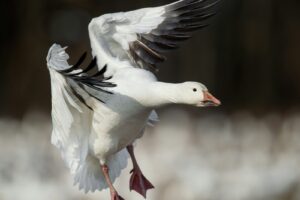
In November 2025, a 10 year old golden retriever / poodle cross dog (better known as a goldendoodle) was infected with H5N1 influenza after exposure to a snow goose, and subsequently died. The dog had a compromised immune system (it was being treated for an immune-mediated disease), and that could have contributed to severity of the disease caused by the flu virus. It’s similar to the case that occurred in an Ontario dog in 2023, that died from H5N1 flu after being exposed by chewing on a Canada Goose that died from the same infection.
This case is more of a reminder of the risk that’s already been present for a while, versus anything new, but it’s part of the reason we put a lot of effort into H5N1 influenza control. Currently circulating H5N1 flu strains are poorly adapted to infect and spread between people (and dogs, and most other mammals with a few exceptions), but every time the virus spills over into a mammal, it creates more opportunity for the virus to change and adapt to infect more mammals, which is definitely bad.