I remember the first case of fly myiasis (aka fly strike, maggot infestation) in general practice. I was a very new grad called to look at a lamb owned by someone who had a few sheep. The complaint was that the lamb wasn’t doing well. It was laying down when I arrived and I grabbed it’s back… and immediately off came a big patch of skin, revealing hundreds of maggots underneath, and a smell that you never forget.

The owner threw up. I fortunately managed to avoid doing the same, but we euthanized the lamb. That wasn’t even a case of New World screwworm (NWS), but provides some idea of what these infections can be like – gross, potentially devastating, and not something we want to see in any animal (or person).

New World screwworm 101

New World screwworm myiasis is caused by the larvae (maggots) of a particular species of fly (Cochliomyia hominivorax). It’s estimated to cause billions of dollars in loses in livestock production, unquantified impacts on companion animals and wildlife, and hundreds of human infections each year.

This image illustrates the general life cycle of NWS:
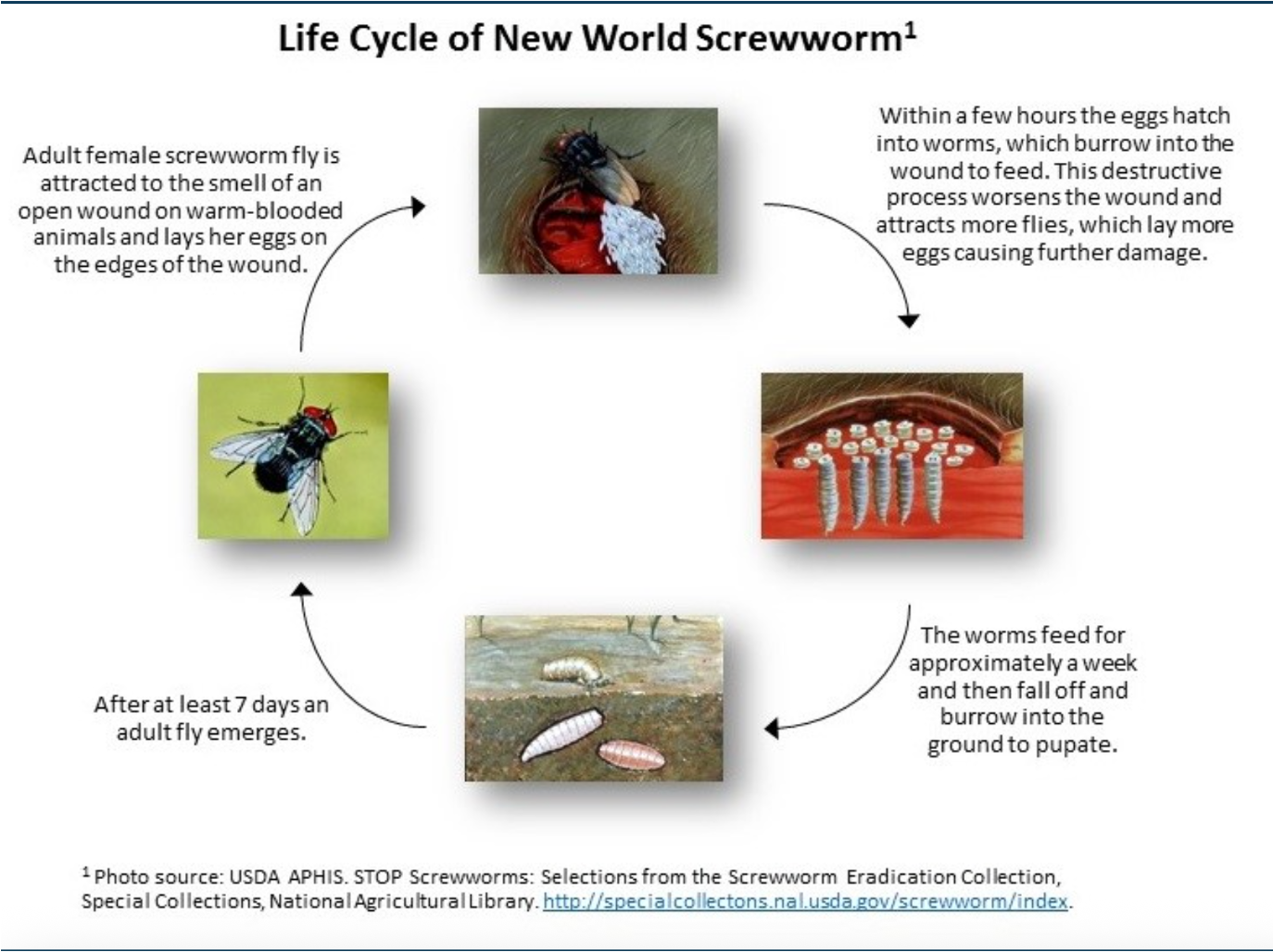
The adult fly is attracted to wounds or even minor skin lesions on warm blooded animals (i.e. mammals and birds). It doesn’t need to start out as a big wound wound or an infected wound, although those kinds of breaks in the skin provide a much larger target for the female flies, and that is where they lay their eggs. When the eggs hatch, the larvae (maggots) burrow into the tissue, causing lots of damage as they grow. Unlike “regular” maggots from other kinds of flies that only feed on tissue that is already dead / necrotic, these maggots will destroy previously healthy / living tissue, so they can cause a lot of damage, and the infection can even be fatal. After a week or so, the larvae drop out of the wound and finish maturing in the soil, emerging as new adult flies. The wounds they leave behind can be very painful, and can be prone to secondary bacterial infections too (not to mention being attractive to more adult screwworm flies).

A couple of pictures from the USDA-APHIS NWS photo gallery illustrate just how devastating these infections can be:
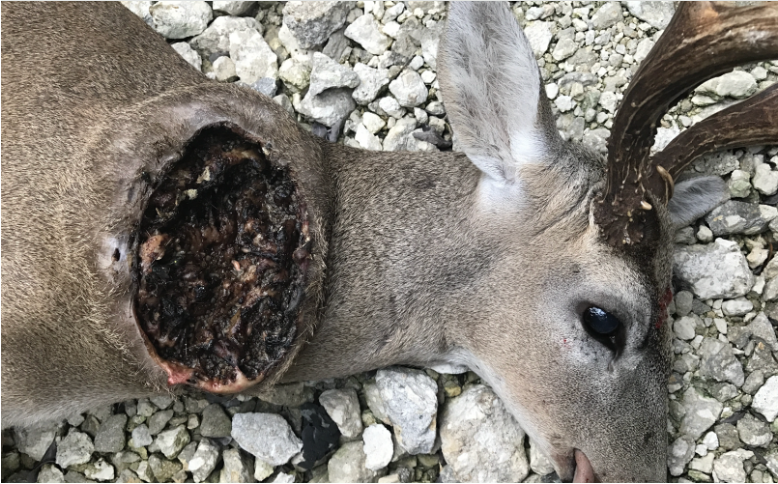
For decades beginning in the 1950s, massive efforts were undertaken to eradicate NWS from the Southern US, Mexico, and Central America. The eradication programs relied heavily on the release of millions upon millions of sterile male screwworm flies. As a fortunate happenstance of this fly’s biology, females only mate once in their lifecycle – if they mate with sterile males, they lay sterile eggs, and there are no maggots or new adults produced. While it still took a lot of hard work, this technique was highly effective, and NWS was gradually pushed all the way back to Panama. The fly remains endemic in South America, and unfortunately eradication there isn’t likely achievable because the fly’s range is so large and much of the area is very remote. So there is always the potential for NWS to re-invade Central America (or to be imported via people, animals or products) and begin to move north again, which appears to be exactly what’s happened. Starting in 2022 it was detected again in Panama, and has now come within a few hundred kilometers of the Mexico-US border.

Having NWS once again so close to the US border has caused a lot of concern, as it’s estimated that re-establishment of NWS in the US could result in economic losses of close to $2 billion in Texas alone. The US has initiated more surveillance, increased border controls (including bans on livestock importation from at-risk areas) and is significantly ramping up sterile fly production. Cattle producers have also asked for permission to feed ivermectin (an anti-parasitic) to their animals as a preventative control measure.

  • While ivermectin and some other drugs can be given prophylactically to help prevent myiasis, injectable or topical treatment of individual animals in extremely large herds is logically difficult, so that’s why daily in-feed treatment has been discussed. While it could be effective for NWS, it also brings up potential for development of resistance issues in other parasites… but that’s a topic for a different day.

A sliver lining to Canadian winters

However, it’s one of these things that should be aware of in Canada but fortunately don’t have to be too concerned about because of our climate.

While we sometimes complain about the cold weather in Canada, a cold climate helps us avoid a lot of infectious disease risks, particularly where insects are involved. We are well outside of the plausible geographic range for this insect, even with a changing climate. It can’t survive our winters, or even most of our springs and falls. Development of the larvae in the soil is slower the colder it gets, and when the temperature drops below ~8C, larvae in the soil die. Of course we have periods of the year when these flies could successfully reproduce here, but it would be limited, local transmission that would end with the first cold snap. It won’t be able to establish itself here long term.

But we still need to be aware of the problem given the amount of people and animal movement between Canada and some of these affected areas, especially if it reaches the southern US again. The potential impacts on individuals animals and even short-term local transmission during warmer months (which could be long enough to see several generations of flies) should not be ignored. If a cow in Ontario got infected in early summer, there could be transmission to other cattle on the farm, other species on the farm (including people and pets) and spread to wildlife. They could do a lot of damage before the cool fall weather finally stops the fly’s lifecycle again.

While the focus of attention regarding NWS is on Central America and South America, it’s also endemic in some Caribbean countries (e.g. Jamaica, Cuba, Dominican Republic), and we import lots of dogs from those areas, so the potential for an infected dog to reach Canada is very real. If an infected dog or other pet was imported into Canada, the odds of further transmission are likely limited, since a veterinarian would hopefully see and treat the animal before it could seed the environment with maggots, but it’s not impossible. The more important concern in these cases is the health of the individual infected pet, because of the tissue damage these maggots can cause if the infection is not identified and addressed immediately.

What Canadian veterinarians and animal owners should do

Just being aware of the risk of NWS is a good start. It’s unlikely any given veterinarian or animal owner will see an infected animal here, but all it takes is one to be an issue, so we want to maximize our ability to detect and respond quickly and efficiently.

Addressing health problems in recently imported animals is important for many reasons, and this yet another one. If we identify infested animals early, we can manage them better, both to reduce the risk of severe disease and to prevent transmission (i.e. not letting any larvae make it to the soil).

Flagging importation history is the key. Too often, we have animals with health problems and we don’t find out relevant importation history until later in the course of disease. Owners of recently imported animals should have a low bar for seeking veterinary care if there are any issues. Ideally, we’d see every imported animal shortly after they arrive, to give them a good health check and review vaccination and other preventative care needs.

If maggots are found on an animal imported from an area endemic or at risk for NWS, larvae should be removed immediately, placed in ethanol to kill them (NOT thrown in the garbage or on the ground outside!) and they should be submitted for identification via the Canadian Food Inspection Agency (because NWS is a federally immediately notifibale disease in Canada, and is also notifiable to provincial health authorities in some provinces). Physical removal of as many maggots as possible is the mainstay of treatment, though anti-parasitics are often used in parallel to try to kill any deeper embedded larvae. Significant wound care may be required, depending on the location and severity of infection.
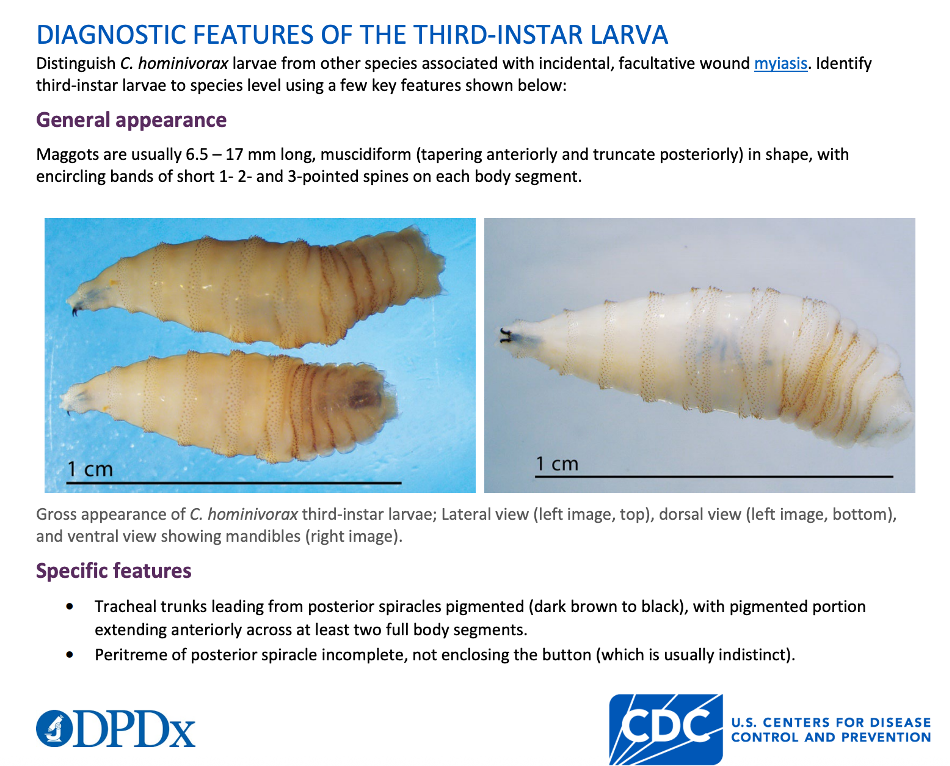
These larvae can also infect humans, as I mentioned briefly above. In Canada, it’s a travel-associated disease, a case of NWS was reported earlier this year in Ontario in a patient who had recently travelled to Costa Rica. As with many infectious diseases, the key is basic awareness.
Oh Darwin’s… here we go again.

Yet again, the FDA has issued a “Do not feed certain lots of Darwin’s Natural Pet Products” warning. It’s a pretty regular occurrence. And, once again, Darwin’s is dragging their feet on responding.

In July, Darwin’s ignored an FDA request to recall diets contaminated with E. coli O157 and Salmonella, two serious foodborne pathogens that can cause disease in pets and people.

The latest advisory is due to contamination with Salmonella and Listeria monocytogenes. These two bacteria were found in different samples of Darwin’s products, after an investigation was launched because of a consumer complaint. Presumably, that complaint was based on someone (a pet or a person) getting sick, but those details aren’t provided.

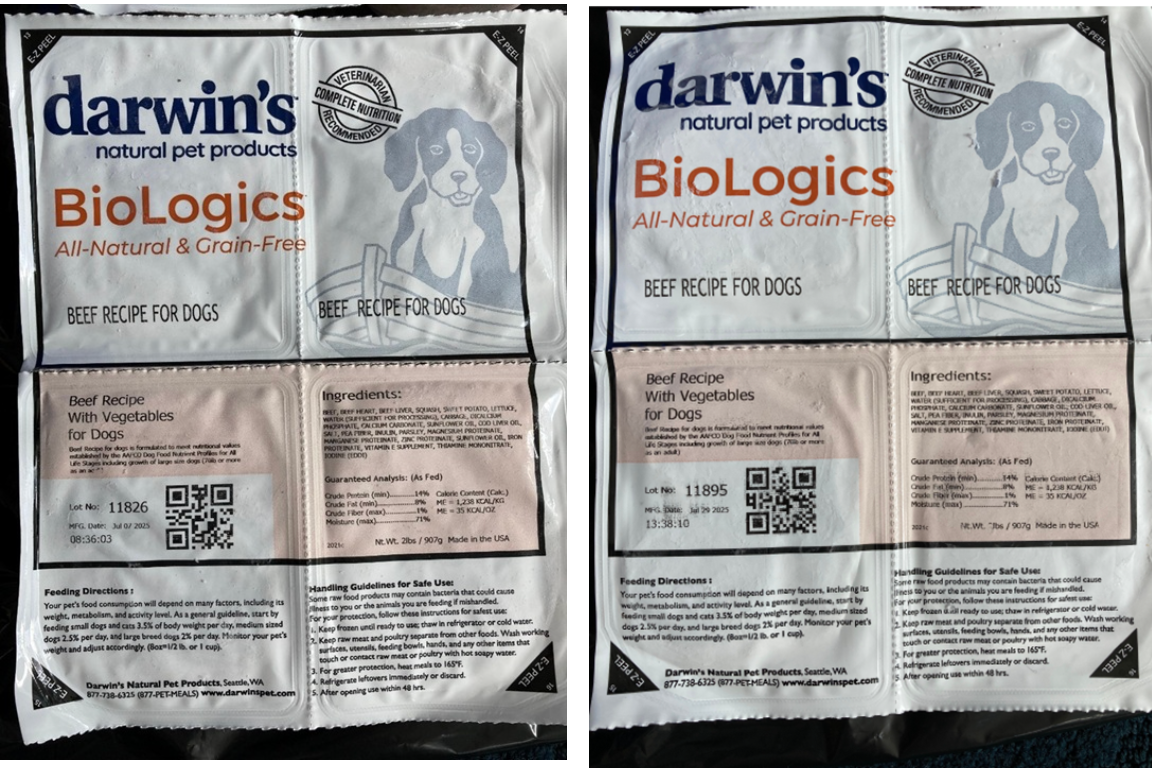
The implicated diet is frozen 2 lbs packages of certain lots of Darwin’s BioLogicals All-Natural & Grain Free Beef Recipe for Dogs. I wonder if there’s broader risk though, based on the frequency of contamination of their products, and the fact that Listeria in particular could be cross-contaminating other product lines via processing equipment.

The FDA recommended that the products be recalled. In response, the company did not recall the diets but (apparently? maybe?) sent a letter to consumers notifying them about the Listeria issue, but not the Salmonella. I have to wonder who they actually contacted and how. Maybe they contacted everyone that ordered the product online – that would be possible if all their sales are direct to consumer. It’s unclear, though, as is what they may have actually said in the letter. I can’t find anything on their website about this issue. The FDA notice says “The firm reportedly sent a letter…” suggesting FDA hasn’t actually seen what the company sent either, or if they actually did anything at all.

The FDA notice also says “Although Arrow Reliance may have notified its customers that it is withdrawing the two lots for L. mono, the firm has not yet provided sufficient documentation to the FDA to show that this action has removed affected product from the marketplace and customers’ freezers. Consumers may want to check Darwin’s BioLogics All-Natural & Grain-Free Beef for Dogs products for the affected lot numbers prior to feeding to pets.”

If you have any of the implicated diets, don’t feed them to any animal, and dispose of them safely. Personally, I’d say the same even for any non-implicated diets from this company, because of their repeated contamination issues and lack of appropriate response.

Any regular reader will know I have concerns about raw animal-based diets for pets. There’s no evidence they provide a benefit over an appropriate commercial or cooked diet, and they create risk to pets and the people around them. I’m pragmatic enough to know that some people will continue to use these diets anyway, so I focus on risk reduction in situations where raw diets are fed. That’s why we have an infosheet on raw meat diets on the Worms & Germs Resources – Pets page. In addition to the standard recommendations of using good basic hygiene practices and choosing a high pressure pasteurized diet, I’d add “don’t use products from companies that have recurrent FDA safety advisories.”

test

The H5N1 influenza situation in North America has been quieter lately (apart from saga with the BC ostriches, but that’s a different story). There’s been less spillover into domestic animals recently and less attention in the news, but the virus is still out there and causing problems. (H5N1 flu activity has already started to increase in some areas as the fall wild bird migration gets underway.)

I’ve written about the risks of H5N1 flu (and other pathogens) from raw pet food many times, so the latest report about 2 cats from a household in California that got sick and died after eating commercial raw pet food isn’t a surprise. It doesn’t change anything, but it’s yet another reminder that this virus is still a risk, and there are completely avoidable death occurring in pets (primarily cats).

Both of the cats from the report were nominally indoor only. That narrows down the potential sources nicely to start. Both cats were fed a commercially available raw pet food. The first cat got sick and rapidly deteriorated and developed severe neurological disease. That’s quite common in cases of H5N1 influenza in cats that have been reported to date, but the first cat wasn’t tested. Five days after the first cat got sick, the second cat became ill with similar signs, starting with fever and loss of appetite and ending with severe neurological disease. It tested positive by PCR for H5N1 influenza after it died.

  • With that time frame, we have to consider whether the second cat could have been infected from the diet or from the first cat. The latter would be the worst scenario, as cat-to-cat transmission would be a significant concern, and also indicate potential risk of cat-to-human transmission. Unfortunately there isn’t any way to determine the transmission route in this type of situation.

Further testing showed that it the genotype of the virus from the second cat was the B3.13. That’s the main strain found in dairy cattle in the US, though it is also still possible to find it in wild birds and poultry. Presumably a poultry-based raw diet was the source, but since it was B3.13, I assume they investigated raw milk exposure too, as well as direct or indirect exposure to dairy farms.

The implicated raw diet is currently being investigated. It’s the logical source of infection in these cats, but confirmation would require detection of the virus in the food. Unfortunately, the time lag from ingestion to illness to diagnosis to investigation in cases like this often means the food that was the potential source is long gone before testing can be done, especially with raw diets that are often made in small batches (vs kibble diets). If the lot of the diet is known, then there’s the potential to find other samples from the same lot, but we also don’t know how evenly distributed the virus (or any other contaminant) would be within a batch of food. It can therefore be hard to show a definitive link, but it’s been done before so we clearly know raw food-associated H5N1 flu is an issue.

The report does not name the commercially available food that’s being investigated.

  • On one hand, you can understand why: the link is not confirmed at this point.
  • On the other hand, if there is contaminated food out there that’s yet to be eaten, or if there are sick cats that haven’t been diagnosed because people don’t know about the risk, holding back the information can be a problem.

I understand why this particular information is being withheld at this point, but hopefully more information will be released as the investigation continues.

What should cat owners do?

  • Avoid feeding raw poultry-based diets to cats (and other pets that may be susceptible).
  • If a raw poultry-based pet food is to be fed, use a high pressure pasteurized diet; this will be lower (but not zero) risk for pathogens like H5N1 flu.
  • If signs of illness occur in a cat that’s eaten a raw poultry-based diet, a veterinarian should be contacted ASAP and the raw diet exposure history should be explained. Fever, lethargy and decreased appetite are probably the most common initial signs. Respiratory disease may not be apparent. Neurological disease is a big concern but typically occurs later. If these signs occur in a cat that has been fed a raw diet, H5N1 should be considered, testing is warranted, and there might be value in providing antiviral therapy (if it can be given early enough).
  • We should assume that cats that might have H5N1 are infectious to other pets and possibly people. The risk is probably highest to other cats (since cats are quite susceptible to the virus and cat-to-cat transmission has been shown experimentally) but we can’t rule out the potential for cat-to-human transmission. Keeping the sick cat isolated and using good infection control practices are critical.

The LA County Deptartment of Public Health is monitoring household members and veterinary personnel who were in contact with the cats from this report, and are offering flu testing to anyone who gets sick, but there is no evidence of human disease at this point. That’s great. The risk is probably low, but it’s not zero. When we see a low risk situation over and over again, it eventually ceases being low risk, and then it becomes a bigger problem.

One last thought: Why are we seeing another report of H5N1 in cats from LA County?

  • Do they have lots of people? Yes, it’s a huge county.
  • Do they have lots of cats? Yes, more people generally means more cats.
  • Do they feed raw diets to pets more often? Maybe, but probably not that disproportionately.

The main reason is likely the fact that LA County has an exceptional public health system that does at great job integrating animal health. That raises the concern that more situations like this are likely occurring elsewhere but are going unrecognized. The less robust the local surveillance and communications, the fewer cases are found. I assume there are many more cats that have died from H5N1 flu after eating contaminated food than we know about.

I’ve had a lot of questions about this week’s somewhat (understandably) vague notice from the Public Health Agency of Canada (PHAC) about an ongoing outbreak investigation of Salmonella infections linked to dog food and treats. The information available is pretty sparse, but there are still some important messages related to what we do know.

From February to August 2025, there have been 27 people infected with Salmonella Oranienburg across Canada, mostly from out west (13 from Alberta, 12 from British Columbia). Six cases were hospitalized, and the outbreak may still be ongoing.

  • Reported Salmonella cases are always the distinct minority. For every case that gets reported, someone has to get sick, THEN go to the doctor, who THEN has to order the test, and THEN the person has to actually submit the fecal sample, and the lab THEN has to isolate Salmonella and THEN report it. That’s a lot of steps where things can get derailed for one reason or another. It’s been estimated that there are likely as many as 26 cases Salmonella in people for every case that gets reported to public health.
  • Hospitalization are probably less underestimated since testing is more common in sicker people. Regardless, six hospitalization highlights how serious these infections can be.

The link to pet foods is presumably based on interviews of infected people. When a cluster of infections caused by a specific (and uncommon) strain of Salmonella like this occurs, investigators try to find common exposures among the cases to help narrow down potential sources for further investigation. Sometimes finding the source is straightforward, such as when everyone reports eating the same kind of food from the same source around the same time. With outbreaks that are more spread out over months and across the countryidentifying the source is tougher.

“Many” (unclear how many) cases in this outbreak reported handling dog kibble, dehydrated pet diets and freeze-dried treats prior to getting sick, but no common supplier was evident. The fact that not everyone reported that type of contact doesn’t rule out pet food/treats as the source, since no one’s recall is perfect (especially if they were interviewed weeks or months after the were ill). Some people could have had indirect exposure through environmental contamination or from a dog that was infected by eating contaminated food/treats, or through visiting someone with a dog, without realizing they could have been exposed. It’s also possible there’s some other risk factor that just couldn’t be identified, or that the pet food/treats is a proxy for some other exposure (but I don’t have a good idea what that could be).

The fact that kibble, dehydrated pet diets and freeze dried treats are all mentioned shows there’s no clear direction towards what might be the source. If I had to rank the probable risk from these products, I’d put dehydrated diets first, treats next and kibble last.

  • Dehydrated diets are raw diets. Raw animal-based products are high risk for Salmonella and other pathogens. Dehydration is not a pathogen elimination tool. It will have an effect on some bacteria, but not all.
  • Freeze-dried treats are also primarily raw animal-based products, and are therefore also high risk for Salmonella and other pathogens. Freeze drying is likewise not a pathogen control tool, in fact it’s a pathogen storage tool – if we want to preserve a bacterium for a long time in the lab, we can freeze dry it so it’s shelf-stable. Myriad raw animal based treats are available too. Go into any pet store and you’ll likely find bins and bags of dried animal bits of various sources (e.g. liver, pig ears, rawhides, bully sticks and much, much, more). Bulk bins of these pose even greater risk because one contaminated item can cross-contaminate the whole bin.
  • Kibble is initially cooked and extruded, which should kill any pathogenic bacteria in the raw ingredients. However, it’s still a plausible source of Salmonella as there have been infections linked to kibble. This may occur from post-extrusion contamination (e.g. contaminated flavour enhancers that are sprayed on the kibble after), or through contaminated machinery. The risk is really low, particularly compared to raw diets, but it’s not zero. Kibble is also probably a less likely source in this outbreak because a specific product would likely be more easily identified during the interviews. However, if contamination occurred because of an ingredient that was sourced by different companies, or if different companies’ food was produced in the same plant (which does happen), then the link would be harder to identify.

Hopefully we’ll get more details as the investigation continues. If the outbreak is ongoing, there will be more data that could help identify the source, and now that public health personnel are aware of the potential dog food/treat link, there might be more detailed questions and quicker testing of products.

  • Testing of dog food and treats to confirm the source requires rapid identification of the issue so that the source food/treat is still possibly available to test. The longer it takes, the less likely that is.
  • It’s unclear if any testing of products has been done so far in this outbreak. At this point, with no clear source, testing of food and treats in affected peoples’ houses would be a fairly low yield fishing expedition, especially given time delays. It would be easier to pick up in kibble, since there could be more bags of the lot around to test, if an entire lot was implicated. Dehydrated diets and treats are usually made in smaller batches, so by the time an issue is identified, there may be none left to test.

It’s hard to say if we will get a final answer as to what caused this outbreak, but in the meantime, it’s a good reminder of some basic infection control practices. PHAC’s advice is pretty basic but like a lot of things in infection control, basic practices are the core prevention methods:

  • To prevent illness, individuals are advised to practice good hand hygiene and frequent handwashing after contact with dogs, their food and treats.

Good basic hand hygiene, preventing cross contamination of pet food and human food, keeping higher risk people (especially young children) away from pet food and food bowls, avoiding raw diets and raw animal-based treats (which are abundant, and people don’t often realize are raw) and good hygiene when handling pet feces are all easy, reasonable and critical core prevention practices, especially until (and even if) the true source of this outbreak is identified.

test

Yesterday, I was in Birmingham, UK, giving a keynote address at the British Equine Veterinary Association Congress (and HRH Princess Anne was in the audience and I didn’t put her to sleep… I’ll take that as a win).

After finishing my talks I was walking back to the conference centre when I heard someone yelling. It’s a big city with lots of noise and interesting characters, so I didn’t think much of it initially. It continued, though, and as I got closer, I could year someone yelling “get him off me!

I then saw a person on the ground with a pit bull-type dog latched onto his forearm and a someone who was presumably the dog owner trying unsuccessfully to get the dog to disengage.

Perhaps stupidly, I got involved – I grabbed the leash and the dog, to try to help control the dog while the owner continued to try to pry the dog off. After what probably seemed like a lot longer than it actually was, the dog let go.

The dog jumped away and I lost my hold on the leash, so I then had a big dog with a decidedly unfriendly look on his face staring at me from 2 feet away.

  • My next thought was “oh, crap.”

Fortunately for me, the owner then grabbed the dog and sprinted away.

A bystander had called the police, but I doubt the dog or owner will be found – they were long gone. The person who was attacked had some pretty deep bite wounds on his forearm and unfortunately had no interest in seeking medical care, talking to the police or even giving his name. Hopefully he ended up getting some care for his wounds somewhere.

That’s a long lead-in to the question what should you do if you’re bitten by a random dog on the street?”

The approach is somewhat different in Canada versus the UK, because of the difference in rabies prevalence in the two countries. In this incident, I suspect there may have been a token effort to find the dog, since odds are low the police would be able to spot him, and that might have been the end of it. But let’s review the approach that would generally apply in other jurisdictions like Canada.

#1 Get safe.

  • If the dog is still around and uncontrolled, get away from it. If there’s a risk to yourself or others, call the local animal control agency (if there is one). If the danger is very high and immediate and there are no other readily available options, call the police – but only if it’s really an emergency.

#2 Do a quick assessment of your injuries.

  • It’s important to deal with bite wounds promptly, but they don’t all necessarily require emergency care. Washing wounds thoroughly with soap and running water for 5-10 minutes is an important first step and should be done immediately. For young children, elderly individuals, pregnant women and anyone who is immunocompromised or doesn’t have a functional spleen, it is particularly important to seek medical care as soon as possible (urgent, but no an emergency). This also applies to bites to the face, over joints or other sensitive structures (e.g. pretty much any bite to the hands or feet). If you or someone else is very badly injured, is feeling faint after the attack or if there is a lot of bleeding, you may need to call an ambulance. If in doubt, seek medical care for bite wounds.

#3 Identify the dog and owner, if possible.

  • If the owner says at the scene, get their contact information and information about the dog. A picture is a good idea of you can get one. We want to know who’s involved for a couple reasons. From a rabies standpoint, we need to be able to identify the dog to do a proper risk assessment and to do a 10 day observation period in most cases (more on that below).
  • (I’d advise against telling the owner what you really think of them or their dog at the time, chasing someone down or doing anything confrontational.)

#4 Report the incident to public health.

  • If you seek medical care for a bite wound, the healthcare provider should contact public health automatically (in Ontario, that’s mandated through the Health Protection and Promotion Act), but one way or the other it’s important for public health to assess the risk of rabies exposure from the bite. Rabies in dogs is really rare in Canada, but since rabies is almost invariably fatal, we don’t take chances. Public health can investigate, do a risk assessment, and work with the dog owner (if identified) to ensure the dog is observed for 10 days for any signs of rabies. This helps determine if you will need rabies post-exposure prophylaxis / shots.
    • If the dog was rabid and shedding rabies virus in saliva at the time of the bite, it will show signs of illness within 10 days, and die shortly after. That puts the bite victim at very high risk for rabies and post-exposure prophylaxis should be started asap.
    • If a dog is alive and neurologically normal 10 days after the bite, it could not have transmitted rabies at the time of the bite, so there’s no need for post-exposure prophylaxis.
  • If the dog can’t be identified, there’s no way to know for sure whether or not the dog was rabid. As mentioned before, rabies in dogs in Canada is rare, but the risk isn’t zero and there are scenarios where the risk can be higher, so the need for post-exposure prophylaxis still needs to be considered very carefully. That’s why identifying the dog is so critical, as it can help rule out rabies in most cases if the 10 day observation period can be completed..

#5 Consider reporting the incident to municipal animal control or other authorities, depending on the circumstances.

  • Some dog bites are more concerning than others. An unprovoked, vicious attack (like the one I witnessed) raises a lot of concern about the dog and the owner, and police and/or animal control (depending on the area) should be involved. If the dog had grabbed the person’s neck or attacked a child, that could have been fatal.
  • Other bites might be less concerning based on the circumstances, but it’s good to have some degree of investigation of any bite to assess future bite risks.

Ozzie was bitten by a dog at a Guelph off-leash park a few weeks ago. (I started a post about that but got distracted… maybe I’ll get a chance to finish it off). It wasn’t a severe bite, but there are obvious owner and dog issues when an unprovoked bite occurs at an off-leash park. The owner took off with the dog in that case too. Heather was with Ozzie, but only had a vague description of the dog and owner, so it’s unlikely they would be found, but she reported it nonetheless to make sure it’s documented. If there are other reports of similar incidents with similar descriptions of the dog and owner, that would be a reason to investigate more and maybe warn park visitors.

So, I got to meet British royalty, talk with Birmingham police, and meet some people on the street, along with giving a couple of talks. Overall it was a pretty eventful 48h in the UK.

test

Yesterday I wrote about a FDA notice regarding H5N1 contamination of RAWR pet food that killed a cat in California (and likely sickened others, but that’s a guess). A sharp reader pointed me to the manufacturer’s response that must have gone up shortly after I looked at their website. I’ve seen lots of responses from pet food companies after events involving contaminated products (both raw and kibble-based diets); the good companies acknowledge, apologize, indicate what happened (if they know), and what they are doing going forward. Others unfortunately deflect, deny or gaslight.

Let’s look at RAWR’s posted response (“Safety Alert”) to this incident of H5N1 contamination of one of their products. I’ll put on my professor hat and critically assess their document. Italicized text is from the company’s response:

If you know us you know that transparency and integrity are paramount to who we are.

  • Okay, but then why did you only mention this after the FDA released its public notice? That’s not transparency, that’s damage control.

Unfortunately, FDA waited weeks before providing us with any real information that would help guide us to understanding their investigations. When we finally did receive test results, those results were not tied to specific lot codes.

  • (That ticking behind me is my bulls*t meter warming up). I don’t know the details, obviously. Slow follow-up could be a real issue. However, it’s not a reason to do nothing until forced. I’d also be quite surprised if specific details regarding lots tested weren’t provided.

Our reasonable questions regarding the cat, the lot codes, testing methods, and chain of custody have gone unanswered. Instead, FDA declined to provide the information directly and advised us that the only way to obtain these vital records was through FOIA (Freedom of Information Act requests) — a slow process that can take weeks, months or even years.

  • Fair complaint. Although the cat’s information would be confidential, as that’s private medical information.

But if protecting the public were truly the priority, why was critical information delayed for weeks, provided in fragments, and not shared with us until after FDA had already posted a public warning? This approach undermines the very goal of public safety by creating confusion and blame instead of clarity.

Because of this, we did not bring this to your attention sooner; we ourselves have only been receiving snippets of information in an extremely slow and piecemeal fashion. In fact, as I was preparing this alert to you, FDA notified us that they had already posted their public notice – despite us still waiting for our requested information to be provided.

  • Pick a lane. We’re told they didn’t get any information until the FDA released it, that they got piecemeal information and that they were preparing a response when the FDA released their notice (which would require them to know). All these can’t be true. I cannot fathom a situation where FDA would provide no information to a company before a release, and the company’s own verbiage suggests that’s not really the case.

Redirecting blame onto a single small manufacturer does not bring us closer to understanding avian flu, nor does it help prevent future issues in the food supply chain.

  • So? The issue at hand is contamination of this diet, that killed a cat.

Investigations into the death of cats from Avain (sic) Flu seem to only occur when that cat is on a raw food diet.

  • Nope. Investigation is usually started when we find out the cat has H5N1, and we look at how it might have gotten it. Knowing the cat was fed a raw food diet makes us more suspicious, but we don’t just focus on cats fed raw diets.

To date FDA has only two requirements regarding H5N1 in raw pet food: 1. Use only USDA-inspected and passed meat and 2. Include H5N1 in the company’s Food Safety Plan. We are in full compliance with both requirements.

  • Yes, but those requirements don’t prevent contamination, they only help reduce the risk. There is no way to completely prevent contamination in raw poultry.
  • Also, being in compliance doesn’t negate their responsibility to act, inform and take other appropriate measures when a problem is identified.

RAWR has not adulterated any food.

  • That doesn’t matter, as unadulterated food can still be contaminated. This starts throwing terminology around that the consumer won’t understand to make it look like there are no issues with properly handled raw meat.

H5N1 is a naturally occurring virus found in wild and domestic birds. If it is present, it exists in the entire poultry supply chain, as we use only USDA human-grade, inspected, and passed ingredients. If FDA finds this to be an issue then it should be addressed at the USDA level, and not made to be a problem created by raw food companies.

  • Yes, H5N1 flu is widespread. Human grade and inspected are more terms that are used to  mislead people to think that means pathogen-free. There’s a reason people cook raw meat bought from the store before eating it: to help prevent all the various illnesses we can get from pathogens that are not uncommonly present in raw meat.

Sample Lot CCS 25 093, Sell By 10/03/26 was the lot code in question and the only test done on this was from an open household bag that had been opened prior to July 13th. Testing a product 6 weeks after it has been opened makes it impossible to know whether those results reflect the product as made, or contamination from the home environment.

  • The odds of contamination of raw meat with H5N1 flu from household sources are extremely low. There would have to be another source. When we have a high risk product (raw poultry) AND a genetic match for the virus in the cat was also found in unopened food sold by the same company, there’s no reasonable argument that the food wasn’t the source.

Other testing was performed on a different lot Lot CCS 25 077, Sell By 9/18/26 produced a month earlier with entirely separate poultry sources, which does not prove a direct connection to the complaint nor have any other customer complaints been filed.

  • Maybe they haven’t clued into the fact that they are raising major issues here. If H5N1 with a genetic match was found in lots from separate production batches and dates, there was either repeated introduction from their sourced meat (of the same strain) OR they have a cross-contamination issue in their facility OR they have record keeping issues and those weren’t actually separate lots. All of which are bad.
  • The “no complaints” statement is a joke. For a complaint to happen, a sick cat would have to be taken to a veterinarian (when some cats die too quickly from this virus for that to happen, and lots of cats don’t go to a veterinarian when sick), testing would have to be done (that’s probably only going to occur in a small subset of cases), a proper sample would have to be collected (usually not a problem but can be tough with some cats) and the lab used must be able to test for H5N1 flu (not always done). Then, the result has to be reported and investigated, and someone needs to identify the link with the food so the company can be notified. We could have a lot of sick cats that were not diagnosed. I expect reported infections to be a minority of the total infections.

Another piece that is concerning and worth noting is that the initial test results we received, despite not being linked to any specific lot code showed non-H5N1 Influenza A. Only later, after retesting one of those samples did FDA report HSN1 (sic).

  • As above – pick a lane. You can’t say critical information was “not shared with us until after FDA had already posted a public warning” and also make the statement above.
  • I’m not sure what the non-H5N1 statement is about. It could be that the first result was a pan-influenza test that had to be followed up to determine if it was H5N1 flu. I’d be surprised if they told the company they found flu that wasn’t H5N1, then changed the story.

In regards to the cat in question no necropsy was performed. There is still no definitive medical determination of the cat’s cause of death.

  • But they say above that the FDA didn’t answer their questions about the cat. How can they know this? We don’t need a necropsy to have a solid diagnosis (it’s nice, but not mandatory). A positive H5N1 PCR with consistent clinical signs is enough. The FDA report says the cat “became ill with H5N1” so I’d trust they had enough clinical and testing information to make that call.

Out of an abundance of caution, we proactively removed the lots in question (CCS 25 077 and CCS 25 093) from circulation weeks ago.

  • (That big boom was my bulls*t meter exploding. Rest in peace old guy. I know I’ve worked you hard over the years.)
  • So, obviously the FDA reported the affected codes a while ago.
  • I wonder how this was done with no information on the website. They could have had sellers remove product from shelves, but that doesn’t protect people who have purchased the food already. That’s why public recalls are needed. People could still have these lots in their freezers.
  • Also “weeks ago” doesn’t fit with “we only found out last night when the FDA issued their notice.”

If you have a bag from Lot CCS 25 077 or Lot CCS 25 093 and would prefer not to feed it raw, please know that simply cooking the food to an internal temperature of 165°F will neutralize any potential virus.

  • !!! If you have a bag of food that’s been implicated in the death of a cat that ate that batch, this isn’t an “if you would prefer not to feed it” scenario. It’s a clear, firm recommendation to dispose of or return it.

It’s okay to try to protect your company, but don’t insult us in the process. There was clearly an issue with the food that killed at least one cat. Giving us a bit of a mea culpa and a here’s what we’re going to do about it would be good.

Were they apologetic? Not really.

Did they accept that there’s an issue? No.

Did they indicate what they are doing in response to this problem to prevent problems in the future? No.

test

H5N1 avian influenza has dropped of the media radar lately (apart from the BC ostrich farm debacle, but that’s a different story), but that doesn’t mean it’s gone away (and with the fall wild bird migration season looming, we need to stay on alert). The same applies to H5N1 infections in pets from contaminated raw diets: there hasn’t been much press about it, but it’s still an issue, as highlighted by another US FDA notification about a cat death linked to a commercial raw diet, namely RAWR Raw Cat Food Chicken Eats. The cat developed severe H5N1 infection and was euthanized. The open package of the raw diet was tested and it was positive for H5N1 flu as well, and it was a genetic match with the virus from the cat. That’s all pretty clear-cut, unfortunate and sadly not surprising.

Some raw pet food companies have tried to deflect responsibility in such scenarios by claiming an open package could have been contaminated by the cat or owner. In this case there was further investigation which included testing two additional retail (unopened, for sale) samples of a different lot of the same food, and they were also positive for H5N1 flu virus. Genetic analysis was done on one of the two, and it was also a match with the virus from the cat and the other batch of food. It’s even more concerning to have two separate batches contaminated with the same virus strain, as it either means they have repeatedly used contaminated ingredients for separate batches, or they have cross-contamination of batches during production. Both point towards risk that might extend beyond the two lots that were tested.

There’s no word about a recall and nothing on the company’s website about this incident. Affected batches have probably already been consumed (and quite likely killed other cats that weren’t diagnosed) but with sell-by dates of September 18, 2026 and October 3, 2026, it’s possible there’s still some of this food out there in pet owners’ freezers. People who have purchased this diet should check the lot numbers: CCS 25 077 and CCS 25 093 are the known affected lots (but I definitely wouldn’t rule out others being contaminated, either linked to this event or separately). Affected lots (or, really, any lots in my mind) should be discarded, preferably in a manner that also prevents them from being scavenged / eaten by wildlife or any other animals.

Raw pet foods, particularly poultry-based raw diets, will continue to be a risk for as long as H5N1 flu continues to circulate (and that might be a long time). Avoiding all poultry-based raw diets is the best avoidance measure. High pressure pasteurized raw diets should pose much lower (but non-zero) risk, and should be sought if someone’s determined to feed their pet raw poultry. If any cat (or dog) that’s eaten raw poultry develops flu-like illness, respiratory disease or neurological disease, the pet owner should consult a veterinarian ASAP.

For more information on H5N1 flu, including H5N1 infections linked to raw pet food, check out all our previous Worms& Germs posts on avian influenza.   We also have a general infosheet on raw meat based diets available on the Worms & Germs Resources – Pets page.

Cat colonies present some interesting infectious disease challenges. Anytime we have animals congregating, there’s an increased risk of disease transmission, and when they’re outside, it also increases the risk of diseases from wildlife. Thus cat colonies can become a bridge for diseases between wildlife and people.

I’ll pause here to add a perspective that I’d often put at the end of the post, and which people often miss (and then email me asking why I hate cats or cat colonies or people who manage cat colonies). I have no issues with cat colonies. Yes they create some risks, but life is full of risks. I’m writing this with a formerly completely feral cat curled up beside me. Yet we should neither ignore nor dismiss issues with cat colonies, but rather try to optimize the cat health and human health components as much as possible.

Back to rabies and cat colonies

Rabies is always a concern in cat colonies. Any outdoor cat in a rabies endemic area has a risk of encountering rabies from a bat or other reservoir species (e.g. raccoon, skunk, fox). Colonies just amplify the potential impacts: a solitary rabid cat poses much less risk than a cat that has close contact with a large group of other cats, and if it’s a managed colony or the colony cats have other contacts with people, then the risk to humans increases as well. Vaccination of colony cats is a great control measure. It’s hard to get them all, but getting vaccine coverage in a large percentage of the cats will greatly reduce the risk, including to those that can’t be caught. But this method (trap-vaccinate-release (TVR)) takes time and money and people, which are not always available.

Some cat colonies are managed, meaning there are people who attempt to capture and spay/neuter and/or vaccinate the cats, feed them, keep an eye on them and interact with them regularly. In contrast, some colonies are unmanaged – they’re basically just a group of cats that live amongst people. They’re less likely to be the target of spay/neuter and vaccination efforts, and health issues are less likely to be spotted.

A recent report in Morbidity and Mortality Weekly Report (MMWR) about a rabies outbreak in an urban unmanaged cat colony in Maryland highlights some of the issues with these populations. It started with a rabies diagnosis in an aggressive cat that was part of an unmanaged group of about 20 cats. This particular cat was caught and tested because it had bitten or scratched 2 people. Because it’s hard to know who else might have had contact with a feral / unowned cat, they had to go searching for other potential human contacts. A complicating factor here was that the cats were near a hotel, and there was concern that hotel guests might have been exposed. Persons experiencing homelessness in the area were also a concern. So, this was a lot more complicated than many investigations. They had to coordinate with health departments in the US and Canada to track down hotel guests, who were asked if they had any exposure to cats during their stay. Reverse 911 messaging was also used, whereby all local cell phone subscribers got a text that described the situation and what to do. Community-based support programs for individuals experiencing homelessness were engaged to reach other potentially exposed people. They also contacted local healthcare facilities to have them flag people coming in for recent animal bites or scratches.

The investigation was wide reaching. Risk assessments were completed for 197/309 hotel guests from 27 US states and Canada (that’s pretty impressive). In the end, three potentially exposed individuals were identified, all of whom started rabies post-exposure prophylaxis (PEP) within 10 days of exposure (also impressive).

A kitten from the colony was seen to have been acting abnormally around the same time, raising concerns about the potential for a cluster of rabies cases within the cat population. It’s not clear whether the kitten was caught and tested, but it seems like it wasn’t. That’s not too surprising as a sick feral cat can be hard to find and catch. If it had neurological disease from rabies, it wouldn’t have survived more than a few days, so it may have died before anyone could find it.

Three other cats from the colony were caught, euthanized and tested. It’s not clear if they were sick or why these three particular cats were tested, but it sounds like they just wanted to catch and test whichever cats they could (not a great strategy). All three cats were negative for rabies.

Rabies vaccination of feral cats living in close proximity to people takes time and money, but so does an investigation like this. Estimates of personnel time required from just 17 of the 29 jurisdictions involved totaled 450 hours. Three people got PEP, which typically costs thousands of dollars per person in the US. The CDC has estimated that approximately $33 million is spent annually in the US on PEP for people exposed to potentially rabid cats. That would buy a lot of rabies vaccine for cats.

Vaccination and better management of colonies won’t eliminate rabies or drop all the costs to zero. However, like most things with infectious diseases, there’s a cost savings argument to be made for putting more resources into prevention via cat colony vaccination and monitoring. Ideally, we’d have effective oral rabies vaccines, like we do for wildlife, to make it easier to vaccinate large numbers of cats. However, conventional trap, vaccinate and release (TVR) approaches can still achieve good population-level vaccine coverage in these groups. Education of people about interacting (or more specifically, not touching) feral cats, and reporting any bites or scratches from feral cats promptly is also important.

Cat colonies aren’t going away, but with good spay/neuter and TVR programs, they can be managed to reduce the risks to both cats and people.

test

I suspect that people in every decade since the 1940s have said “we really shouldn’t have to talk about why raw milk is bad anymore, should we?” …but apparently we do still have to talk about it, and with certain high-profile characters in the US pushing raw milk, the topic isn’t going away anytime soon. So here we go again…

Pasteurization of milk was one of the biggest public health successes in history.  No matter how well animals are raised and how hygienically milk is collected, there’s some degree of risk of contamination with various pathogens. Pasteurization takes care of that risk for us, while maintaining the nutritional value of milk.

That should be all we need to say, but unfortunately it’s not enough. Raw (i.e. unpasteurized) milk continues to be promoted and sold (sometimes legally, sometimes not). Some people who consume raw milk know the risks and chose to drink it anyway. Many presumably don’t know the risks, or have been misled to assume there are no risks.

I could write posts for days about cases of raw milk associated illnesses and outbreaks, but I’ll spare you that. However, since money drives a lot of the raw milk industry and anything that impacts profits will get attention, I want to talk about a recent lawsuit from a Florida woman who is suing a dairy farm that produced raw milk she purchased, after she developed E. coli and Campylobacter infections and suffered a miscarriage. Her toddler also got seriously ill. She claims that she didn’t know about the risks of drinking raw milk.

Whose responsibility it this? Governments that allow the sale of raw milk? People who sell it? People that gloss over the risks and push it as a healthy choice? Consumers who should be expected to do some degree of due diligence?

Yes. All of them. There can be different ratios of responsibility (e.g. a consumer that was misled by false advertising vs someone who knows the risk but chooses to dismiss it), but everyone in that list has some role. That’s often a challenge with infectious diseases: no one can fix the problem alone, and many players are involved in preventing or causing disease. I’ve had lots of discussions with lawyers who get frustrated when I won’t paint a black and white picture of the lawsuit they’re planning or defending, but it’s the truth.

You could say that the consumer has a responsibility to understand what they’re purchasing and eating. The milk container label apparently indicated that it was only fit for animal, not human, consumption (more of a way to deflect liability than to warn people off, I assume). At the same time, you could say that it’s fair for a consumer to assume that someone who is legally selling a food product is selling a safe product.

The woman in this case apparently asked about the label warning, and according to a news article was told that it was just a technical requirement so sell “farm milk.” That definitely amps up the “someone’s really liable” meter.

Consider an analogy using a car accident: Should I sue a car manufacturer if I get into an accident that was an inherent risk of driving?

Is this akin to a a raw milk-associated infection? Or is it more akin to a manufacturer that sold a car despite knowing it had a correctable manufacturing defect that increased the risk of an accident? With raw milk, it’s probably more of the former, since raw milk that has been otherwise handled and produced appropriately may still be contaminated from the start.

What about the regulator? What if the government allowed a car on the road despite knowing it was unsafe and could be made safer using a practical method? I can make a stronger argument for responsibility here.

Ultimately, many people bear responsibility, and the lack of regulation against the sale of raw milk in some regions is a staggering deferral of responsibility by governments. Sale of raw milk is not legal in Canada but there’s a surprising number of US states that allow it. There’s absolutely no public harm or negative impact on food security, food production or farm income through mandating pasteurization, and one huge benefit (safer milk). So, apart from the overused “freedom” excuse, there’s little compelling reason to allow sale of raw milk. I’m not saying we need a nanny state and that freedom concerns are invalid, but it’s clear that many people (and animals) get sick from raw milk, many of whom don’t realize the risks that they are taking, and there’s an easy way to prevent all those infections.

Maybe this lawsuit will at least stop some of the blatant marketing misinformation that’s out there about raw milk, but there’s so much other misinformation circulating that it might not have much of an impact.

Universal Ostriches. It’s been a ride.

test

I was involved early in the saga of the H5N1 influenza outbreak on this ostrich farm in BC, answering some questions about the situation and potential options, but eventually stepped back from commenting much as things went off the rails, in part to avoid the flurry of threats that come along with challenging the narratives from their supporters.

To recap briefly, H5N1 influenza hit the birds on this large farm in December 2024 and subsequently killed 69 of their more than 400 ostriches. They didn’t report the sudden onset of deaths to the Canadian Food Inspection Agency (CFIA), which was legally required since avian influenza is a reportable disease and in this situation was very likely the cause of the deaths. Someone else apparently anonymously reported the situation to the CFIA, who then investigated. So right from the start there were indications that responsible animal ownership was lacking.

The CFIA tested the birds, and a novel assortment of H5N1 influenza virus was identified, which made the situation even more concerning. As per standard practice and international disease codes, a quarantine order was issued and a cull was mandated (which includes financial compensation for the birds destroyed).

However, the farm refused to euthanize their remaining birds, and challenged the decision in court – unsuccessfully – at various levels. They took to social media to spread the word, rally support and ultimately ask people to come to the farm to protest (peacefully). They essentially had an ongoing public campout at a farm that was under a quarantine and cull order. That’s pretty much exactly what we don’t want to do at a farm with a high-consequence zoonotic pathogen that we’re trying to contain.

Despite the large number of deaths, many birds survived, but many of those were probably infected and infectious, whether they were sick and survived or or simply healthy carriers of the virus. That’s expected, because although the mortality rate with H5N1 flu is extremely high in many domestic poultry flocks, it isn’t always 100% and can vary in different bird species. So there were still potentially infected birds around as all this was slowly winding its way through the legal challenges. Especially because they keep their birds outside, there was (and still is) concern about the farm being a source on infection for wild birds and other animals, which could lead to further spread of the virus. Ostriches are classified as poultry, and Canada’s international obligation through animal health codes is to cull infected birds unless there are strong mitigating circumstances and control measures.

From the start, the story moved very quickly from any concern about animal health to a mix of anti-regulation, anti-government, anti-PCR, anti-[insert lots of other things] fringe elements, and a lot of changing stories from the farm. Add on Rebel “News” (my quotes) embedding itself on site, rage baiting and coming up with bizzare stories such as murder drones taking out birds, the constant pleas for donations, as well as the trucker convoy elements who tried to recreate that disaster on the farm, and you can see how it devolved (the summer schedule even included a concert by convicted convoy leader Tamara Lich). An anti-vax far right pastor was also baptizing people in a river downstream from runoff from the ostriches and convoy campground (multiple levels of “yuck” here). Dr. Angie Rasmussen has a much more interesting and comprehensive discussion on the whole situation.

I have to admit, it was kind of funny watching the “viruses don’t exist,” “masks are harmful” and “antivax” crowds do the mental gymnastics in online chats to support a farm that has said they’ve played a role in developing products for masks and that they were involved with injecting birds with SARS-Co-2 antigens to produce antibodies (aka vaccination).

This week, the Federal Court of Appeal rejected the farm’s appeal to block the Canadian Food Inspection Agency (CFIA)’s cull order. That should be the end of all of this, although the farm is calling on people to come to the farm and “sit with the birds.”

There are multiple issues and levels of concern here. Ultimately, it’s a matter of national and international health regulations, and whether we are going to follow them or not, and whether there are repercussions for blatantly ignoring them.

If I drove home drunk and nearly ran over someone in the process, but made it to my driveway after a high speed police chase, I wouldn’t have much luck saying “no harm, no foul. I made it home ok. You need to let me go.” No, I’d rightfully get raked over the coals in a court of law. It’s the same thing here.

From the standpoint of further spread of H5N1 flu, has something really bad happened because of what the farm did? Not that we know of (at this point).

Does that mean we should drop everything and move on? Absolutely not. There’s a rule-of-law issue and a critical precedent here. We may have gotten lucky here. We may not the next time.

  • We can’t effectively control diseases if we allow anyone who just doesn’t want to follow the rules to weaponize the court system to draw things out.
  • We can’t let people blatantly ignore quarantine restrictions (while posting evidence of these breaches online).

The tough part is the birds. The last thing I want to see is animal culls, unless there’s a clear requirement, which I wrote about in an earlier series of posts. I assume all these surviving birds are flu-free at this point, so the protective value of culling them at this point is probably very limited. The bigger issue is the farm, their actions and future risks considering H5N1 flu is still around.

So, what do we do? Do we want the government to surrender, ignore their rules, ignore international standards and move on? Do we want a response that’s probably no longer necessary? Is there even an acceptable middle ground?

What would I like to see done?

I have no power in this regard (that’s probably a good thing most of the time) but I’d love to see this response:

  • Test all of the birds (at the farm’s expense)
  • If they are all negative, and they can be rehomed, seize the group and rehome them. This farm has clearly shown it should never be allowed to raise livestock.
  • Fine the farm substantially (again) to make it clear to others that they can’t act this way.

Dr. Oz has offered to take the birds, so I say test them and let the American’s figure out how they want to import birds from a quarantined flock and deal with them. That could be entertaining.  The farm declined the offer earlier, saying they want to keep the birds in Canada (which might just mean they don’t want to give the birds away for free, as there’s no profit in that).

I’d also review the response to H5N1 flu to see where we can improve (and internationally, discussions to re-classify ostriches as non-poultry might help). There are potential ways to bring in non-culling options for special populations, but only with proper and usually intensive infection control measures, as this is still a very serious virus that is a major threat to human and animal health.

The stories change regularly on this ostrich farm, but one thing they talk about a lot is the massive research value of these birds, and that they are part of a study of some sort that involved producing anti-SARS-CoV-2 antibodies. That’s interesting, but I doubt there’s any true value here. I’ve seen no publications, abstracts or other research outputs from the Japanese lab with which they have reportedly been working to suggest these birds have been useful or that they harbour anything unique or critical. I’m not saying not to study them, but we can inject lots of ostriches or other species with SARS-CoV-2 antigens (vaccination) and harvest antibodies. I’ve not seen any independent experts suggest the research value of these birds is anything special, so that aspect should be removed from any discussion.

In response to the recent verdict, the farm has once again appealed to the public to come to the farm. To do what? Physically prevent CFIA personnel from entering? Get more attention? Have one last party (or fundraiser)? Regardless, it’s one more example of a lack of respect for the law and due process, and shows to me that they shouldn’t be allowed to keep livestock. I’m all for exploring options to avoid culling the birds, but not to keep them in the hands of this group.